Skip to content

Myowncottage.ca

Canadian Prefab Homes With Prices: Cost Breakdown & Options for 2026

Canadian prefab homes with prices are explained in this guide, breaking down real-world cost ranges for small, modern, and affordable prefab homes across Canada.

You’ll learn what influences total price—including square footage, energy efficiency, site work, and financing—so you can budget accurately before building.

Last updated: January 25th, 2026
Written by prefab building specialists at My Own Cottage

Canadian Prefab Homes With Prices (2026 Guide)

Canadian prefab homes with prices are increasingly attractive to homebuyers looking for a cost-effective, energy-efficient, and high-quality new home option in today’s housing market.

Built in a controlled factory environment, prefab homes—also called prefabricated homes or modular construction—offer predictable pricing, stronger quality control, and faster home construction timelines compared to traditional homes.

In Canada, prefab house pricing varies widely based on square footage, custom design, energy performance, and site work.

However, buyers benefit from lower labor costs and efficient construction that meaningfully improves affordability.

Canadian prefab homes with prices infographic showing 2026 price ranges for small, affordable, and modern prefab homes in Canada

Above is an infographic of Canadian prefab homes with prices in 2026, showing typical cost ranges for small, affordable, and modern prefab homes across Canada.

If you’re focused specifically on architect-designed and higher-end models, view the full modern prefab homes Canada price list.

According to national housing data from Canada Mortgage and Housing Corporation, factory-built housing continues to gain traction.

In fact, prefabrication is becoming imperative for housing as construction costs and land prices rise across provinces like British Columbia and Ontario.

Whether you’re a first-time home buyer, downsizing to a tiny home, or planning a modern prefab home as a dream home, understanding total cost upfront is critical.

What Do Canadian Prefab Homes Cost in 2026?

Average prefab home prices in Canada

Most Canadian prefab homes with prices fall between $150,000 and $400,000, excluding land.

Smaller prefab homes and tiny house models can start closer to $120,000, while larger modern prefab homes with advanced energy efficiency, custom home plans, and premium building materials can exceed $450,000.

Prefab construction reduces overall cost by minimizing weather delays, shortening the construction process, and lowering labor costs compared to traditional construction.

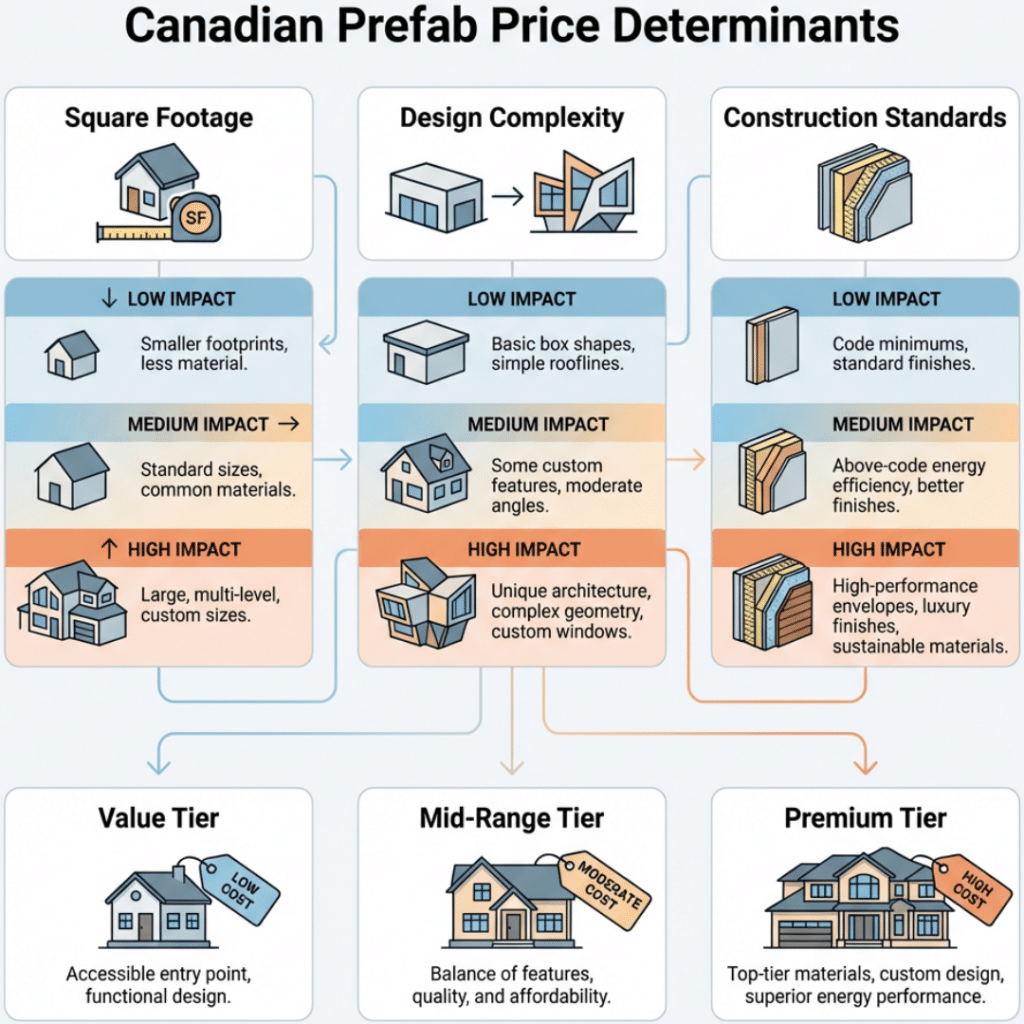
Average prefab home prices in Canada infographic showing how square footage, design complexity, and construction standards affect cost

Average prefab home prices in Canada compared by square footage, design complexity, and construction standards.

According to housing market analysis referenced by CMHC and Statistics Canada, prefab homes typically deliver a lower total cost per square foot than site-built homes when timelines and energy efficiency are factored in.

Prefab homes in Canada are especially cost-effective in regions with challenging weather conditions, where controlled manufacturing facilities prevent delays and material waste.

With energy-efficient home construction, prefab homes are designed to meet or exceed Canadian building codes.

In fact, they often incorporate passive house principles, advanced insulation, and high-performance windows.

This results in strong energy performance, reduced environmental impact, and lower long-term housing prices through operational savings.

For buyers comparing budget-friendly and mid-range options, see our detailed affordable modern prefab homes price comparison in Canada.

What’s included vs excluded in prefab pricing

Prefab home pricing usually includes the manufacturing of the home, structural components, interior finishes, and quality control completed in the factory.

This ensures consistent quality homes and predictable pricing.

However, most prefab house prices do not include:

  • Land prices

  • Site work (grading, driveway, utilities)

  • Foundation or crawl space

  • Permits and municipal fees

  • Utility connections

Understanding these exclusions is essential to accurately estimate the total cost of a prefab construction project in Canada.

Key cost drivers: square footage, design, and site work

Three primary factors determine prefab home pricing:

  1. Square footage – Larger living space increases material and transportation costs.

  2. Customization options – Custom design, upgraded finishes, and modern prefab homes increase price range.

  3. Site conditions – Remote locations, soil conditions, and access affect delivery and site-built preparation costs.

In provinces like British Columbia, where land and permitting costs are higher, site work can significantly impact final pricing even when the prefab home itself is cost-effective.

For a full breakdown of how prefab homes compare to site-built houses, see our prefab homes cost comparison with traditional homes.

Small Canadian Prefab Homes With Prices

Small prefab home price ranges in Canada

Small Canadian prefab homes with prices typically range from $120,000 to $220,000, making them one of the most affordable paths to homeownership.

Small prefab home price ranges in Canada infographic showing typical costs for tiny homes, compact prefab homes, and small family prefab homes

Small prefab home price ranges in Canada, grouped by size to show how square footage affects affordability.

These homes usually fall between 400 and 900 square feet, offering efficient living space without sacrificing quality.

Tiny home and compact prefab house models are especially popular among first-time home buyers, retirees, and buyers seeking lower cost housing in urban-adjacent or rural areas.

Their efficient construction, reduced material use, and lower labor costs significantly reduce overall project budgets.

In markets like Vancouver, Victoria, and Toronto—where housing prices are high—small prefab homes are increasingly used as laneway homes, garden suites, or primary residences on smaller lots.

Efficient home living in small prefab homes emphasizes smart layouts, multi-use rooms, and energy efficiency.

With fewer square feet to heat and maintain, these homes deliver long-term savings while still meeting Canadian building codes and modern quality expectations.

Typical sizes, layouts, and use cases

Most small prefab homes include:

  • Open-concept living and kitchen areas

  • One or two bedrooms

  • Compact but efficient bathrooms

  • Optimized storage solutions

These homes are well-suited for new builds on rural land, cottage properties, or infill lots where traditional homes may not be feasible.

Where small prefab homes work best across Canada

Small prefab homes perform especially well in regions with:

  • High land prices (Ontario, British Columbia)

  • Seasonal or recreational demand (Atlantic Canada, Québec)

  • Remote or northern locations where efficient construction reduces on-site labor

Across Canada, small prefab homes offer a practical, lower cost entry into quality housing while maintaining durability under diverse weather conditions.

Modern Canadian Prefab Homes With Prices

Modern prefab home pricing in Canada

Modern Canadian prefab homes with prices typically range from $250,000 to $450,000+, depending on square footage, architectural complexity, and energy performance standards.

These homes emphasize clean lines, open-concept living space, and high-quality building materials.

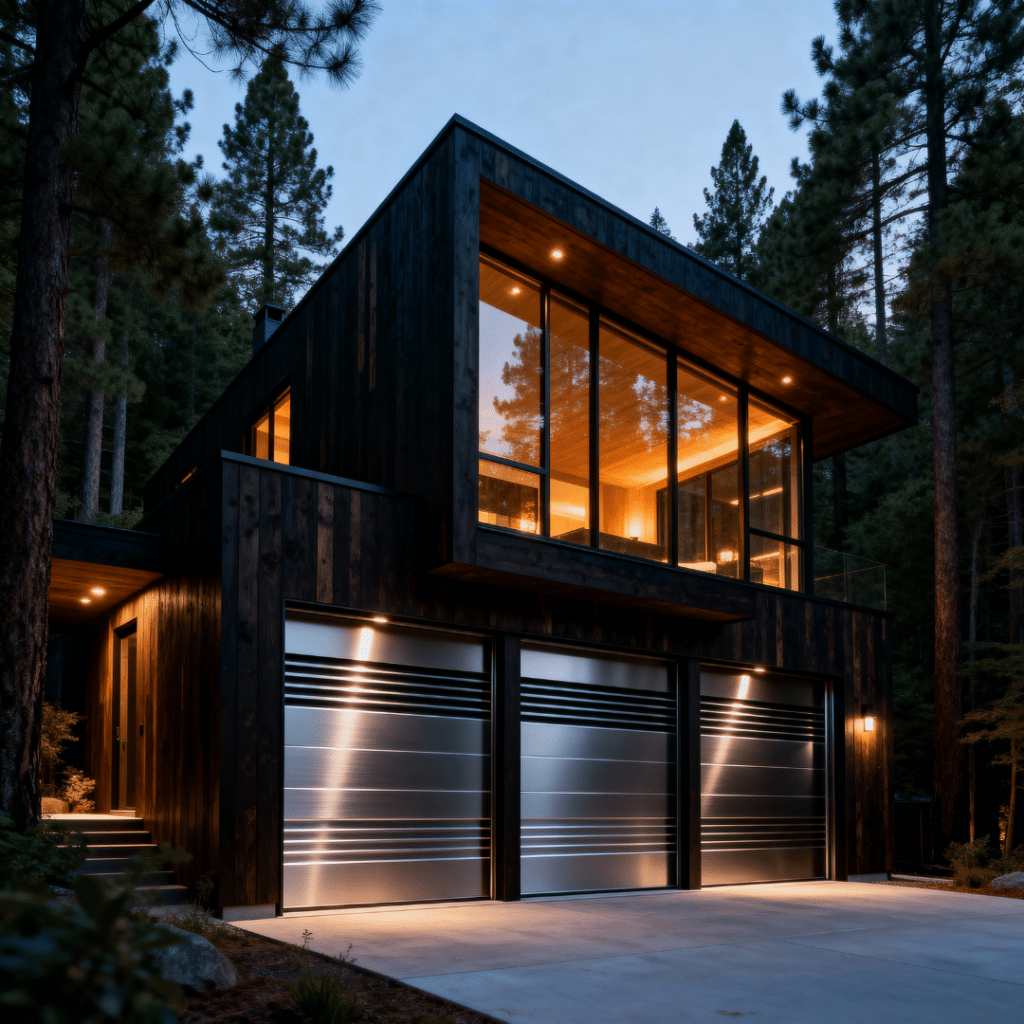
Modern prefab home pricing in Canada shown through a contemporary prefab home exterior with premium materials and energy-efficient design

A modern prefab home exterior illustrating the design quality, materials, and energy-efficient features that influence modern prefab home pricing in Canada.

Naturally, these features are making them a popular choice for buyers seeking a contemporary new build without the uncertainty of traditional construction.

Because modern prefab homes are produced in a controlled factory environment, they benefit from consistent quality control and efficient construction timelines.

This reduces weather-related delays and meaningfully improves cost predictability, especially in provinces like British Columbia and Ontario where site-built homes face higher labor costs and scheduling risks.

In cities such as Vancouver, Toronto, Montréal, and Calgary, modern prefab homes are increasingly used as primary residences, laneway homes, or custom infill projects that align with urban design standards.

Most modern prefab homes are designed as energy-efficient homes, often incorporating passive house strategies, triple-pane windows, airtight envelopes, and advanced HVAC systems.

While these features raise upfront cost, they significantly lower long-term energy consumption and environmental impact.

Features that increase cost (design, energy efficiency)

Several features commonly push modern prefab homes into higher price ranges:

  • Custom home plans and architectural detailing

  • Larger square footage and higher ceilings

  • Premium finishes and fixtures

  • Advanced energy efficiency upgrades

  • Smart home and sustainability features

Although these additions increase the initial investment, they often result in an efficient home with lower operating costs and stronger resale value compared to traditional homes built to minimum code.

Modern prefab demand in major Canadian cities

Modern prefab homes are especially popular in urban and high-cost markets where buyers value design efficiency and faster project completion.

In Toronto and Vancouver, modern prefab homes are often used to maximize living space on smaller lots.

To contrast, in Montréal and Ottawa they appeal to buyers seeking contemporary aesthetics within established neighborhoods.

Across Canada, modern prefab homes represent a growing segment of the housing market, driven by demand for high-quality, energy-efficient housing that adapts well to diverse weather conditions.

Affordable Canadian Prefab Homes With Prices

Most affordable prefab home price ranges

Affordable Canadian prefab homes with prices generally start between $120,000 and $180,000, making them one of the most cost-effective alternatives to traditional construction.

These homes prioritize efficient layouts, standardized designs, and durable building materials to keep total cost low without sacrificing safety or quality.

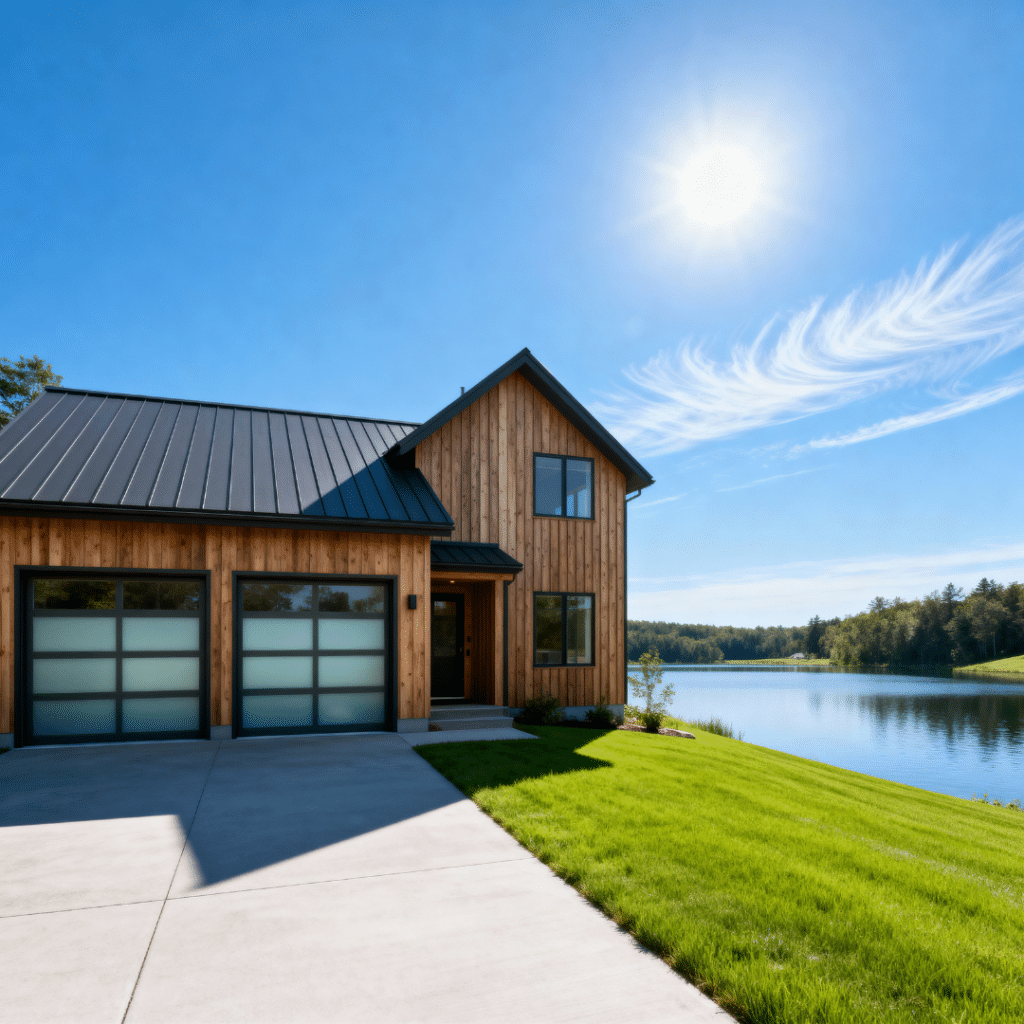
Most affordable prefab home price ranges in Canada shown through a compact, practical prefab home exterior

A compact prefab home exterior representing the most affordable prefab home price ranges in Canada.

Affordable prefab homes are especially appealing to first-time home buyers, retirees, and buyers priced out of traditional homes due to rising housing prices and labor costs across Canada.

These cost-effective housing solutions are reducing construction time, minimizing waste, and leveraging prefab construction methods.

Moreover, these homes deliver predictable pricing and faster occupancy—key advantages in today’s competitive housing market.

Cost-saving strategies without sacrificing quality

Affordable prefab homes remain high-quality by focusing on:

  • Standardized modular construction

  • Optimized square footage and layouts

  • Durable, low-maintenance materials

  • Simplified customization options

Building in a manufacturing facility ensures consistent quality control, which reduces costly errors often seen in site-built homes.

Trade-offs buyers should understand

Lower cost prefab homes may involve trade-offs such as:

  • Fewer customization options

  • Smaller living space

  • Limited exterior design variation

However, for buyers prioritizing affordability, energy efficiency, and faster delivery, these compromises often represent a practical path to owning a quality home in Canada.

They are particularly effective in regions with rising land prices and limited housing supply.

Prefab Homes vs Traditional Homes: Cost Comparison

Prefab vs traditional home costs in Canada

In Canada, prefab homes are generally 10–25% more cost-effective than traditional site-built homes when comparing total cost, timelines, and energy performance.

Canadian prefab homes with prices typically range from $200–$300 per square foot, while traditional homes often exceed $275–$400 per square foot, depending on region and labour availability.

Prefab construction benefits from a controlled factory environment, which reduces material waste, limits weather delays, and improves quality control.

Prefab vs traditional home costs in Canada infographic comparing cost per square foot, timelines, labour, energy efficiency, and cost predictability

Prefab vs traditional home costs in Canada, comparing pricing, timelines, labour requirements, and overall cost predictability. With blue representing prefab construction and orange representing traditional construction.

According to housing cost analysis referenced by Canada Mortgage and Housing Corporation, factory-built construction methods can meaningfully improve cost certainty compared to traditional construction, particularly in volatile housing markets.

In provinces like British Columbia and Ontario, where labour costs and construction timelines are longer, prefab homes often deliver a lower total cost and faster completion.

Labour, materials, and construction timeline differences

Traditional homes rely heavily on on-site labour, which increases exposure to weather conditions, scheduling delays, and rising labour costs.

In contrast, prefab homes are assembled efficiently in a manufacturing facility, allowing multiple construction stages to happen simultaneously.

Prefab construction typically shortens the construction process by several months.

While site-built homes can take 9–14 months to complete, prefab homes are often move-in ready within 4–6 months, reducing financing costs and temporary housing expenses.

Material purchasing at scale also allows prefab builders to control costs more effectively than traditional construction projects.

Long-term cost considerations (energy, maintenance)

Over time, prefab homes often outperform traditional homes in terms of energy efficiency and maintenance costs.

Many prefab homes are designed as energy-efficient homes with airtight building envelopes, high-performance insulation, and modern HVAC systems.

Lower energy consumption, improved durability, and consistent quality control translate into reduced operating costs with long-term value.

This is particularly important for homebuyers planning to stay in their home for many years.

Additional Costs to Budget for With Prefab Homes

Common hidden costs in Canadian prefab projects

While prefab home pricing is transparent, buyers must budget for additional costs that are not always included in the base price.

These costs can significantly affect the total cost of a prefab construction project if not planned for upfront.

Common hidden costs in Canadian prefab projects infographic showing site work, foundations, utilities, permits, delivery, and weather delays

Depicted above are common hidden costs in Canadian prefab projects, highlighting expenses buyers often overlook when budgeting.

Common additional costs include land acquisition, site work, permits, and utility connections.

These expenses vary widely depending on location, soil conditions, and municipal requirements.

Land, permits, and servicing costs

Land prices are often the single largest variable in prefab home projects.

In high-demand areas such as Vancouver, Toronto, and surrounding regions, land costs can exceed the cost of the prefab house itself.

Permits, development charges, and servicing fees—such as water, sewer, septic, and electrical connections—also vary by municipality and province.

Buyers should confirm local building codes and zoning requirements early in the planning process.

Delivery, foundation, and site preparation

Prefab homes require a prepared site before installation. This typically includes:

  • Foundation or crawl space construction

  • Site grading and drainage

  • Delivery and crane placement costs

Remote or northern locations may incur higher transportation and setup costs.

Despite this, prefab construction often remains more efficient than traditional construction in these areas due to reduced on-site labour requirements.

Proper site preparation ensures the prefab home performs as intended under Canadian weather conditions and meets long-term durability expectations.

Financing Options for Canadian Prefab Homes

How prefab homes are financed in Canada

Canadian prefab homes with prices can be financed, but the process differs slightly from traditional homes because prefab construction happens in stages.

Most buyers use construction financing first, followed by a traditional mortgage once the home is installed and meets building code requirements.

How prefab homes are financed in Canada infographic showing mortgage pre-approval, construction loans, installation, and mortgage conversion

How prefab homes are financed in Canada, outlining the step-by-step process from pre-approval to mortgage conversion.

According to guidance commonly referenced by Canada Mortgage and Housing Corporation, prefab and modular homes that are permanently affixed to a foundation and meet local building codes are generally eligible for standard mortgage products.

This makes prefab construction a viable option for many Canadian homebuyers.

Prefab homes are not classified as mobile homes when they are permanently installed, which is an important distinction for lenders and insurers.

Construction loans, mortgages, and down payments

Financing a prefab home typically involves:

  • Construction loan during manufacturing and site work

  • Progress payments released at key milestones

  • Mortgage conversion after final inspection and occupancy

Down payment requirements often range from 5% to 20%, depending on the lender, buyer profile, and total project cost.

Lenders assess not only the prefab house price, but also land ownership, site preparation, and overall construction project scope.

Buyers with land already secured often find financing easier, as this reduces perceived risk and total borrowing.

How lenders view prefab construction

Lenders generally view prefab construction as lower risk than traditional construction because homes are built in a controlled factory environment with consistent quality control.

Shorter construction timelines reduce exposure to weather conditions, labour shortages, and cost overruns.

However, lenders still require:

  • Approved home plans

  • Fixed-price contracts

  • Compliance with provincial building codes

Working with an experienced prefab builder simplifies the financing process and improves approval outcomes.

Are Prefab Homes Worth the Price in Canada?

Value proposition of prefab homes for Canadians

Prefab homes are worth the price for many Canadians because they deliver predictable costs, efficient construction, and strong energy performance compared to traditional homes.

While the upfront price may appear similar, the total cost is often lower once construction timelines, energy efficiency, and reduced maintenance are considered.

Prefab homes also offer consistent build quality, which reduces defects and long-term repair expenses.

For buyers navigating a competitive housing market, this reliability meaningfully improves the overall value proposition.

Best buyer profiles for prefab housing

Prefab homes are especially well-suited for:

  • First-time home buyers seeking a cost-effective new build

  • Buyers in regions with high labour costs

  • Owners building on rural or remote land

  • Homeowners prioritizing energy-efficient living space

In provinces like British Columbia and Ontario, prefab homes provide a practical alternative to traditional construction amid rising housing prices.

When prefab may not be the best option

Prefab homes may be less suitable when:

  • Extensive on-site customization is required

  • Zoning or access constraints limit delivery

  • Buyers want highly bespoke architectural detailing

Even in these cases, many buyers still find that prefab construction offers a more efficient and transparent path to homeownership than traditional site-built homes.

Frequently Asked Questions About Canadian Prefab Homes With Prices

What are the average prices for prefab homes in Canada?

The average price of Canadian prefab homes typically ranges from $150,000 to $400,000, excluding land. Smaller or standardized prefab homes can cost less, while larger or modern prefab homes with advanced energy efficiency and custom design features may cost more.


How much does a typical Canadian prefab home cost including installation?

Including installation, site work, and foundation, most Canadian prefab homes cost between $200,000 and $500,000. Final pricing depends on square footage, site conditions, delivery distance, and local permitting requirements.


What factors influence the cost of prefab homes in Canada?

Prefab home prices in Canada are influenced by square footage, customization options, energy-efficiency upgrades, site work, foundation type, and delivery logistics. Regional factors such as labour costs, land prices, and provincial building codes also play a significant role.


How does the cost of prefab homes compare to traditional builds in Canada?

Prefab homes are generally 10–25% more cost-effective than traditional site-built homes when total project costs are compared. Faster construction timelines, reduced labour costs, and improved energy performance often result in lower overall expenses.


Are there prefab homes in Canada with prices under $200,000?

Yes, some small prefab homes and compact models in Canada are available under $200,000, typically excluding land and major site work. These homes usually offer efficient layouts, limited customization, and smaller square footage, making them ideal for budget-conscious buyers.


What is included in the price of prefab homes sold in Canada?

Prefab home pricing usually includes the factory-built structure, interior finishes, and quality-controlled construction. Land, foundation, permits, utility connections, and site preparation are typically not included and must be budgeted separately.


Are prefab home packages or turnkey options available in Canada?

Many Canadian prefab home builders offer turnkey or semi-turnkey packages that include manufacturing, delivery, installation, and coordination of site work. Turnkey options simplify the construction process and provide clearer upfront cost visibility for buyers.


Which companies offer prefab homes with transparent pricing in Canada?

Several Canadian builders provide pricing guidance, but My Own Cottage stands out for offering clear model-based pricing, detailed cost explanations, and transparent customization options, helping buyers accurately estimate total project costs before building.


Can I view prefab home models, floor plans, and prices online in Canada?

Yes, many builders publish prefab home models and floor plans online, though pricing transparency varies. My Own Cottage provides clearly presented designs with pricing ranges, allowing buyers to compare layouts, sizes, and budget options more easily.


Can I get financing options for prefab homes in Canada?

Prefab homes in Canada can be financed through construction loans followed by traditional mortgages, provided the home is permanently installed and meets building codes. Working with an experienced builder helps streamline lender approval and documentation.


Are there government incentives in Canada that affect prefab home prices?

Federal and provincial programs may indirectly reduce prefab home costs through energy-efficiency incentives, financing support, or housing initiatives. Eligibility depends on location, home performance standards, and program availability at the time of construction.


Where can I buy prefab homes in Canada with reliable pricing and delivery?

Buyers can purchase prefab homes directly from Canadian manufacturers and builders that service specific regions. Choosing an established builder like My Own Cottage ensures reliable pricing, coordinated delivery, and expert guidance through permitting, installation, and final completion.

Choosing the Right Canadian Prefab Home Price Point in 2026

How to choose a prefab home that fits your budget

Choosing the right prefab home starts with understanding your total budget, not just the prefab house price.

Square footage, customization options, site conditions, and energy efficiency all influence final cost.

Buyers who prioritize efficient home design, realistic living space needs, and early site planning typically achieve the best value.

Prefab homes offer a predictable, cost-effective alternative to traditional construction, especially in Canada’s challenging weather conditions and high labour cost environment.

When planned correctly, prefab construction delivers a high-quality new build with strong long-term performance.

Next steps with My Own Cottage

If you’re exploring Canadian prefab homes with prices that align with your budget and lifestyle, working with an experienced builder makes the process significantly easier.

My Own Cottage helps homebuyers navigate home plans, customization options, site requirements, and financing considerations—so there are no surprises during your construction project.

From small prefab homes to modern, energy-efficient designs, the right guidance ensures your prefab home becomes a durable, comfortable, and cost-effective dream home.

Click any of the options below to book a free consultation, call us directly, or explore our design catalogue today.

🧑‍💼 Request a Free Consultation
📲 Call Us Directly: (705) 345-9337
🏘️ View Our Design Catalogue

✅ Ontario-Built | ⚡ Energy-Efficient | 🏡 Fully Customizable | 🚚 Fast Delivery

Alternatively, for your convenience, you can also simply fill out the contact form below and we’ll get back to you soon! 👇

Contact Us

We usually respond within 24 hours!