Modern Canadian Prefab Homes: Prices, Floor Plans & Costs
Modern Canadian prefab homes offer a faster, more predictable way to build a high-quality, energy-efficient home using factory-built construction.
This guide explains modern prefab home prices, floor plans, costs, and what to expect when building in Canada.
Understanding Modern Canadian Prefab Homes
Modern Canadian prefab homes represent a high quality, precision-built approach to home building where most of the building process takes place in a controlled environment rather than an exposed construction site.
Across Canada, these factory-built, energy-efficient homes are increasingly chosen for their consistent quality, reduced construction time, and modern design.
These modern designs are suited to diverse climates—from the West Coast to Atlantic Canada.
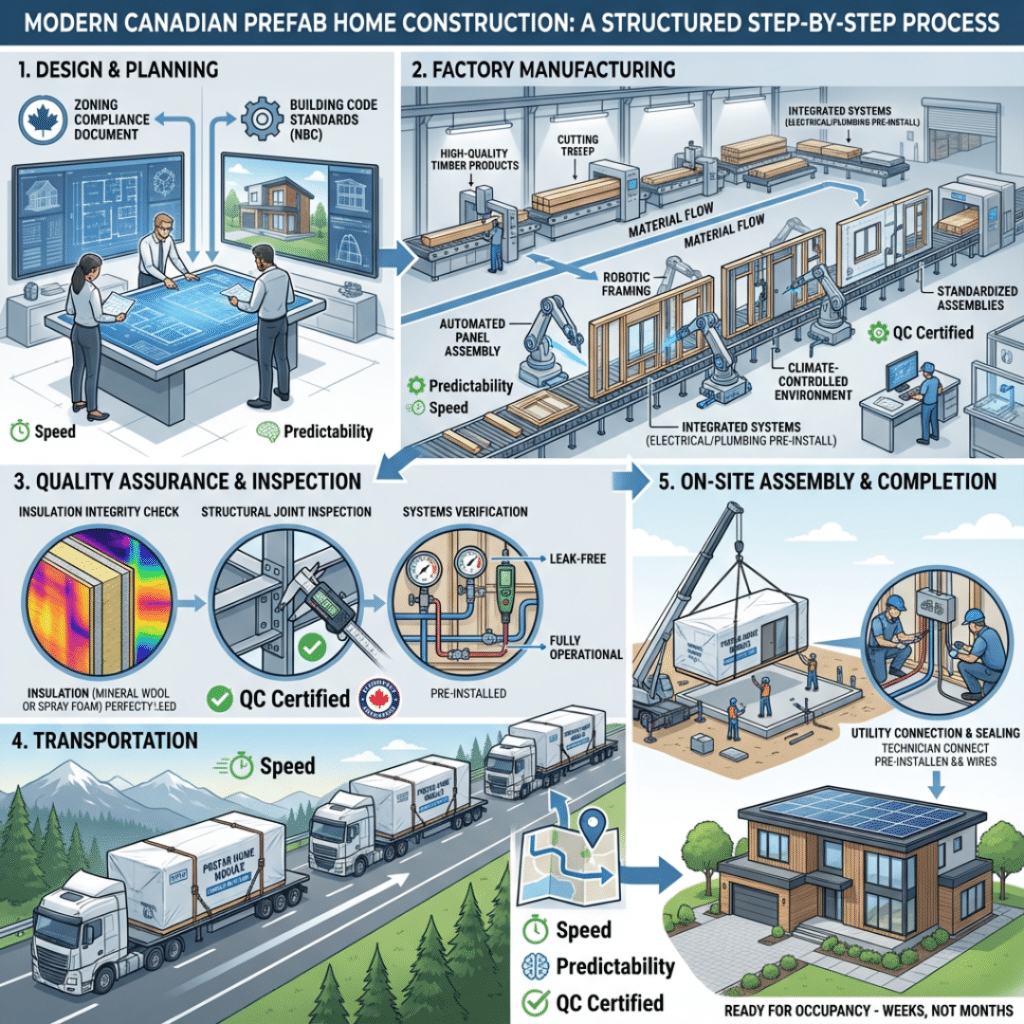
Depicted above is a step-by-step overview of how modern Canadian prefab homes are designed, built in a factory, and assembled on site.
According to the Canada Mortgage and Housing Corporation, prefabricated housing plays a growing role in addressing housing affordability, climate performance, and scalable residential construction across North America.
Unlike speculative developments, modern prefab homes emphasize net-zero housing, renewable energy, and quality control, creating a more predictable path to a beautiful home or long-term dream home.
Modern Canadian prefab homes are built off-site in a factory, then assembled on your land for faster timelines, better quality control, and energy-efficient performance.
What Are Modern Canadian Prefab Homes?
Modern Canadian prefab homes are factory-built houses designed with contemporary architecture and assembled on-site across Canada.
Modern Canadian prefab homes are precision-built in factories using modular construction, panelized systems, or hybrid prefab building methods, then transported to site for final assembly.
These homes are designed to meet provincial and national building code requirements while supporting modern lifestyles focused on efficiency, comfort, and living space optimization.
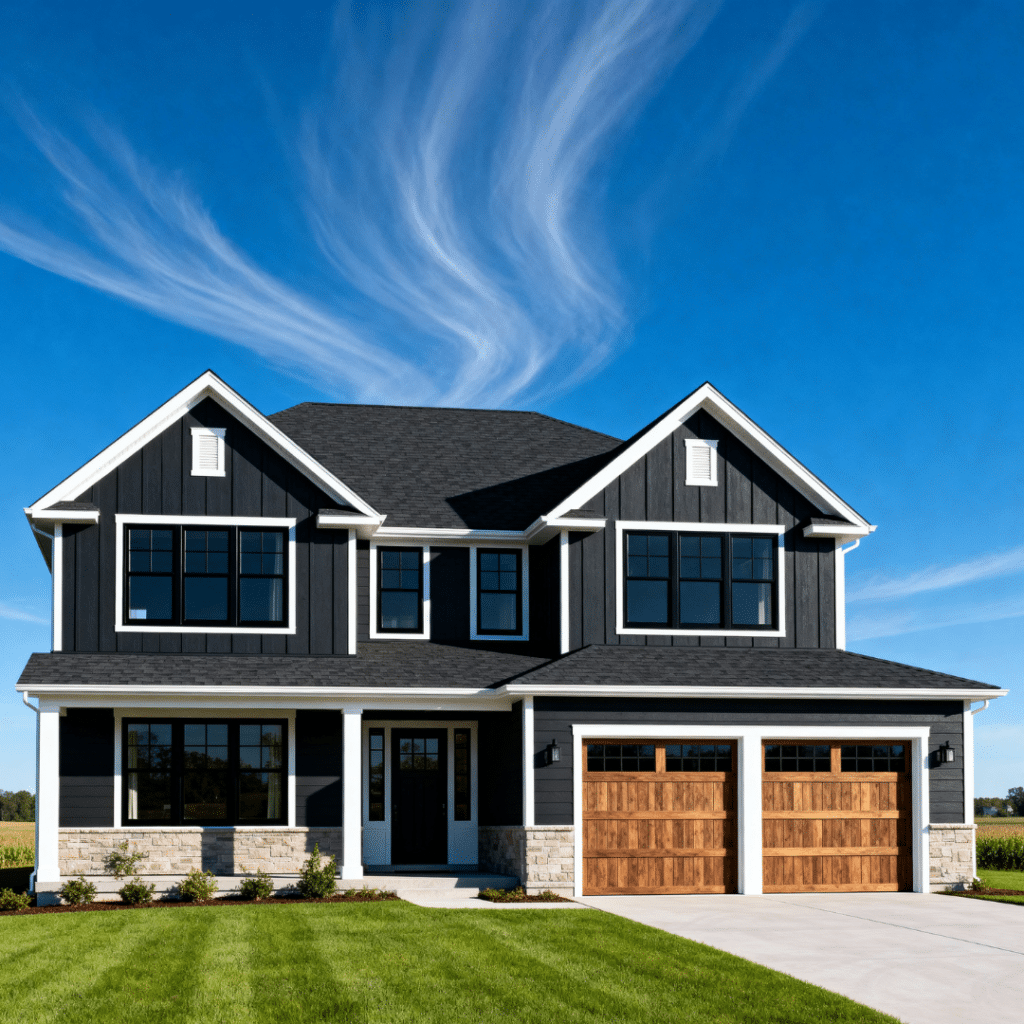
An example of a modern Canadian prefab home after factory construction and on-site assembly, featuring contemporary architecture and clean lines.
From a regulatory standpoint, prefab homes must comply with minimum standards such as the Ontario Building Code, including CSA A277 certification, which ensures factory inspection standards equivalent to site-built homes.
Oversight from the Ontario Ministry of Municipal Affairs and Housing confirms that factory-built and modular homes meet the same safety and performance expectations as traditional residential construction.
A modern prefab home is built indoors, inspected to Canadian standards, and finished on your property like a traditional new home.
How modern prefab homes differ from traditional construction
Traditional construction methods rely heavily on weather, on-site labor availability, and sequential scheduling.
In contrast, prefab homes are built in a controlled environment, which improves precision-built outcomes, protects building material quality, and ensures consistent interior finishing regardless of season.
According to Passive House Canada, off-site construction enables tighter building envelopes, improved airtightness, and higher energy performance.
These are key factors in creating efficient homes and most energy-conscious residential designs.
Importantly, this approach also supports passive house strategies that are difficult to execute reliably on open job sites.
Prefab construction shifts most of the work indoors, improving accuracy, speed, and energy performance.
Why modern prefab homes are growing in Canada
The growth of modern prefab homes reflects rising housing demand, affordability pressures, and evolving sustainability policies across Canada.
In provinces like British Columbia, prefab supports urban density goals, while in Alberta, it addresses harsh climate conditions and short building seasons.
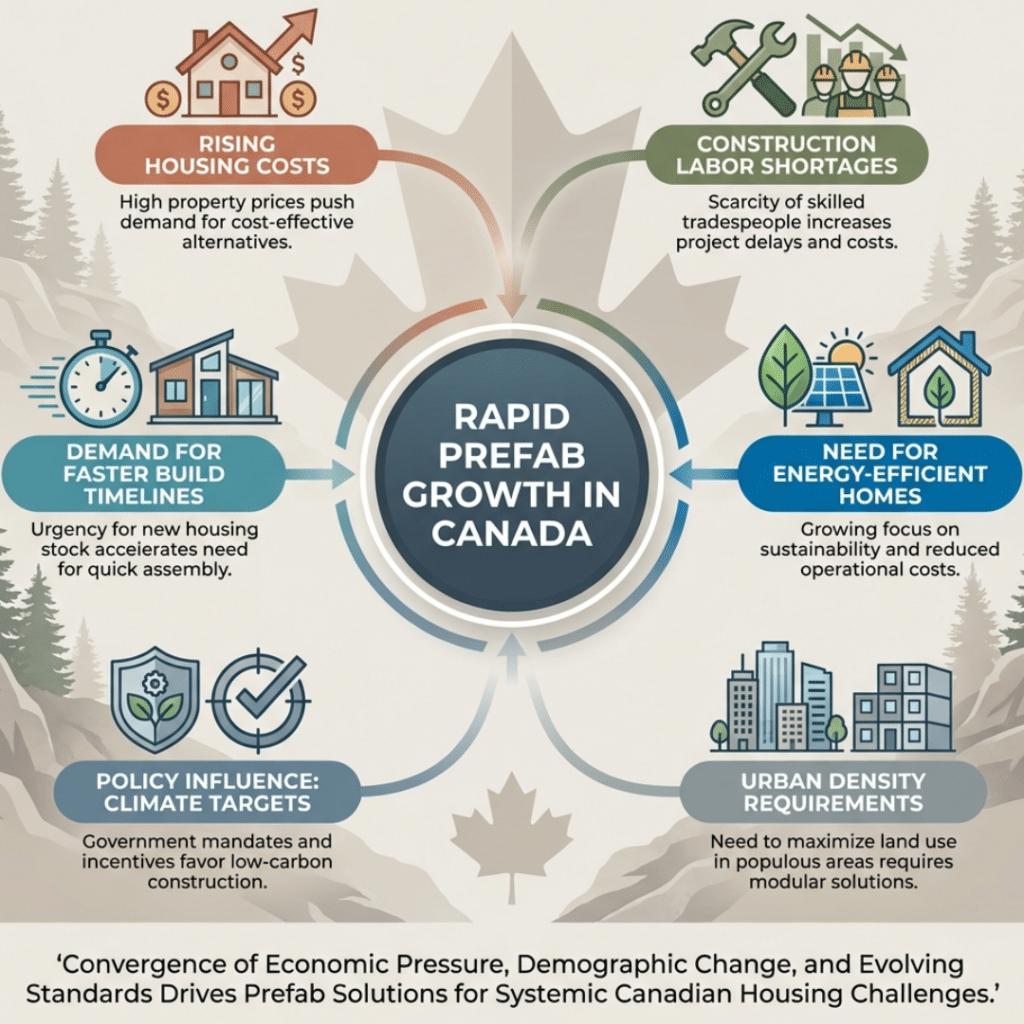
Above are key factors driving the growth of modern Canadian prefab homes, including housing demand, construction efficiency, and energy performance.
The National Building Code of Canada recognizes off-site construction as a viable method for achieving resilient, high-performance housing.
Importantly, prefab building also aligns with national objectives for net-zero housing, renewable energy integration, and reduced construction waste.
In general, prefab homes are growing in Canada because they’re faster to build, easier to control for quality, and adaptable to local climates.
Modern Canadian Prefab Homes Prices & Costs
Modern Canadian prefab homes typically cost between $200–$400 per square foot, depending on design, location, and finishes.
In Canada, modern prefab home pricing commonly ranges from $200 to $400 per square foot, influenced by home design, interior finishes, energy systems, and regional logistics rather than land value alone.
Costs reflect the level of customization, size of the living area, and performance features such as energy-efficient homes or net-zero housing readiness.
According to pricing insights referenced by the Canada Mortgage and Housing Corporation, prefab home costs vary by province due to transportation distances, labor markets, and climate requirements.
For example, projects near the City of Kawartha Lakes or within the Sturgeon Lake watershed may face different servicing and permitting costs than urban infill projects.
Most modern prefab homes in Canada cost between two hundred and four hundred dollars per square foot.
For buyers looking to compare specific models and configurations, see our modern prefab homes Canada price list.
What factors affect prefab home pricing in Canada
Prefab home pricing is shaped by several key variables:
Selection of natural materials versus engineered assemblies
Level of interior design and interior finishing
Integration of renewable energy systems
Transportation complexity to rural, coastal, or northern sites
Municipal zoning and building code requirements
The Ontario Ministry of Municipal Affairs and Housing notes that zoning compliance, servicing, and inspections can significantly affect total project cost, particularly for urban infill or laneway housing.
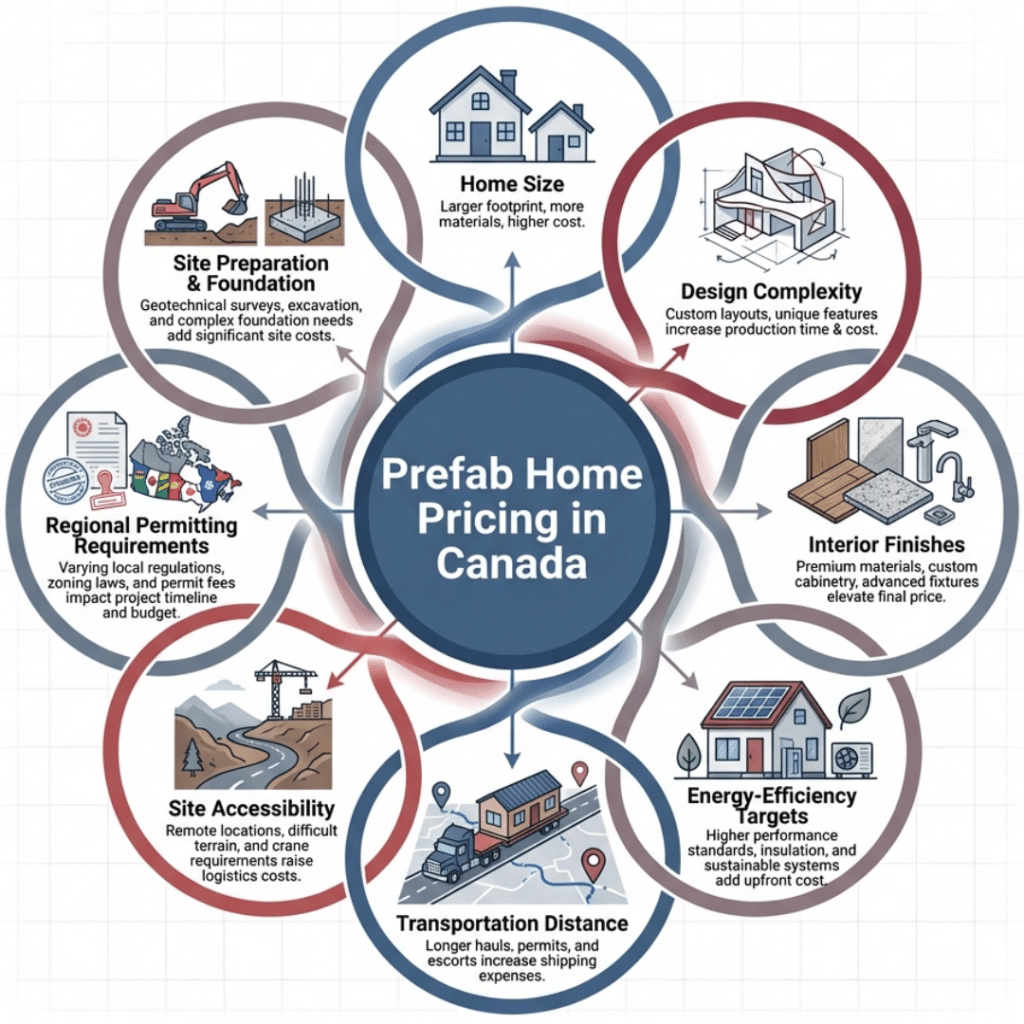
The main factors that influence modern Canadian prefab home pricing, from design choices and finishes to site conditions and regional requirements.
Financing considerations may involve regional institutions such as the Royal Bank of Canada, which typically evaluate prefab homes similarly to traditional new homes once the foundation and assembly stages are complete.
Prefabricated home pricing depends on design choices, energy features, and where the home is built.
Price ranges by home size and complexity
Smaller modern prefab homes emphasize efficiency and compact house plans.
In contrast, larger family homes focus on expanded living areas, natural light, and architectural features such as ceiling windows and clean lines.
Larger homes with advanced customization options and premium interior finishes naturally fall toward the higher end of the pricing range.
Across North America, prefab construction consistently reduces construction time while improving budget predictability.
While customization still affects cost, factory-built methods provide clearer pricing pathways than traditional construction methods.
Larger prefab homes cost more, but pricing is usually more predictable than traditional construction.
Modern Prefab Home Floor Plans & Design Styles
Modern Canadian prefab floor plans emphasize open layouts, natural light, and efficient use of space.
Modern Canadian prefab homes are defined by contemporary design, open-concept layouts, and carefully planned living space that maximizes functionality without excess square footage.
Floor plans often prioritize natural light, seamless indoor-outdoor connections, and clean circulation patterns that improve daily living and long-term adaptability.
Across Canada, these house plans are designed to perform well in different climates while maintaining high-performance standards for insulation, air sealing, and energy use.
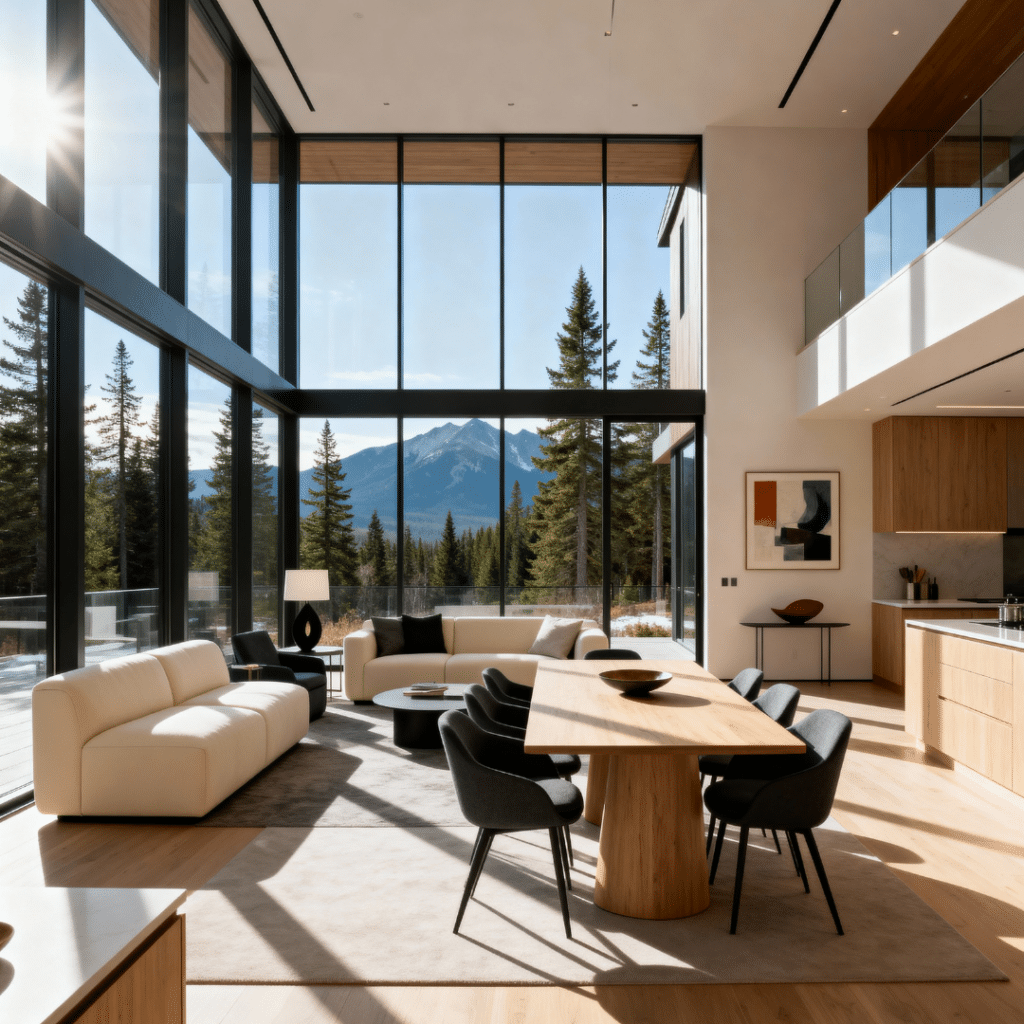
An open-concept interior in a modern Canadian prefab home, designed to maximize natural light and efficient use of space.
According to Passive House Canada, well-designed prefab floor plans make it easier to achieve airtight construction and consistent thermal performance.
Modern prefab floor plans are designed to feel open, bright, and efficient while meeting Canadian performance standards.
Popular modern prefab layouts in Canada
Common layouts include compact single-storey homes, multi-bedroom family homes, and flexible designs that support future expansion.
Many modern prefab homes feature combined kitchen, dining, and living area zones, along with large glazing systems and ceiling windows that enhance daylight and curb appeal.
In British Columbia, especially in urban regions like Vancouver and Victoria, prefab floor plans often focus on vertical efficiency, smaller footprints, and net-zero housing readiness.
This aligns with provincial sustainability goals and the BC Energy Step Code, which promotes energy-efficient construction and reduced emissions.
Popular prefab layouts balance modern design, efficient space planning, and long-term adaptability.
Custom vs pre-designed floor plans
Buyers typically choose between pre-designed models and fully customized floor plans.
Pre-designed options offer faster timelines and proven layouts, while custom plans allow greater flexibility in interior design, room configuration, and interior finishing selections.
According to the Ontario Building Code, both custom and pre-designed prefab homes must meet the same structural and safety standards, ensuring consistent quality regardless of layout choice.
This flexibility allows prefab homes to function as both entry-level housing and fully customized dream home solutions.
Prefab homes offer both ready-made plans and custom designs without compromising quality or code compliance.
Modern Canadian Prefab Homes for Sale
Modern prefab homes for sale in Canada are typically offered directly through builders rather than traditional real estate listings.
Unlike resale properties, modern prefab homes are not usually listed through conventional MLS systems.
Instead, they are offered as home packages that include design, manufacturing, and assembly, with pricing tied to specifications rather than market bidding.
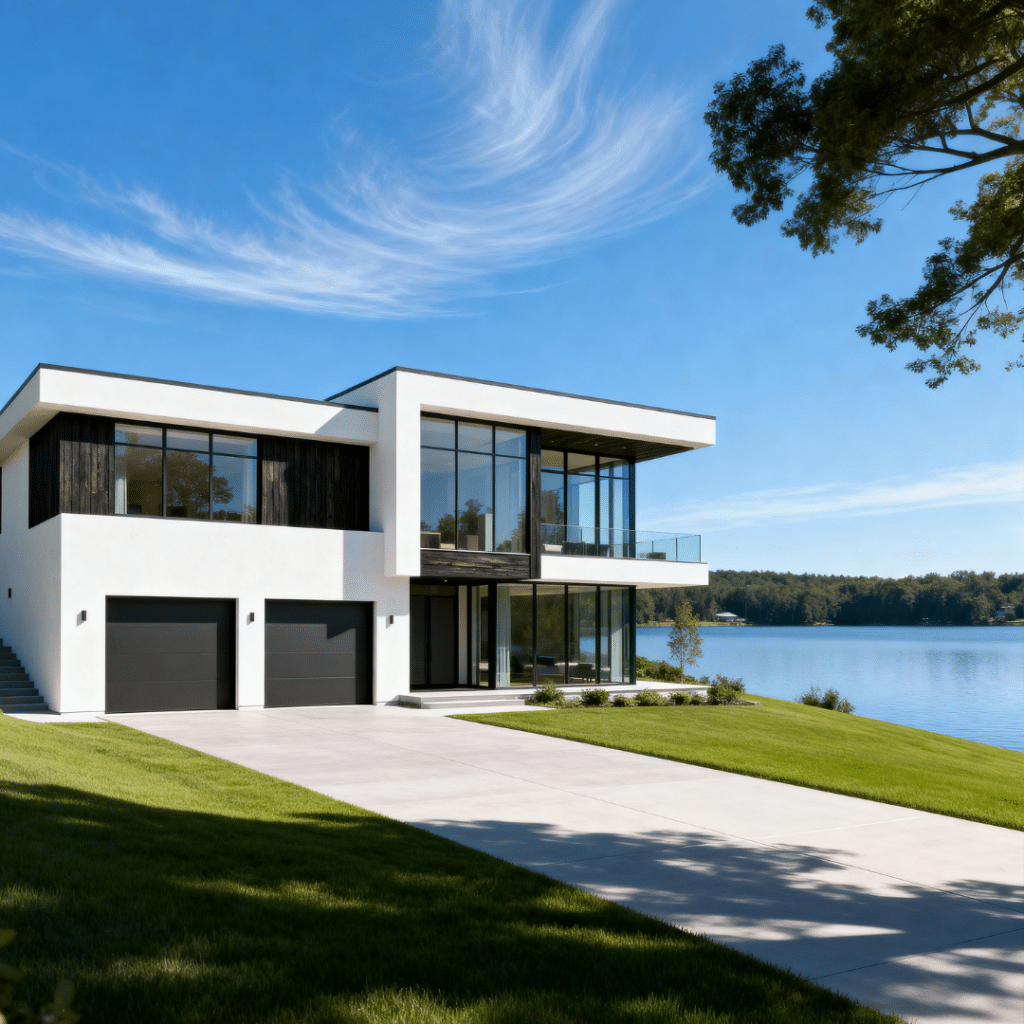
An example of a modern Canadian prefab home for sale through a builder-direct process, not a traditional real estate listing.
According to the Canada Mortgage and Housing Corporation, prefab homes are increasingly used as a solution for housing supply gaps, particularly where traditional construction cannot scale efficiently.
This model gives buyers clearer expectations around construction time, scope, and final cost.
Prefab homes for sale are purchased as a construction project, not a finished resale property.
How buying a prefab home differs from buying a resale home
Buying a prefab home is closer to managing a construction project than purchasing an existing house.
The process involves selecting a design, securing permits, preparing the site, and coordinating delivery and assembly.
In Ontario, prefab homes are commonly used for urban infill, garden suites, and laneway housing in cities such as Toronto and Ottawa.
Oversight from the Ontario Ministry of Municipal Affairs and Housing ensures that prefab homes meet zoning and planning requirements similar to site-built homes.
Buying prefab means planning ahead, but it also means more control over design and performance.
What “for sale” really means in prefab construction
When a prefab home is described as “for sale,” it typically refers to the availability of a specific design, model, or build slot rather than a completed structure.
Pricing usually covers the factory-built components, with site work, foundations, and services handled separately.
This approach is especially valuable in Northern and remote regions, where prefab homes can be transported by truck, rail, or barge, reducing on-site labor needs.
According to regional housing studies, this method improves accessibility and affordability for communities where traditional construction is impractical.
Prefab homes for sale are customizable builds delivered to your land, not pre-owned houses.
Why Choose a Modern Prefab Home in Canada?
Modern prefab homes offer faster build times, predictable pricing, and contemporary design tailored to Canadian climates.
Modern Canadian prefab homes are increasingly chosen because they reduce uncertainty in the home building process while delivering high quality, modern homes designed for regional conditions.
By shifting most work into a factory-built, controlled environment, prefab construction minimizes weather delays, labor disruptions, and material waste.
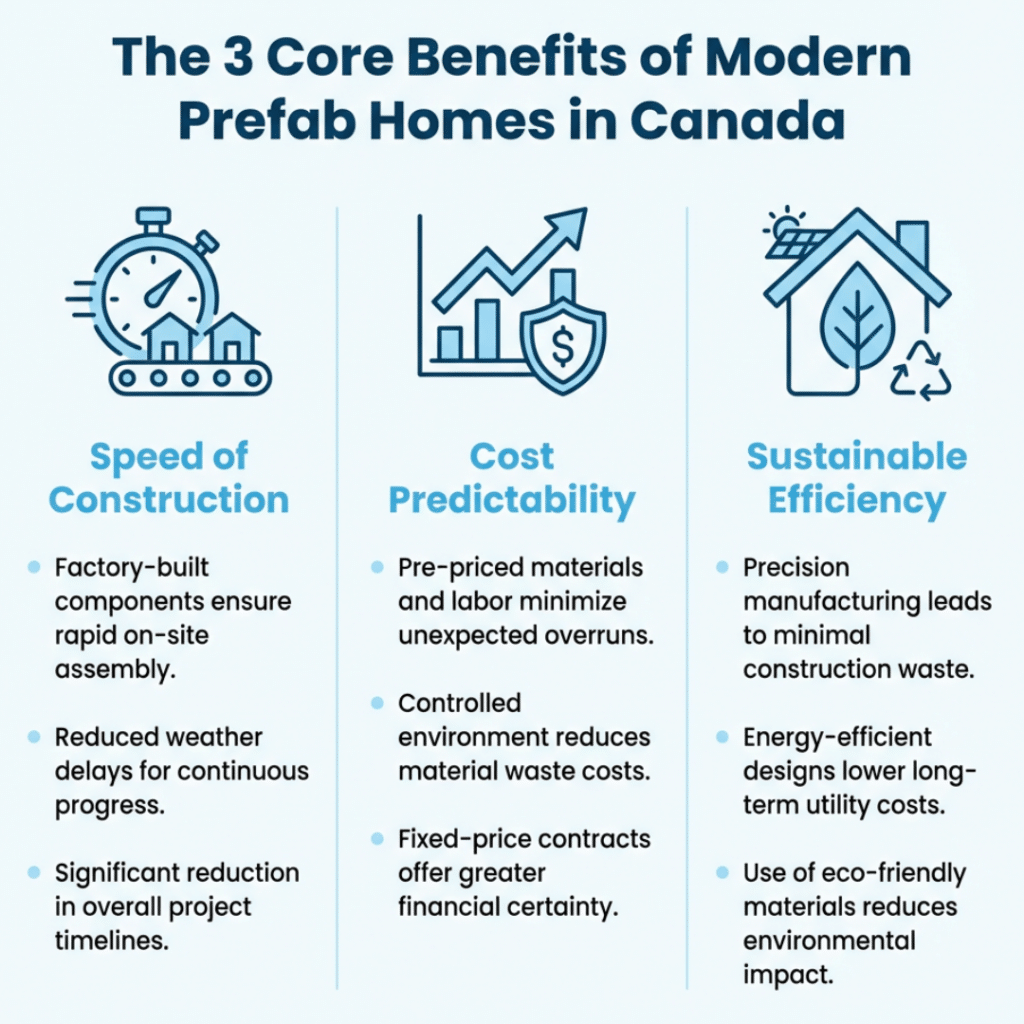
The three main benefits of modern Canadian prefab homes: faster construction timelines, more predictable pricing, and design tailored to Canadian climates.
According to the National Building Code of Canada, off-site construction supports consistent compliance with national performance standards, which is especially important in regions with extreme weather or short construction seasons.
Prefab homes are faster to build, easier to budget, and better suited to Canadian climates.
Energy efficiency and sustainability advantages
Modern prefab homes are designed to be among the most energy-efficient residential options available in North America.
High-performance wall assemblies, advanced air sealing, and precision-installed insulation systems allow prefab homes to outperform many traditional builds.
In British Columbia, particularly along the West Coast, prefab homes often align with net-zero housing targets and the BC Energy Step Code.
These designs are also emphasizing reduced energy demand and renewable energy integration.
According to Passive House Canada, factory-built construction improves airtightness and thermal consistency, both critical for energy-efficient homes.
Prefab homes make it easier to achieve net-zero housing and long-term energy savings.
Build timelines compared to traditional homes
One of the most practical benefits of modern prefab homes is reduced construction time.
While site preparation and permitting still follow local requirements, factory fabrication occurs simultaneously, shortening overall project timelines.
In Alberta, where harsh winters and wind exposure can limit on-site work, prefab homes with steel or hybrid frames and high R-value insulation reduce weather-related delays.
According to regional construction data, this approach meaningfully improves schedule reliability in climates with limited building windows.
Learn more about building prefab homes in harsh climates, including cold, remote, and weather-restricted regions.
Importantly, prefab construction shortens timelines by overlapping factory work with site preparation.
Regional experience anchors across Canada
Across Canada, regional approaches to prefabricated housing demonstrate how geography, climate, and policy shape modern prefab innovation.
In Ontario, prefab homes are increasingly used for urban infill, laneway suites, and compact smart homes in cities such as Toronto and Ottawa, supporting density and sustainable growth.
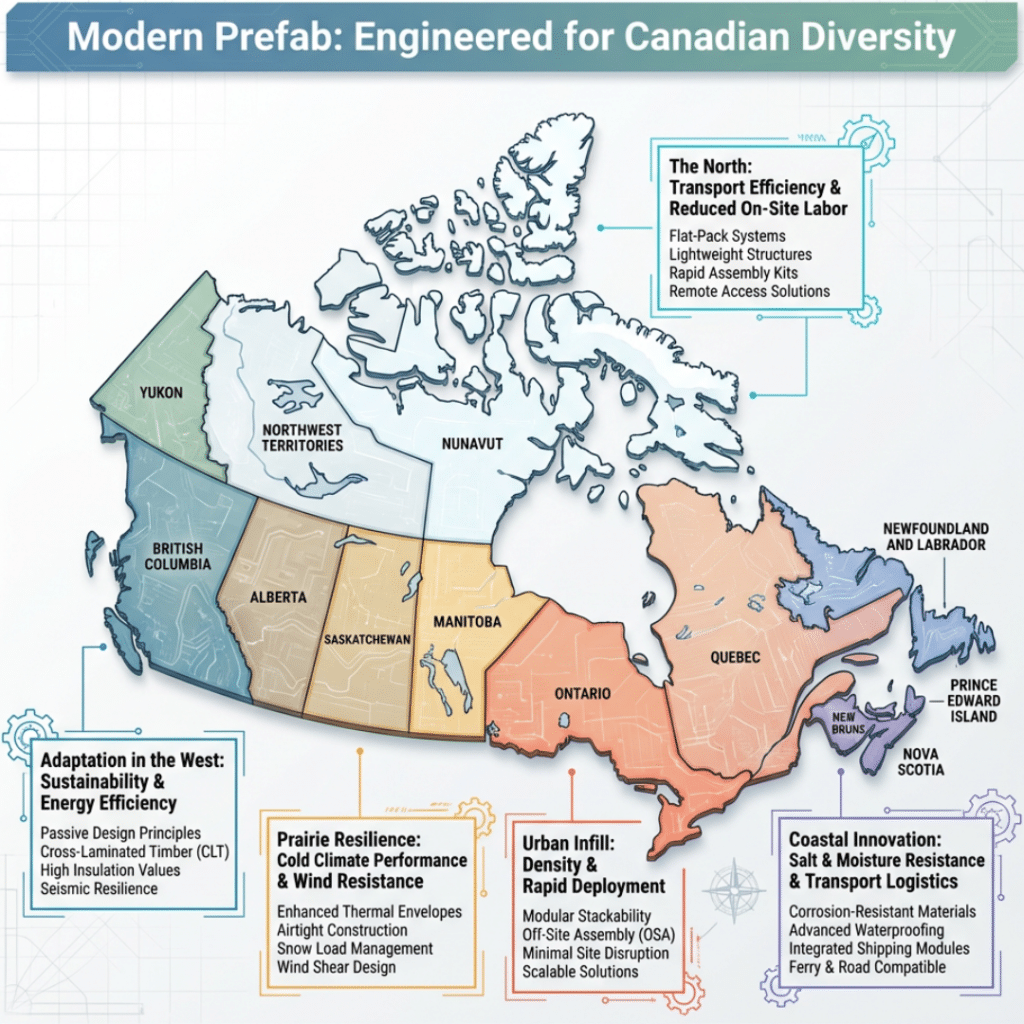
How modern Canadian prefab homes are adapted to different regions, climates, and housing needs across Canada.
In Quebec, Scandinavian-inspired home design, natural wood materials, and advanced insulation systems reflect a cultural emphasis on craftsmanship and cold-weather performance.
To contrast, in Atlantic Canada, prefab homes emphasize coastal durability, moisture control, and resistance to salt air, supporting resilient housing in provinces such as Nova Scotia and New Brunswick.
Prefab homes adapt to regional needs while maintaining consistent quality nationwide.
Modern Prefab Homes by My Own Cottage
My Own Cottage designs and builds modern prefab homes tailored to Canadian zoning, climate, and lifestyle needs.
My Own Cottage approaches modern prefab homes as precision-built housing solutions that balance contemporary design, performance, and customization.
Homes are developed to comply with provincial zoning rules and the Ontario Building Code, while supporting efficient layouts, natural light, and durable materials.
By emphasizing quality control, modern modular homes, and refined interior finishes, My Own Cottage positions prefab housing as a long-term solution for families, couples, and individuals.
Anyone seeking a beautiful home rather than a temporary structure can find a wide range of options available with modern prefab designs.
Modern prefab homes by My Own Cottage are designed for Canadian conditions and long-term living.
Customization options and build process
Customization plays a central role in modern prefab homes. Buyers can typically select from a wide range of house plans, exterior finishes, interior design elements, and energy systems.
This allows each home to reflect personal preferences while maintaining the efficiencies of prefab building.
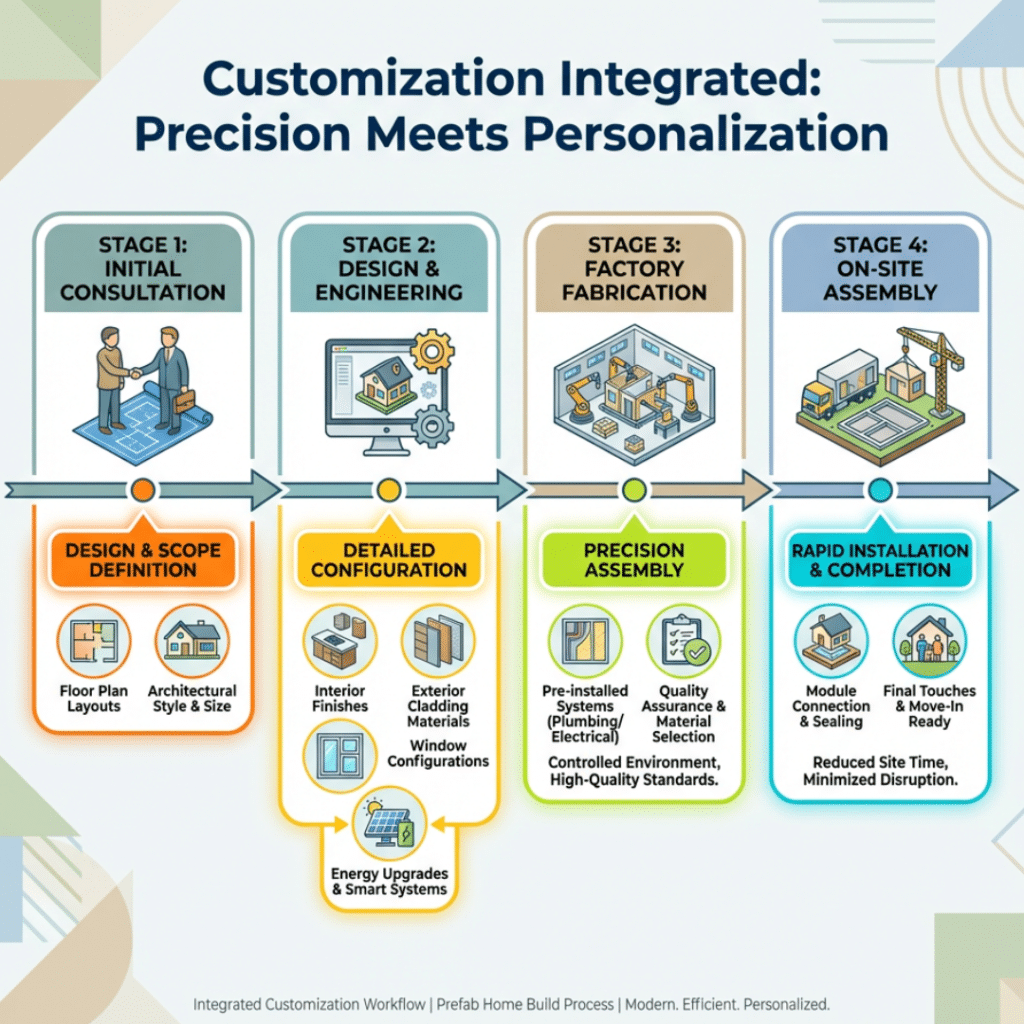
How customization options are integrated into the build process for modern Canadian prefab homes, from consultation through factory construction and on-site assembly.
According to guidance from the Ontario Ministry of Municipal Affairs and Housing, customization does not reduce regulatory compliance.
For reference, all custom prefab homes must meet the same inspection and performance standards as traditional homes.
Prefab customization combines personal design choices with factory precision.
What to expect during a consultation
A free consultation for a modern prefab home typically focuses on site conditions, zoning constraints, design preferences, and budget alignment.
Topics often include access requirements, servicing, building material choices, and how the prefab building system will be delivered and assembled.
Financial discussions may also reference lenders familiar with prefab construction, such as Scotia Bank, which assess prefab projects similarly to other new home builds once foundations and contracts are in place.
Importantly, a prefab consultation helps align design, site, and budget before construction begins.
Frequently Asked Questions About Modern Canadian Prefab Homes
What are the top Canadian companies specializing in modern prefab homes?
Top Canadian prefab companies focus on modern design, code compliance, and climate performance. The most reliable providers offer transparent pricing, customization, and full project guidance. My Own Cottage stands out by combining modern prefab design with Canadian zoning knowledge, energy-efficient construction, and end-to-end client support.
Which prefab home builders in Canada offer customizable modern designs?
Many Canadian prefab builders offer limited customization, but true flexibility varies. My Own Cottage provides customizable modern prefab homes that allow changes to layouts, interior finishes, and performance features while maintaining factory quality control and compliance with Canadian building codes.
Where can I find price estimates for modern prefab homes in Canada?
Price estimates for modern Canadian prefab homes are typically available directly from builders, not real estate listings. My Own Cottage provides clear, upfront pricing ranges during consultation, helping buyers understand base costs, customization options, and site-related variables before committing.
How long does it typically take to construct a modern prefab home in Canada?
Most modern prefab homes in Canada take 6–12 months from design to completion. Factory construction happens alongside site preparation, reducing delays. My Own Cottage streamlines this process by coordinating design, permitting, fabrication, and installation under one project timeline.
What are the benefits of choosing prefab homes over traditional homes in Canada?
Prefab homes offer faster build times, improved quality control, predictable pricing, and better energy performance. Because construction happens in a controlled environment, prefab homes often outperform traditional builds in consistency and efficiency. My Own Cottage leverages these advantages to deliver reliable, high-quality homes.
Are there Canadian prefab home manufacturers that focus on sustainable materials?
Yes. Many modern prefab builders emphasize sustainability through efficient wall systems, reduced waste, and renewable-ready designs. My Own Cottage prioritizes energy-efficient construction, durable materials, and performance-focused design suited to Canada’s climate and long-term environmental goals.
Which prefab home models are best suited for Canadian climates?
The best prefab homes for Canada feature high insulation values, airtight construction, and climate-adapted assemblies. My Own Cottage designs modern prefab homes specifically for Canadian weather conditions, including cold winters, temperature swings, and regional energy-efficiency requirements.
How do I start the process of ordering a modern prefab home in Canada?
The process usually begins with a consultation to review your site, budget, and design goals. My Own Cottage guides clients through zoning checks, design selection, pricing clarity, and next steps, making the process structured and easy to understand from the start.
Can I get financing options through Canadian prefab home companies?
Some prefab builders coordinate with lenders familiar with factory-built homes. My Own Cottage helps clients understand financing pathways and works with Canadian institutions that recognize prefab homes as permanent, code-compliant residential construction once site work begins.
Do any Canadian prefab home companies offer turnkey solutions?
Yes, but turnkey coverage varies. My Own Cottage offers a streamlined, end-to-end approach that can include design coordination, fabrication, delivery, and on-site assembly, reducing the complexity buyers often face when managing multiple contractors.
What permits are required to install a prefab home in Canadian provinces?
Prefab homes require the same permits as traditional homes, including zoning approval, building permits, and inspections. My Own Cottage designs homes to meet provincial and municipal requirements and helps clients understand permitting steps early in the planning process.
Which Canadian prefab home suppliers offer off-grid or energy-efficient options?
Many modern prefab builders support energy-efficient and off-grid-ready designs. My Own Cottage integrates high-performance building envelopes and systems that support net-zero goals, renewable energy integration, and long-term operating efficiency.
How does shipping and installation work for prefab homes in remote Canadian areas?
Prefab homes are transported as modules or panels by truck, rail, or barge, depending on location. My Own Cottage plans logistics and installation sequencing to reduce on-site labor and adapt projects for rural, remote, or hard-to-access Canadian sites.
What warranties are typically offered by prefab home builders in Canada?
Warranty coverage varies by builder and component. My Own Cottage provides clear warranty information covering structural systems and workmanship, giving buyers confidence that their modern prefab home is supported beyond completion.
Can I customize the interior finishes when ordering a prefab home in Canada?
Yes. Interior finishes such as flooring, cabinetry, fixtures, and layouts are commonly customizable. My Own Cottage allows clients to personalize interiors while maintaining the efficiencies and quality controls of factory-built construction.
What steps should I take to compare prefab home builders in Canada?
When comparing builders, review design flexibility, pricing transparency, code compliance, experience, and client support. My Own Cottage differentiates itself by offering modern design, Canadian regulatory expertise, and a clear consultation-led process that reduces uncertainty.
How do Canadian prefab home companies handle post-sale support and maintenance?
Post-sale support varies widely. My Own Cottage remains available after completion to address questions, documentation, and warranty-related needs, providing long-term reassurance that extends beyond project delivery.
Bringing Modern Canadian Prefab Homes Together
Modern Canadian prefab homes reflect regional innovation shaped by climate, policy, and lifestyle needs.
Across Canada, modern prefab homes have evolved into a high quality, precision-built housing solution that responds directly to regional conditions while maintaining consistent quality nationwide.
From British Columbia’s sustainability-driven designs to Ontario’s urban infill solutions, prefab housing demonstrates how modular construction adapts to geography, policy, and community needs.
In Quebec, modern prefab homes reflect design excellence through natural materials, Scandinavian-inspired layouts, and high-performance thermal envelopes suited for cold winters.
In Atlantic Canada, including provinces such as New Brunswick, prefab homes emphasize coastal durability, moisture control, and long-term resilience against wind and salt air.
In Northern and remote regions, factory-built housing improves accessibility by reducing on-site labor and enabling transport by road, rail, or barge.
Modern prefab homes across Canada show how regional needs and national housing goals align.
How modern prefab homes support affordability, sustainability, and long-term value
Modern Canadian prefab homes support affordability not by sacrificing quality, but by improving efficiency across the entire building process.
Factory production reduces waste, shortens construction time, and enables tighter cost control, which is especially valuable for families planning a long-term construction project.
From an environmental perspective, prefab homes are well suited for renewable energy integration, net-zero housing, and energy-efficient homes that reduce operating costs over time.
According to national housing data, these efficiencies meaningfully improve lifecycle value compared to many traditional builds.
Prefab homes balance upfront investment with long-term performance and cost stability.
Why modern prefab homes are a smart choice for today’s home buyers
For buyers seeking a dream home with modern design, predictable outcomes, and strong performance, prefab homes offer a compelling alternative to traditional construction.
Clean lines, thoughtful interior design, abundant natural light, and durable materials combine to create beautiful homes that feel contemporary without being experimental.
Whether the goal is a compact urban dwelling, a family home, or a rural retreat, modern prefab homes provide a wide selection of layouts.
Moreover, they also offer a wide range of customization options while also maintaining the efficiencies of factory-built production.
Modern prefab homes offer modern living without the uncertainty of traditional construction.
Take the Next Step Toward Your Modern Prefab Home
Booking a consultation is the best way to explore design, pricing, and site readiness.
A consultation helps clarify how modern Canadian prefab homes can work for your specific property, lifestyle, and budget.
Topics typically include zoning considerations, site access, house plans, customization options, and how the prefab building system integrates with local requirements.
For buyers exploring modern Canadian prefab homes, a free consultation provides clarity before commitment.
This process also helps ensure that design, performance, and cost expectations are aligned from the beginning.
Booking a consultation with My Own Cottage is the first step toward turning a prefab concept into a finished home.
🧑💼 Request a Free Consultation
📲 Call Us Directly: (705) 345-9337
🏘️ View Our Design Catalogue
✅ Ontario-Built | ⚡ Energy-Efficient | 🏡 Fully Customizable | 🚚 Fast Delivery
Alternatively, for your convenience, you can also simply fill out the contact form below and we’ll get back to you soon! 👇
Contact Us
We usually respond within 24 hours!
- Comprehensive Warranty
- Best Price Guarantee
- Exceptional Service