Are prefab homes cheaper than traditional homes in Canada?
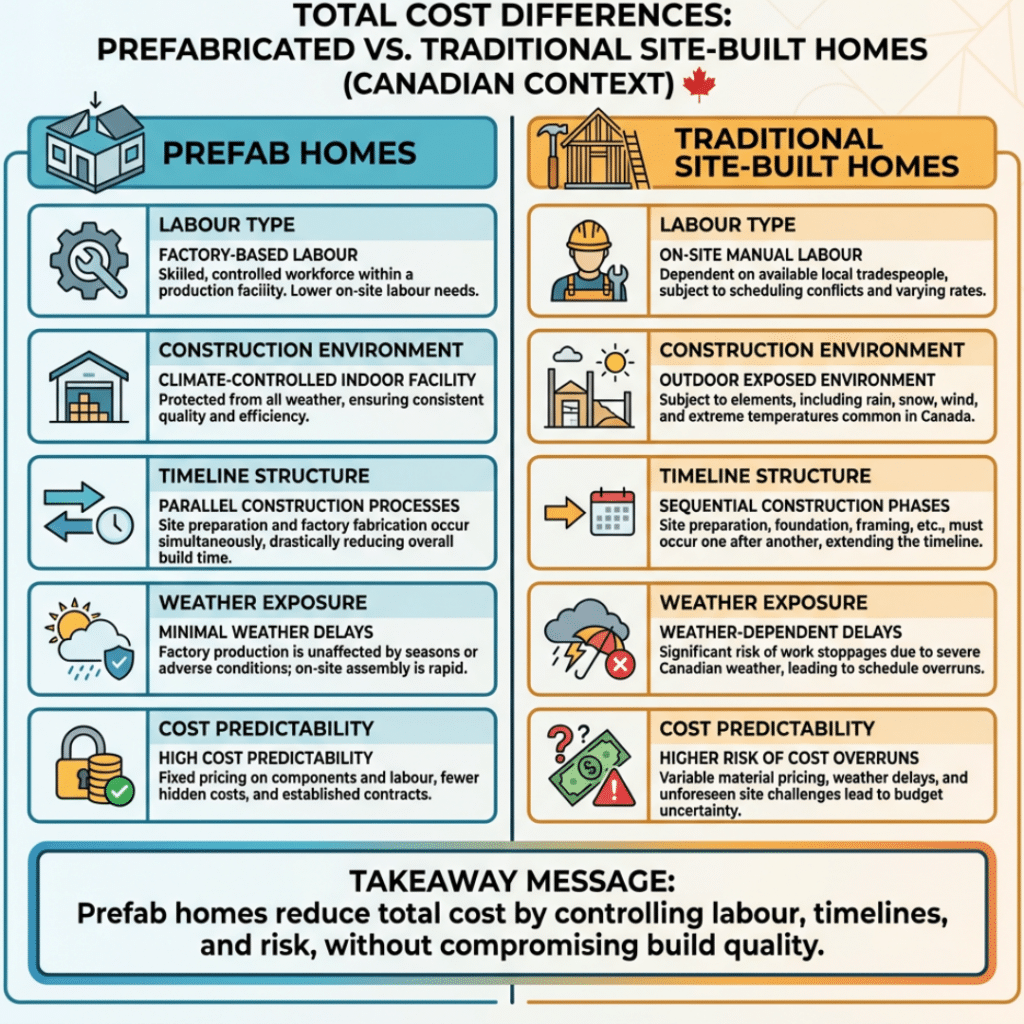
Yes, prefab homes are generally cheaper than traditional homes in Canada when total project cost is considered. Factory-built construction reduces labour overruns, weather delays, and material waste, which often makes prefab homes more cost-efficient overall. Builders like My Own Cottage further improve affordability through fixed pricing and streamlined delivery.
What is the average cost of a prefab home in Canada compared to a traditional home?
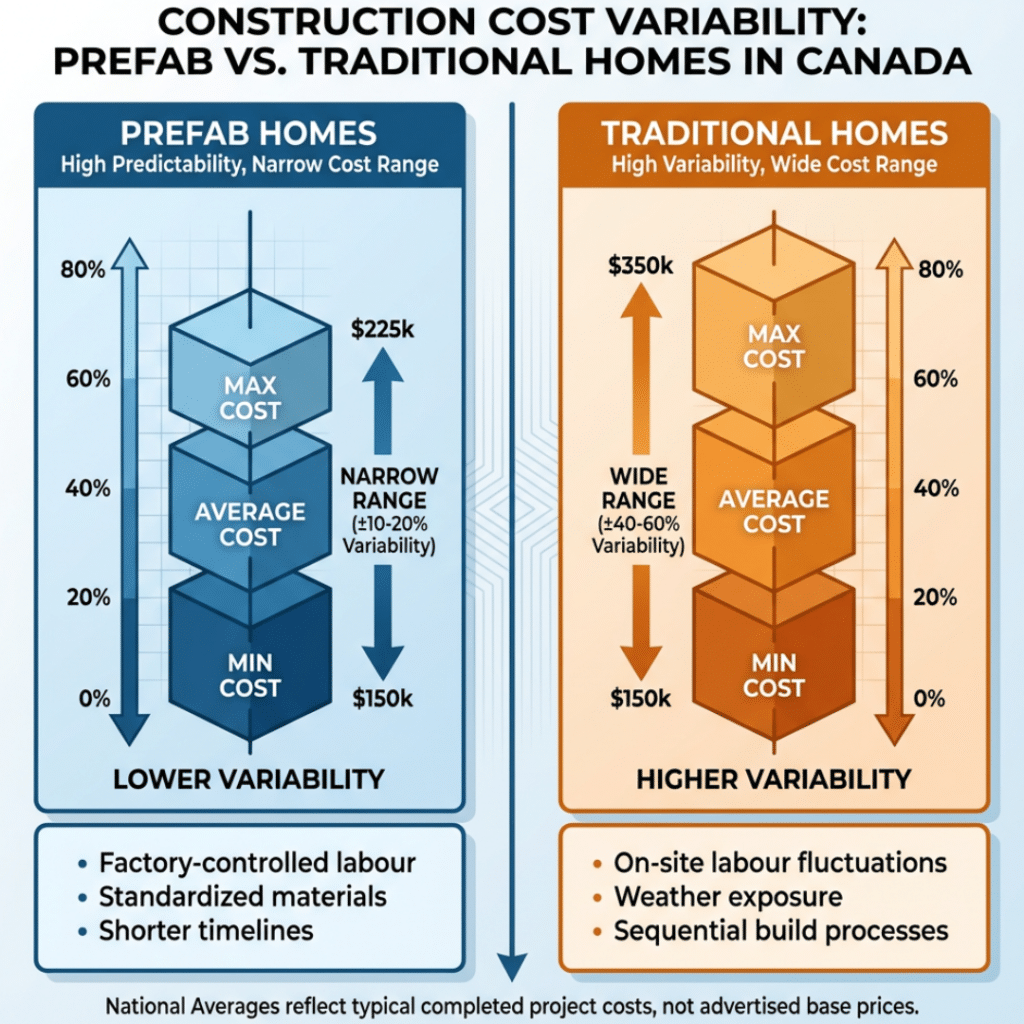
On average, prefab homes in Canada cost less at completion than traditional site-built homes. While base prices may appear similar, traditional homes frequently exceed initial estimates due to labour escalation and delays. Prefab builders such as My Own Cottage help clients understand total cost upfront, not just starting price.
Why do prefab homes cost less than traditional homes?
Prefab homes cost less because most construction occurs in a controlled factory environment. This reduces labour inefficiencies, minimizes material waste, and shortens timelines compared to on-site building. The result is greater cost certainty and fewer surprise expenses for homeowners.
Is a prefab home worth the cost in Canada?
Yes, a prefab home is often worth the cost in Canada, especially for buyers who value predictability and long-term value. Faster construction, lower risk of overruns, and strong energy performance make prefab homes a smart financial choice. Companies like My Own Cottage design homes specifically for Canadian climates and codes, increasing long-term return.
Do prefab homes save money long term compared to traditional homes?
Yes, prefab homes often save money over time due to lower energy use and reduced maintenance. High-performance building envelopes and precision construction improve durability and efficiency. Over decades of ownership, these savings can be significant compared to conventional homes.
What makes prefab homes more cost-efficient than traditional homes?
Prefab homes are more cost-efficient because they use standardized designs and repeatable processes. This allows builders to control labour, materials, and scheduling more effectively. With an experienced prefab builder like My Own Cottage, efficiency gains are passed directly to the homeowner.
How does factory construction reduce the cost of prefab homes?
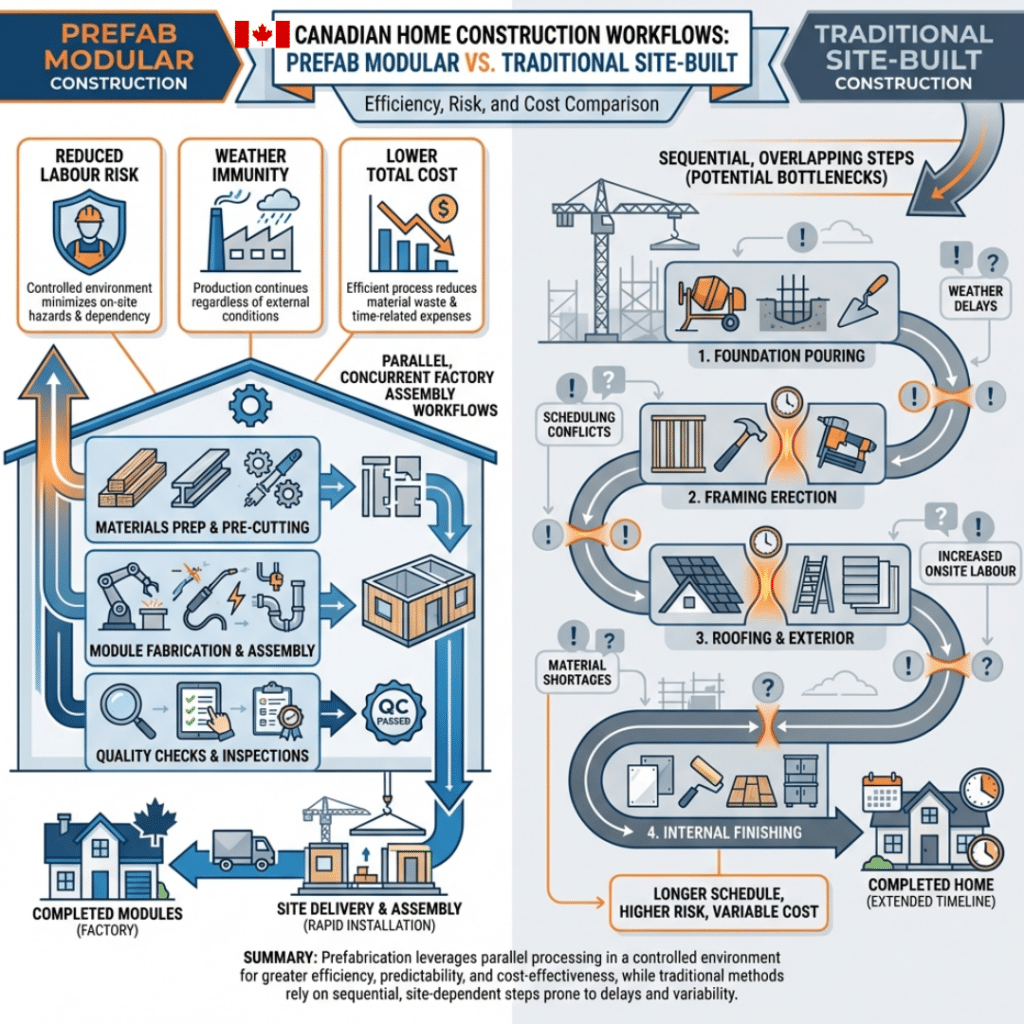
Factory construction reduces costs by eliminating weather delays and enabling consistent quality control. Trades work in parallel rather than sequentially, which shortens timelines and lowers labour hours. This efficiency is a major reason prefab homes outperform traditional builds on cost reliability.
How do labour costs differ between prefab and traditional homes in Canada?
Labour costs are typically lower and more stable for prefab homes because work is centralized in factories. Traditional homes rely on multiple on-site trades, each subject to regional labour shortages and scheduling conflicts. Prefab construction reduces exposure to these risks.
How do construction timelines affect total home cost?
Shorter construction timelines reduce financing, carrying, and supervision costs. Prefab homes are completed faster because site work and home construction happen simultaneously. Traditional homes take longer, increasing the likelihood of cost escalation.
Should I build a prefab home or a traditional home in Canada?
A prefab home is usually the better choice if you want predictable pricing, faster completion, and lower risk. Traditional homes may suit highly custom or self-managed projects but come with greater cost uncertainty. My Own Cottage helps homeowners determine the right path based on budget, site, and goals.
What hidden costs exist with traditional home construction?
Traditional homes often incur hidden costs such as weather delays, subcontractor overruns, material substitutions, and extended financing. These expenses rarely appear in initial quotes but significantly affect final price. Prefab homes minimize these risks through upfront planning.
Are prefab homes more predictable in cost than traditional homes?
Yes, prefab homes are far more predictable in cost than traditional homes. Fixed-price contracts and controlled production environments reduce surprises. This predictability is a major reason homeowners choose experienced prefab builders like My Own Cottage.
Is financing different for prefab homes compared to traditional homes?
Financing is similar, but prefab homes often qualify for smoother construction mortgage draws due to shorter timelines. Lenders view standardized prefab projects as lower risk. This can reduce interim interest costs and delays.
Prefab vs traditional homes: which costs less in Canada?
In most cases, prefab homes cost less in Canada when total project costs are compared. The difference becomes more pronounced in high-labour-cost regions like Ontario and British Columbia. Prefab construction consistently delivers better cost control.
How much faster are prefab homes compared to traditional homes?
Prefab homes are typically completed months faster than traditional homes. Factory production runs concurrently with site preparation, compressing the overall schedule. Faster delivery directly lowers total cost.
Do small prefab homes cost less than small traditional homes?
Yes, small prefab homes often cost significantly less than small traditional homes. Fixed construction costs scale more efficiently in prefab builds, while traditional homes retain many of the same overhead expenses regardless of size.
Are modern prefab homes more expensive than traditional homes?
Modern prefab homes may appear more expensive upfront, but they often include higher-quality materials and better energy performance. When long-term costs are considered, modern prefab homes frequently offer better overall value.
Does the cost difference between prefab and traditional homes vary by province?
Yes, the cost gap varies by province. Prefab homes offer the greatest savings in regions with high labour costs and strong housing demand. Builders like My Own Cottage account for regional factors when pricing projects.
Are prefab homes cheaper in Ontario or British Columbia?
Prefab homes are often especially cost-effective in Ontario and British Columbia due to labour shortages and housing pressure. Faster timelines and reduced labour exposure make prefab construction particularly advantageous in these provinces.
How do Canadian building codes affect prefab home costs?
Prefab homes must meet the same building codes as traditional homes but often achieve compliance more efficiently. Factory inspections and pre-certified designs reduce delays and rework. This lowers regulatory-related costs.
Are prefab homes better suited for Canada’s climate?
Yes, prefab homes are well suited for Canada’s climate. Factory-built construction improves insulation quality and airtightness, enhancing performance in cold and variable weather. My Own Cottage designs homes specifically for Canadian conditions.
When does it make more sense to choose a prefab home?
Prefab homes make the most sense when budget certainty, speed, and long-term efficiency matter. They are ideal for primary residences, cottages, and smaller homes. Many Canadian homeowners choose prefab to reduce financial risk.
Who should choose a traditional home instead of prefab?
Traditional homes may suit buyers who want highly custom designs or plan to manage construction themselves. However, these projects typically involve greater cost uncertainty and longer timelines.
What is the most cost-effective way to build a home in Canada?
For most homeowners, prefab construction is the most cost-effective way to build in Canada. It offers predictable pricing, faster delivery, and strong long-term value. Working with a specialized builder like My Own Cottage further improves outcomes.
What should I consider before choosing prefab or traditional construction?
Before choosing, consider your budget flexibility, timeline, site conditions, and long-term goals. Understanding total cost—not just base price—is critical. A consultation with My Own Cottage can help clarify which option fits your project best.