Do you need a permit to build a boathouse in Kawartha Lakes?
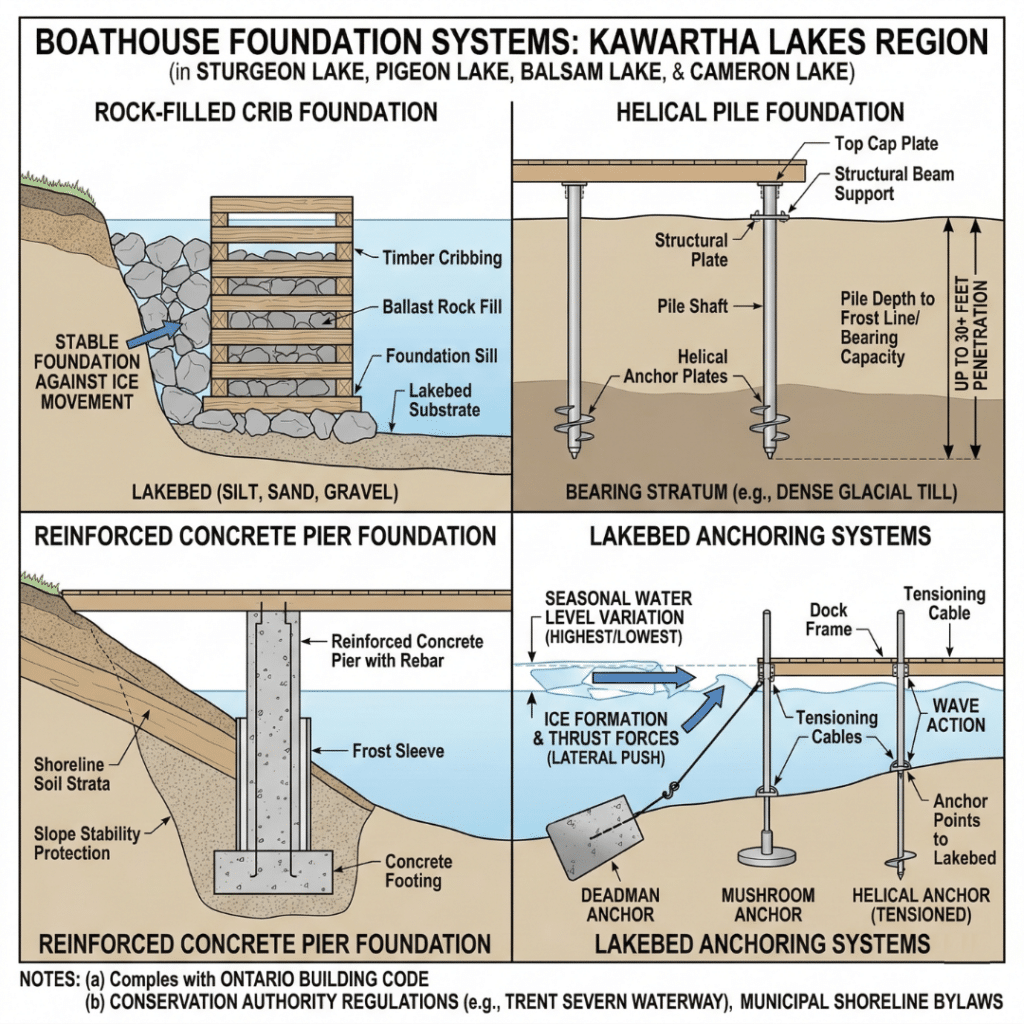
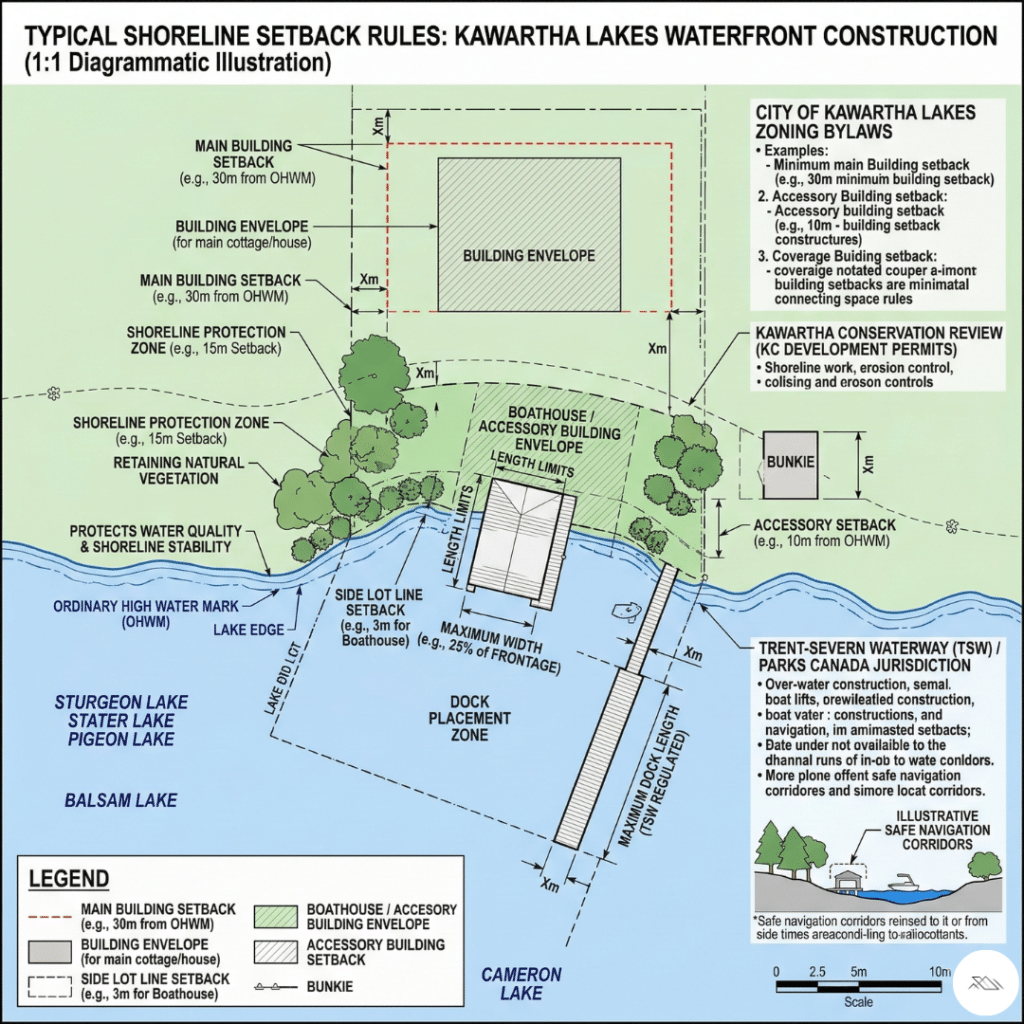
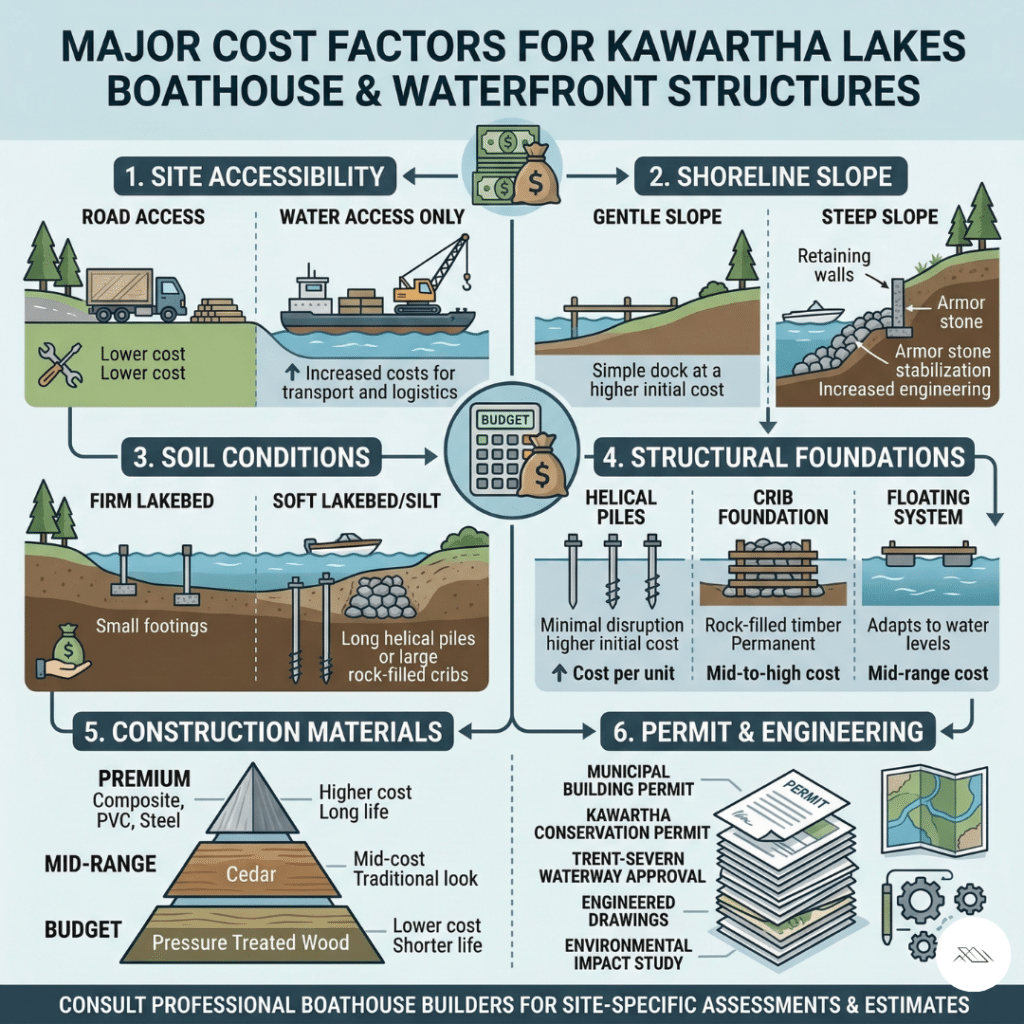
Yes. Most boathouse construction projects in the City of Kawartha Lakes require municipal building permits and must comply with local zoning bylaws and shoreline regulations. Waterfront structures may also require review from Kawartha Conservation or other regulatory authorities depending on whether the property falls within a regulated shoreline, floodplain, or environmental protection area.
Are docks regulated in Kawartha Lakes?
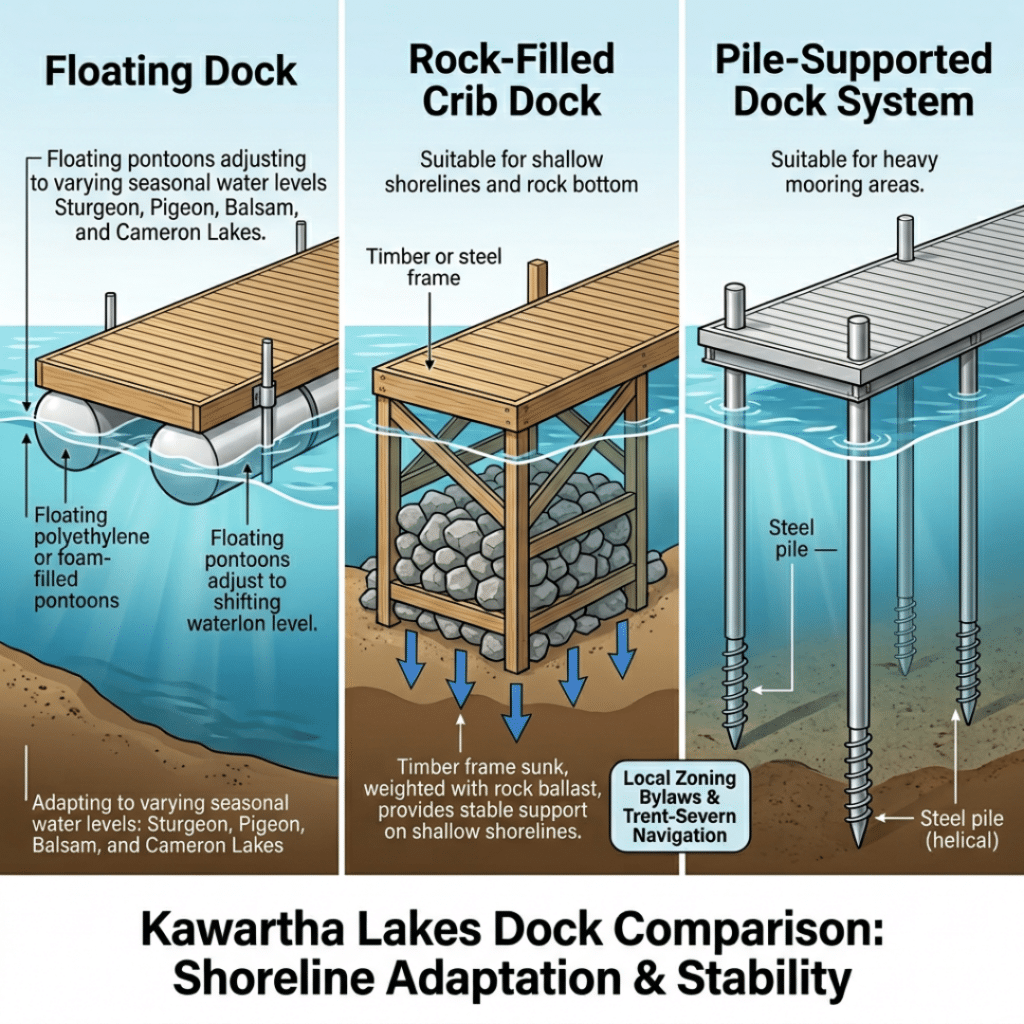
Yes. Dock construction in Kawartha Lakes is regulated through municipal bylaws and may also be influenced by navigation rules associated with the Trent-Severn Waterway, which is managed by Parks Canada. Permits may be required if dock structures extend beyond typical shoreline limits or involve shoreline grading, retaining walls, or structural foundations.
Can you build a bunkie on a waterfront property in Kawartha Lakes?
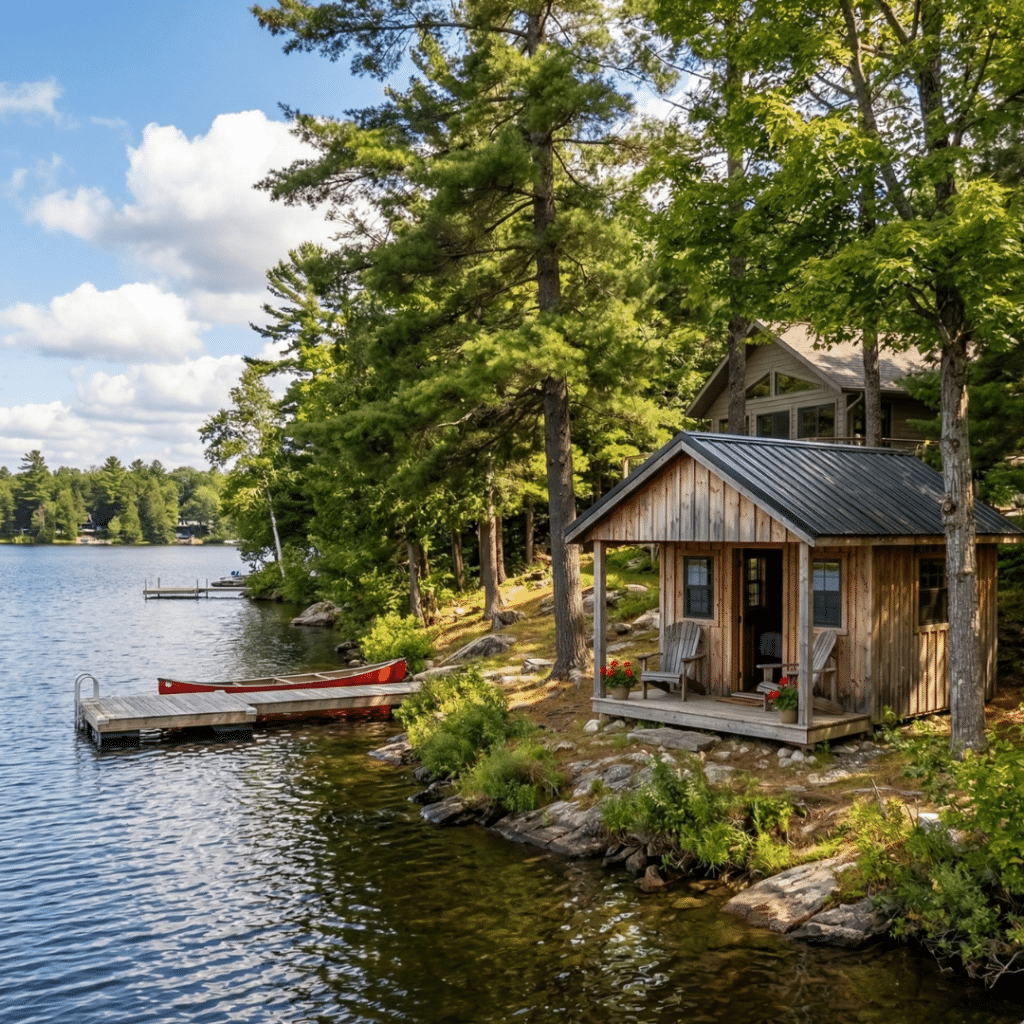
In many cases, bunkies are permitted as accessory structures on waterfront properties in Kawartha Lakes. However, they must comply with zoning bylaws that regulate building size, shoreline setbacks, and permitted uses, and they typically cannot include full plumbing or permanent kitchens unless additional approvals are obtained.
How large can a boathouse be in Ontario?
Boathouse size limits vary depending on municipal zoning bylaws and shoreline classifications. In Kawartha Lakes, restrictions may apply to the building footprint, structure height, and distance from the shoreline to protect natural waterfront environments and maintain safe navigation corridors.
Do waterfront structures require conservation approval?
Some waterfront construction projects require review from Kawartha Conservation if the property lies within a regulated area such as a floodplain, wetland, or shoreline hazard zone. Conservation authorities evaluate potential environmental impacts before municipal permits can be issued.
Are floating docks allowed on Kawartha Lakes?
Yes. Floating docks are commonly used throughout the Kawartha Lakes region because they adjust to changing water levels and seasonal fluctuations. However, floating dock systems must still comply with municipal regulations and may be subject to navigation rules along the Trent-Severn Waterway.