Skip to content

Myowncottage.ca

Waterfront Septic Requirements in Kawartha Lakes: What Cottage Owners Need to Know

Waterfront septic requirements in Kawartha Lakes are designed to protect lake water quality while ensuring cottages have safe and compliant wastewater systems.

This guide explains septic system regulations for lakefront properties, including shoreline setback distances, soil testing requirements, permit approvals, and environmental considerations for installing septic systems in Ontario.

Last updated: March 12th, 2026
Written by building specialists at My Own Cottage

Understanding Waterfront Septic Requirements in Kawartha Lakes

Waterfront septic requirements in Kawartha Lakes are designed to protect lake water quality while ensuring cottages have reliable wastewater treatment systems.

Because many properties in the region are located along lakes and rural shorelines, municipal sewer infrastructure is rarely available.

Homeowners planning a new build can also review our guide to cottage builders in Kawartha Lakes to better understand the full design-build process for lakefront cottage construction.

Most waterfront cottages rely on private septic systems that must comply with the Ontario Building Code, municipal permit requirements, and environmental protection regulations.

Understanding how septic systems are designed, approved, and installed helps homeowners avoid costly mistakes and ensures waterfront construction projects meet the necessary environmental standards.

Why Septic Systems Are Important for Waterfront Properties

Waterfront properties require careful wastewater management to protect nearby lakes and groundwater.

Unlike urban homes connected to municipal sewer systems, most cottages in Kawartha Lakes rely on private septic systems to treat household wastewater safely.

Infographic explaining why waterfront septic requirements in Kawartha Lakes protect lake water quality by properly filtering wastewater through septic systems and soil.

Infographic illustrating why waterfront septic requirements in Kawartha Lakes are important for protecting lake ecosystems, groundwater, and shoreline water quality.

Proper septic system design is especially important near lakes because poorly designed systems can allow nutrients and contaminants to enter nearby waterways.

This is why wastewater treatment standards are enforced by the Ontario Ministry of the Environment, Conservation and Parks.

Environmental concerns include:

  • Nutrient runoff that contributes to algae growth

  • Groundwater contamination

  • Bacterial pollution in lakes

  • Damage to shoreline ecosystems

Because lakes such as Sturgeon Lake, Pigeon Lake, Balsam Lake, and Cameron Lake are popular recreational areas, septic systems must be designed carefully to protect both the environment and public health.

Ontario Regulations for Cottage Septic Systems

Septic systems in Ontario are regulated primarily through the Ontario Building Code, which establishes minimum standards for wastewater treatment systems serving residential properties.

Municipal building departments administer these regulations locally, including in the City of Kawartha Lakes.

Before installing a septic system, homeowners typically must complete several steps:

  1. Soil evaluation and site assessment

  2. Septic system design by a qualified professional

  3. Permit approval from the municipality

  4. Installation inspection and final certification

These steps help ensure the septic system can safely treat wastewater without contaminating nearby groundwater or surface water.

Minimum Setback Requirements From Lakes and Wells

One of the most important aspects of waterfront septic design is maintaining proper separation distances from sensitive areas such as lakes and drinking water wells.

Typical setback guidelines may include:

FeatureTypical Setback
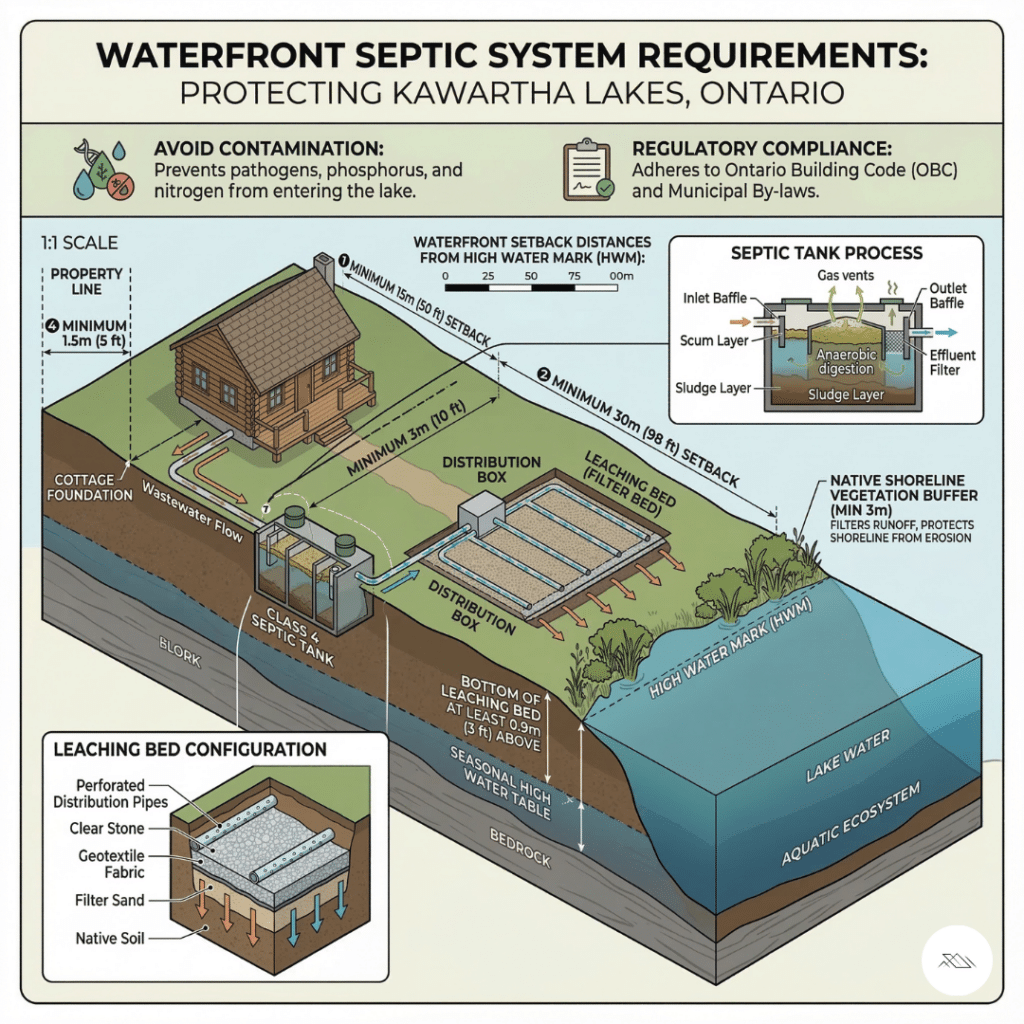
Lake or shoreline15–30 metres depending on site conditions
Drinking water wells15 metres or more
Property boundariesvaries by municipality

These setbacks help prevent wastewater from entering nearby water sources and protect drinking water supplies.

Exact requirements may vary depending on local regulations, lot size, and environmental conditions, which is why septic system design often requires professional evaluation.

Soil Testing and Septic Suitability

Soil conditions play a major role in determining whether a septic system can function properly on a waterfront property.

Before installing a septic system, professionals typically conduct soil testing to evaluate the site’s suitability for wastewater treatment.

Engineer performing soil testing for a waterfront septic system in Kawartha Lakes to determine septic suitability and drainage conditions for a lakefront cottage property.

Soil testing and percolation testing used to evaluate whether a waterfront property in Kawartha Lakes is suitable for installing a septic system.

Testing often includes:

  • Percolation testing to measure how quickly water moves through soil

  • Soil composition analysis to determine sand, clay, or rock content

  • Groundwater depth evaluation to ensure adequate drainage

If soil conditions are poor, traditional septic systems may not be feasible.

Rocky terrain or heavy clay soils sometimes require engineered septic systems that provide additional treatment before wastewater enters the ground.

Types of Septic Systems Used for Waterfront Cottages

Several types of septic systems are used for cottage properties in Kawartha Lakes depending on site conditions and environmental requirements.

Diagram of a waterfront septic system in Kawartha Lakes showing septic tank, distribution pipes, and leaching bed used for cottage wastewater treatment.

Diagram illustrating how a waterfront septic system works for cottages in Kawartha Lakes, including the septic tank, distribution pipes, and leaching bed used to treat household wastewater.

Conventional Septic Systems

Traditional systems include a septic tank connected to a leaching bed where wastewater is naturally filtered through soil.

These systems are common when soil conditions allow proper drainage.

Advanced Treatment Systems

Some waterfront properties require advanced treatment units that provide additional wastewater purification before discharge.

These systems may include:

  • tertiary treatment systems

  • aerobic treatment units

  • eco-friendly filtration systems

Holding Tanks

When soil conditions are unsuitable for standard septic systems, holding tanks may be used to store wastewater temporarily until it can be pumped and transported off-site.

Although less common, they are sometimes necessary for difficult waterfront properties.

Septic Permits in Kawartha Lakes

Installing a septic system requires municipal approval from the City of Kawartha Lakes before construction begins.

In Kawartha Lakes, the permit process typically involves reviewing the proposed septic design, site conditions, and environmental protection requirements.

A typical approval process includes:

  • Site evaluation and soil testing

  • Septic system design submission

  • Permit review by the municipality

  • Inspection during installation

  • Final approval once the system is completed

Homeowners planning construction can also review our guide to building permit costs in Kawartha Lakes to better understand the permit process and inspection requirements.

Early planning helps prevent delays during cottage construction.

Environmental Considerations for Waterfront Septic Systems

Because septic systems operate close to natural water sources, environmental protection guidelines from Kawartha Conservation often influence shoreline development and wastewater system placement.

Improperly designed systems can contribute to:

  • Nutrient pollution in lakes

  • Excessive algae growth

  • Bacterial contamination

  • Damage to fish and wildlife habitats

Regulations are designed to minimize these risks by enforcing proper setbacks, system design standards, and installation inspections.

By following these guidelines, cottage owners can help protect the long-term health of the lakes and shorelines that make the Kawartha Lakes region such a desirable place to live.

Septic Maintenance for Cottage Properties

Proper maintenance is essential to ensure septic systems continue functioning safely over time.

Most septic systems require regular inspection and maintenance to prevent failures that could damage property or contaminate nearby lakes.

Typical maintenance recommendations include:

  • Pumping the septic tank every 3–5 years

  • Avoiding excessive water usage

  • Inspecting the system periodically

  • Preventing heavy equipment from driving over the leaching bed

Routine maintenance helps extend the lifespan of the septic system while protecting the surrounding environment.

Common Questions About Waterfront Septic Systems

Do waterfront cottages require septic systems?

Most waterfront cottages in Kawartha Lakes rely on private septic systems because municipal sewer infrastructure is rarely available in rural cottage areas. These systems must be designed and installed according to municipal regulations and the Ontario Building Code.


How far must a septic system be from a lake in Ontario?

Typical septic setback distances range from 15 to 30 metres from the shoreline, depending on site conditions and municipal regulations. These setbacks help protect lake water quality and prevent contamination.


Do septic systems require permits in Kawartha Lakes?

Yes. Septic systems in Kawartha Lakes require municipal permits before installation to ensure the design complies with local regulations, environmental standards, and the Ontario Building Code.


Can rocky waterfront properties install septic systems?

In some cases, yes. However, rocky or poorly draining soils may require engineered septic systems or advanced wastewater treatment systems designed for difficult site conditions.


How often should a cottage septic system be pumped?

Most cottage septic tanks should be pumped every three to five years, although usage levels, tank size, and household occupancy can influence the recommended maintenance schedule.

Planning a Waterfront Cottage in Kawartha Lakes

Understanding waterfront septic requirements in Kawartha Lakes is an essential step when planning a lakefront cottage build.

Because septic systems must comply with environmental regulations, soil conditions, and municipal permit requirements, early planning helps avoid construction delays and unexpected costs.

If you are considering building on a waterfront property, working with experienced cottage builders in Kawartha Lakes can help ensure your septic system design, site planning, and construction process meet all local regulations.

Book a free consultation with My Own Cottage to review your property, discuss your building plans, and begin designing your custom waterfront cottage today.

🧑‍💼 Request a Free Consultation
📲 Call Us Directly: (705) 345-9337
🏘️ View Our Design Catalogue

✅ Ontario-Built | ⚡ Energy-Efficient | 🏡 Fully Customizable | 🚚 Fast Delivery

Alternatively, for your convenience, you can also simply fill out the contact form below and we’ll get back to you soon! 👇

Contact Us

We usually respond within 24 hours!