Skip to content

Myowncottage.ca

Waterfront Zoning Kawartha Lakes: Shoreline Regulations & Permit Guide

Waterfront zoning in Kawartha Lakes determines how close cottages can be built to the shoreline and what permits are required for waterfront development.

This guide explains shoreline setbacks, the Ordinary High Water Mark, conservation authority approvals, and the building permit process for waterfront properties in the City of Kawartha Lakes.
Last updated: March 3rd, 2026
Written by building specialists at My Own Cottage

Why Waterfront Properties in Kawartha Lakes Have Unique Building Regulations

Waterfront zoning in Kawartha Lakes shapes how cottages can be built along lakes and shorelines, requiring careful compliance with municipal zoning bylaws, shoreline regulations, and environmental protections.

Many homeowners begin their research by reviewing resources from experienced cottage builders in Kawartha Lakes who understand how local planning rules affect waterfront construction.

Building near lakes such as Sturgeon Lake, Pigeon Lake, or Balsam Lake often involves multiple regulatory layers.

This includes municipal planning requirements, shoreline setback rules, the Ontario Building Code, and potential review by Kawartha Conservation.

Because these properties interact directly with natural waterways, regulators place strict limits on building location, site disturbance, and environmental impact.

Key factors include shoreline setbacks, vegetation protection, septic placement, and identifying the Ordinary High Water Mark (OHWM) that defines the edge of regulated waterfront land.

Understanding how these regulations interact is essential before starting any project.

For homeowners planning a lakefront build, reviewing zoning and permit requirements early can prevent costly delays, design revisions, or permit complications.

Understanding Waterfront Zoning in the City of Kawartha Lakes

Zoning bylaws determine how land can be used and what type of structures can be built on a property.

In the City of Kawartha Lakes, waterfront lots are typically governed by specialized zoning categories that regulate building placement, lot coverage, height limits, and accessory structures.

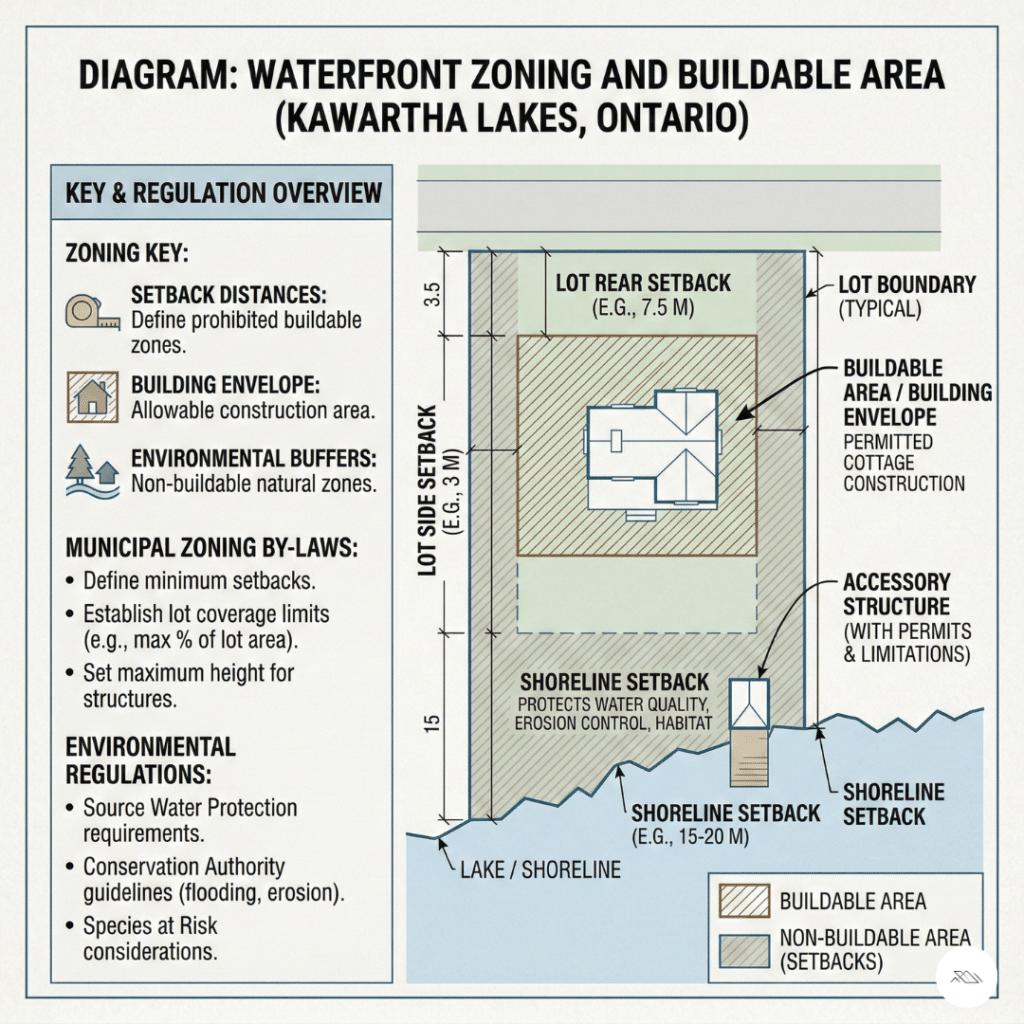
Waterfront zoning Kawartha Lakes diagram showing the building envelope, lot boundaries, and permitted cottage construction area under municipal zoning bylaws.

Example of a waterfront property zoning layout in Kawartha Lakes showing shoreline setbacks, lot coverage limits, and the permitted building envelope for cottage construction.

Unlike inland properties, waterfront lots must account for environmental protection, shoreline stability, and public safety.

These considerations shape the building envelopeβ€”the portion of the property where structures are legally permitted.

Key zoning factors affecting waterfront development include:

Lot Coverage Limits

Municipal bylaws limit the percentage of a lot that can be covered by buildings. This prevents overdevelopment and helps maintain natural shoreline drainage.

Building Height Restrictions

Height restrictions vary depending on zoning classification and distance from the waterline.

These rules protect sightlines and reduce shoreline impact.

Minimum Setback Requirements

Structures must be positioned a minimum distance from the shoreline and property boundaries.

Accessory Structure Limits

Buildings such as bunkies, garages, and boathouses are often regulated separately and may require additional approvals.

Municipal zoning maps determine the allowable building envelope for each property.

Reviewing these maps early in the planning stage helps determine whether a proposed cottage location, footprint, and layout meet local zoning bylaws.

Shoreline Setbacks & the Ordinary High Water Mark (OHWM)

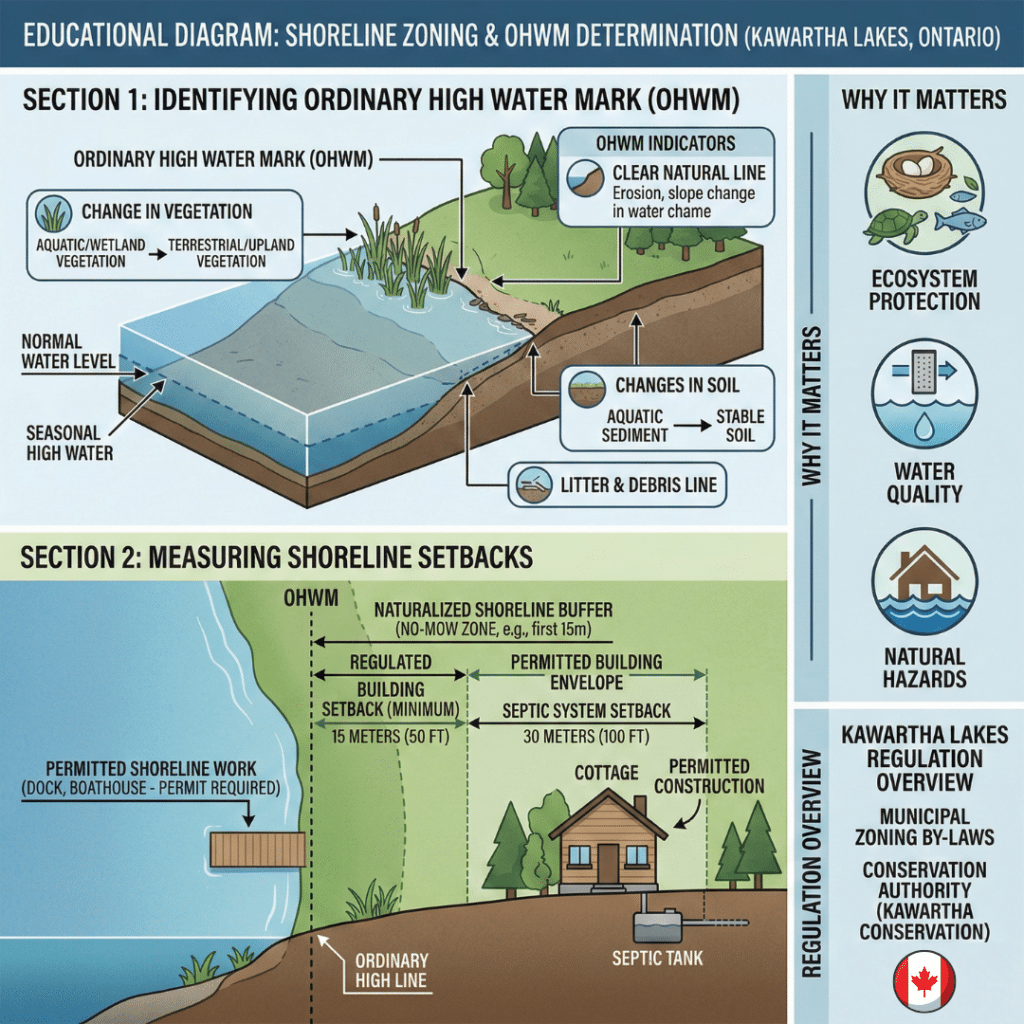
One of the most important regulatory concepts for waterfront construction is the Ordinary High Water Mark (OHWM).

Ordinary High Water Mark shoreline setback diagram explaining waterfront zoning Kawartha Lakes and how OHWM determines cottage setback distance from the lake.

Illustration showing how the Ordinary High Water Mark (OHWM) defines shoreline setback distances used in waterfront zoning regulations in Kawartha Lakes.

What is the Ordinary High Water Mark?

The Ordinary High Water Mark represents the typical boundary between land and water under normal conditions.

It is generally identified by a visible change in vegetation, soil composition, or shoreline features indicating regular water levels.

Municipal setback requirements are measured from this line rather than the visible edge of the lake at any given moment.

Why Shoreline Setbacks Exist

Shoreline setback regulations protect lake ecosystems, reduce erosion risk, and maintain natural drainage patterns.

These setbacks also preserve natural shoreline vegetation that filters runoff before it reaches the water.

Typical setback requirements are designed to:

  • Protect water quality

  • Maintain natural vegetation buffers

  • Reduce shoreline erosion

  • Limit environmental disturbance

In many waterfront areas of Kawartha Lakes, cottages must be positioned a significant distance back from the OHWM to ensure environmental protection and flood resilience.

Maintaining vegetation buffers and limiting grading near the shoreline are also common conditions for waterfront construction approvals.

Kawartha Conservation Authority Requirements

In addition to municipal zoning regulations, many waterfront properties fall within areas regulated by Kawartha Conservation, the regional conservation authority responsible for watershed management.

Kawartha Conservation oversees development in environmentally sensitive areas including:

  • Floodplains

  • Wetlands

  • Shoreline hazard zones

  • Erosion-prone slopes

If a property falls within a regulated area, a conservation permit may be required before municipal building permits can be issued.

When Conservation Authority Approval Is Required

Conservation review is typically triggered when a proposed development:

  • Is located near a waterbody or wetland

  • Falls within a floodplain or erosion hazard zone

  • Requires shoreline alteration or grading

  • May affect natural drainage or watershed flow

Multi-Agency Review Process

For many waterfront projects, approval follows a coordinated process involving both municipal and conservation authorities:

  1. Municipal zoning verification

  2. Conservation authority review (if applicable)

  3. Engineering or environmental assessment

  4. Municipal building permit approval

This multi-agency process ensures that development respects both municipal planning requirements and environmental protection policies.

Building Permit Process for Waterfront Cottages

After zoning compliance and environmental considerations are confirmed, homeowners must obtain a building permit before construction begins.

The permit process ensures the project meets structural, safety, and environmental standards under the Ontario Building Code (OBC).

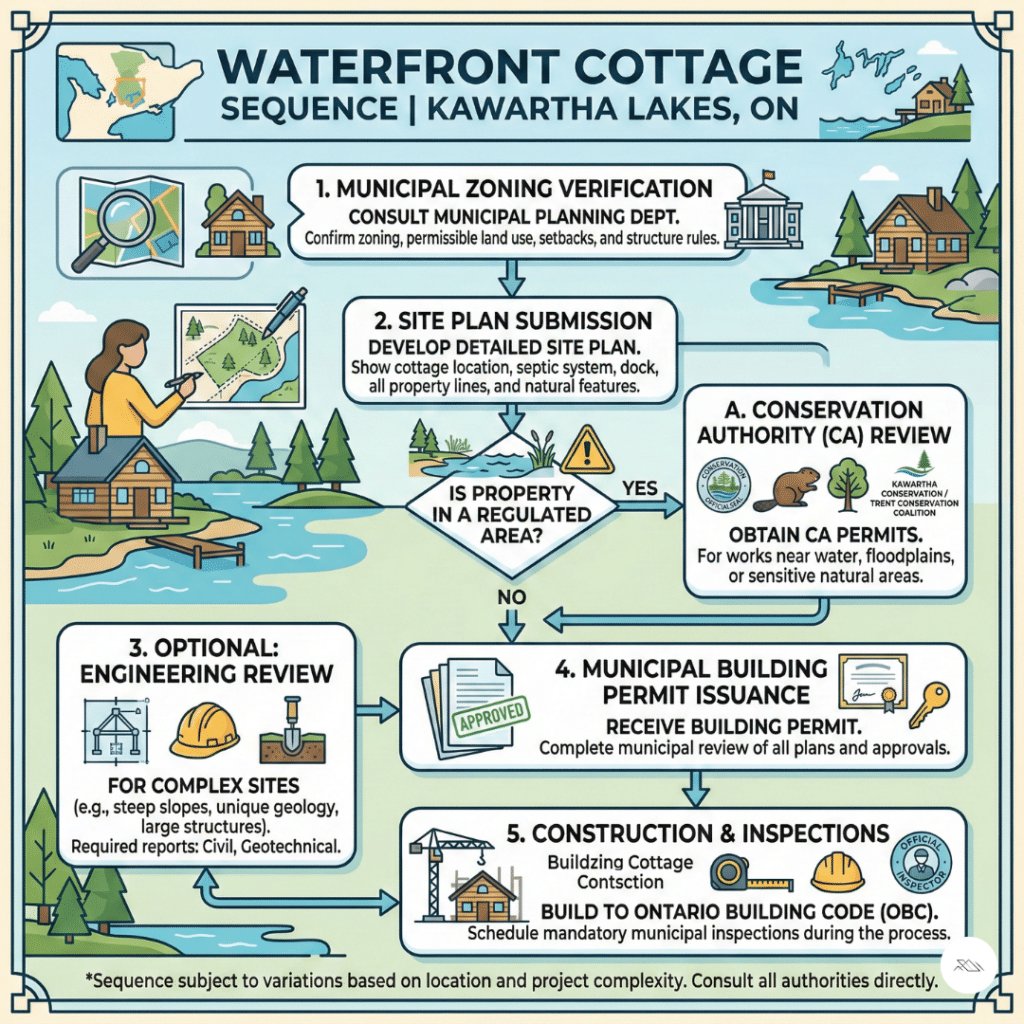
Waterfront permit approval process diagram showing zoning verification, site plan submission, conservation authority review, and building permit issuance for waterfront zoning in Kawartha Lakes.

Flowchart showing the typical approval process for waterfront cottage construction in Kawartha Lakes, including zoning verification, conservation authority review, engineering assessment, and building permit issuance.

Typical Permit Process

  1. Zoning Verification
    Confirm that the proposed building location complies with municipal zoning bylaws and shoreline setback requirements.

  2. Site Plan Submission
    Submit detailed site drawings showing the cottage footprint, shoreline setbacks, septic location, and property boundaries.

  3. Conservation Authority Review (if required)
    If the property lies within a regulated watershed area, Kawartha Conservation must review and approve the proposal.

  4. Engineering Review
    Complex waterfront sites may require professional engineering for foundations, drainage, or erosion protection.

  5. Permit Issuance
    Once all approvals are secured, the municipality issues the building permit allowing construction to begin.

  6. Construction Inspections
    Inspectors verify compliance with the Ontario Building Code at several stages, including foundation, framing, and final completion.

These inspections ensure structural safety, proper installation of building systems, and compliance with approved drawings.

Common Approval Delays & How to Avoid Them

Permit approvals for waterfront construction can take longer than standard residential builds due to environmental review and site complexity.

However, many delays are avoidable with proper planning.

Common causes of permit delays include:

  • Incomplete site plans that fail to show shoreline setbacks or property boundaries

  • Ignoring shoreline regulations when designing the building footprint

  • Underestimating engineering requirements for steep or unstable shoreline areas

  • Late conservation authority consultation, which can trigger design revisions

  • Submitting applications during peak seasonal periods, especially in spring

Homeowners who conduct early zoning research and engage qualified design professionals often experience smoother approvals and fewer revisions during the permit process.

How Zoning & Shoreline Regulations Affect Cottage Building Costs

Waterfront regulations can significantly influence the cost of building a cottage in Kawartha Lakes.

Because shoreline rules limit where structures can be placed, site design must often adapt to constrained building envelopes or environmentally sensitive areas.

Several regulatory factors influence overall project costs:

Foundation Engineering

Steep slopes or unstable shoreline soils may require specialized foundations or structural reinforcement.

Septic System Placement

Septic fields must maintain minimum distances from water bodies and wells, which can affect site layout and excavation requirements.

Environmental Studies

Properties near wetlands or regulated areas may require environmental assessments or engineering reports.

Professional Planning Services

Architects, surveyors, and engineers are often required to produce detailed site plans for permit approval.

Understanding these factors early helps homeowners plan more accurate budgets.

For a detailed breakdown of construction costs and budgeting considerations, see our guide to cottage building costs in Kawartha Lakes.

Can You Build Closer to the Water?

Some property owners wonder whether it is possible to build closer to the lake than zoning bylaws normally allow.

In certain situations, homeowners may apply for a minor variance through the municipal Committee of Adjustment.

This process requests permission to deviate from standard zoning requirements.

However, approval is not guaranteed.

Municipal officials evaluate whether the request:

  • Maintains the intent of zoning bylaws

  • Protects environmental conditions

  • Does not negatively affect neighbouring properties

  • Represents a minor adjustment rather than a major deviation

Because shoreline regulations exist to protect water quality and ecosystem health, significant setback reductions are rarely approved without strong planning justification.

Accessory Structures: Docks, Boathouses & Bunkies

Waterfront properties often include additional structures beyond the main cottage, such as docks, boathouses, or bunkies.

These structures are typically governed by separate regulations and may require their own approvals.

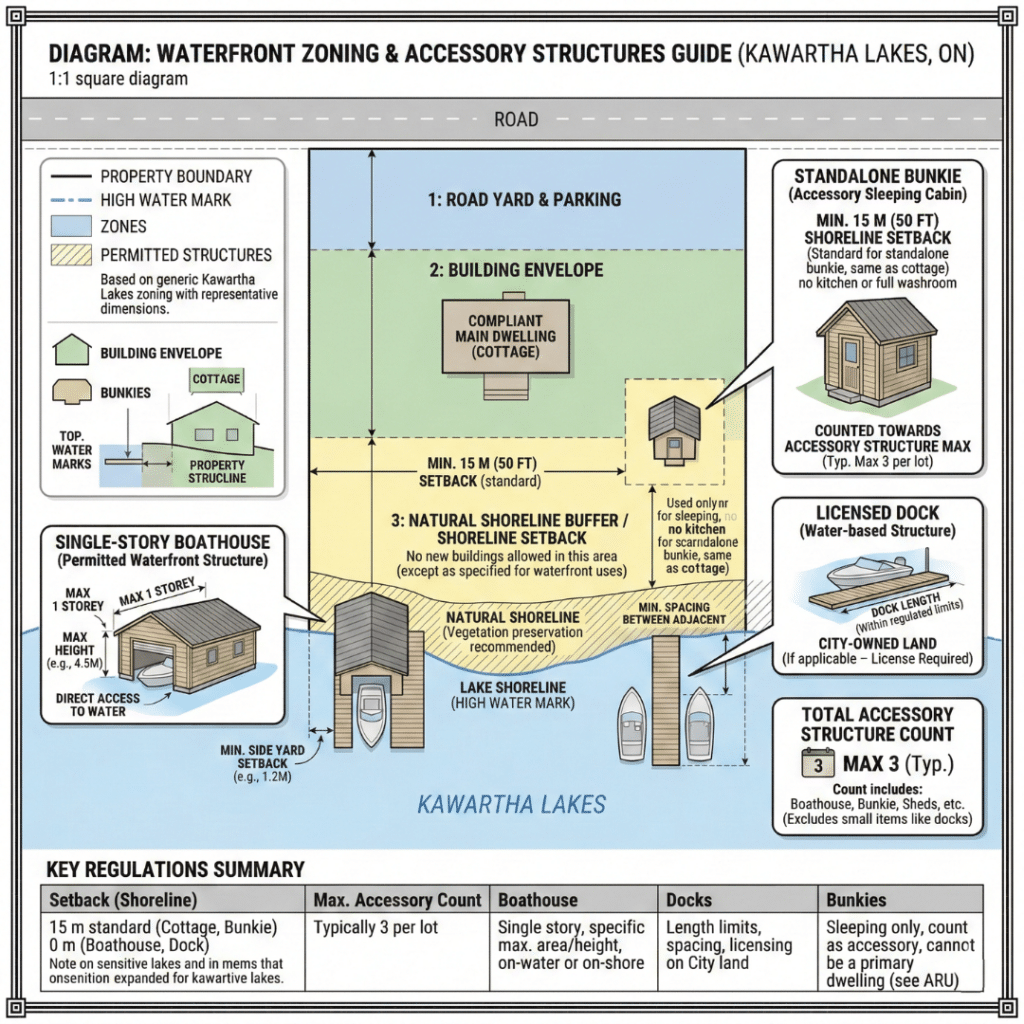
Waterfront zoning Kawartha Lakes diagram showing dock, boathouse, and cottage accessory structures with shoreline setback zones and waterfront property layout.

Example layout of waterfront accessory structures in Kawartha Lakes, including docks, boathouses, and cottages positioned within shoreline setback zones and municipal zoning requirements.

Important considerations include:

Boathouse Location

Boathouses often have different setback requirements from the shoreline compared to the main cottage.

Height and Size Limits

Municipal bylaws limit the height and square footage of waterfront accessory buildings.

Navigation and Waterway Regulations

Properties located along the Trent-Severn Waterway may also be subject to federal navigation regulations.

Separate Permits

Accessory structures frequently require additional building permits or environmental approvals.

Understanding these requirements helps property owners plan future expansions while remaining compliant with local regulations.

Additional guidance on these projects will be covered in our upcoming resource on boathouse builders in Kawartha Lakes.

Common Questions About Waterfront Zoning in Kawartha Lakes

What is the shoreline setback in Kawartha Lakes?

Shoreline setback requirements vary depending on zoning classification and environmental conditions. In many waterfront zones, cottages must be located a significant distance from the Ordinary High Water Mark to protect natural vegetation and water quality.

What is the Ordinary High Water Mark?

The Ordinary High Water Mark (OHWM) represents the typical boundary between land and water under normal conditions. It is identified by vegetation changes, soil composition, or shoreline features and is used to measure required shoreline setbacks.

Do all waterfront properties require conservation approval?

Not all properties require conservation authority approval, but many waterfront sites fall within regulated areas such as floodplains or wetlands. When a property lies within these areas, Kawartha Conservation review is required before municipal permits can be issued.

How long does waterfront permit approval take?

Approval timelines vary depending on project complexity and whether conservation authority review is required. Straightforward permits may take several weeks, while projects requiring environmental review or engineering studies may take longer.

Can I rebuild an older cottage closer to the lake?

Older cottages sometimes exist closer to the shoreline than current zoning bylaws allow. Rebuilding in the same location may be possible under certain circumstances, but significant expansions or structural changes may require variances or relocation.

Are minor variances common in Kawartha Lakes?

Minor variances are occasionally approved when a proposal maintains the intent of zoning bylaws and does not negatively affect neighbouring properties or environmental conditions. However, approval depends on the specifics of each application.

Why Early Compliance Planning Protects Your Project

Many waterfront construction challenges arise when regulatory requirements are addressed too late in the planning process.

Zoning rules, shoreline setbacks, and conservation authority regulations are not simply administrative stepsβ€”they shape the entire design and feasibility of a cottage project.

Early planning helps ensure that:

  • The cottage footprint fits within the permitted building envelope

  • Environmental buffers are preserved

  • Septic systems and utilities can be installed correctly

  • Permit approvals proceed without unnecessary redesigns

By integrating regulatory compliance into the early design phase, homeowners reduce the risk of delays, additional engineering costs, and permit revisions.

For homeowners seeking professional guidance throughout the planning and construction process, explore our guide to cottage builders in Kawartha Lakes for a complete overview of building a custom lake home in the region.

Planning a waterfront cottage project in Kawartha Lakes?

Our team can help you navigate zoning bylaws, shoreline setbacks, conservation approvals, and the full design-build process before construction begins.

πŸ§‘β€πŸ’Ό Request a Free Consultation
πŸ“² Call Us Directly: (705) 345-9337
🏘️ View Our Design Catalogue

βœ… Ontario-Built | ⚑ Energy-Efficient | 🏑 Fully Customizable | 🚚 Fast Delivery

Alternatively, for your convenience, you can also simply fill out the contact form below and we’ll get back to you soon! πŸ‘‡

Contact Us

We usually respond within 24 hours!