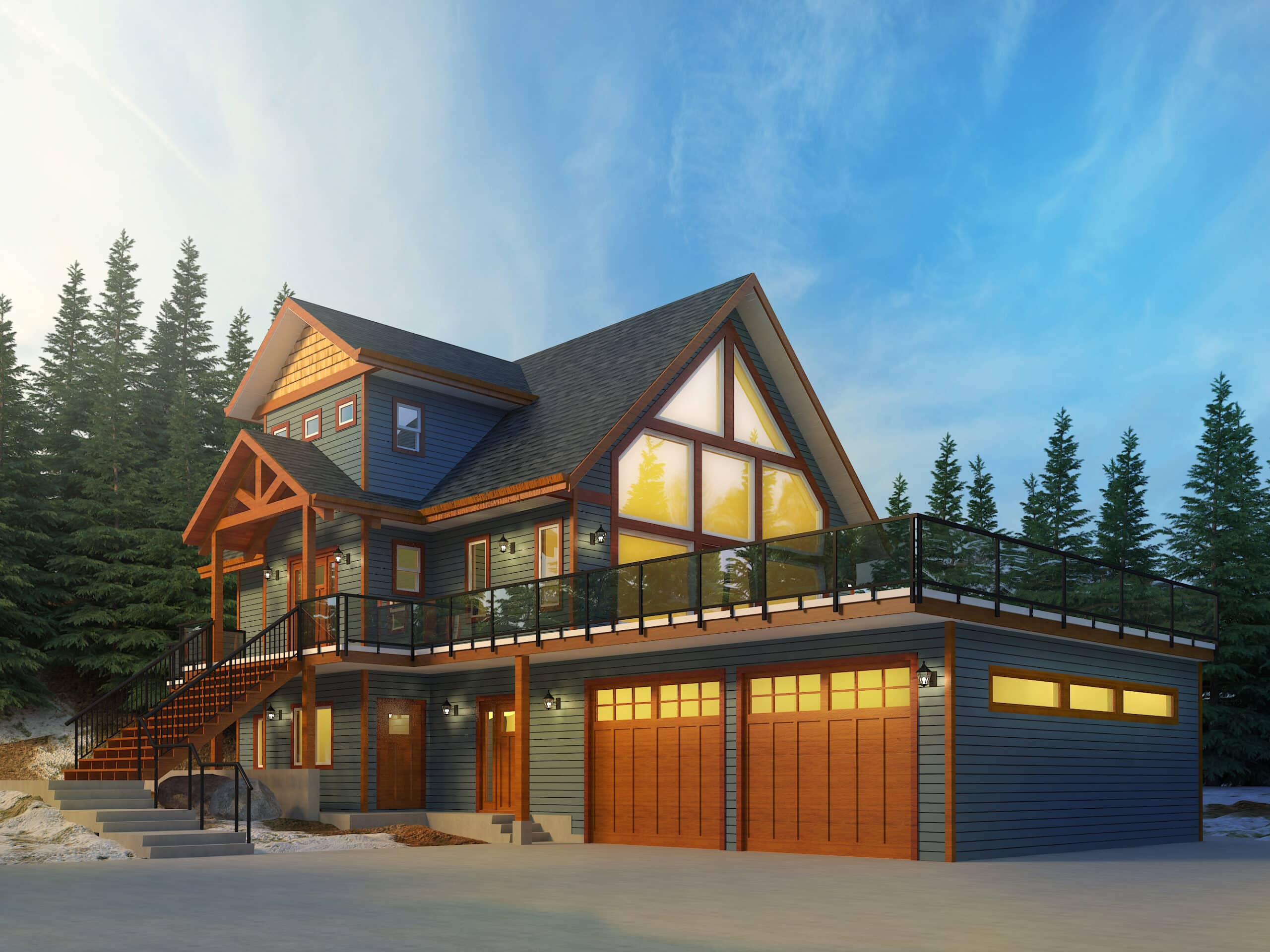
Affordable Modern Prefab Homes Price Comparison in Canada
Affordable modern prefab homes price comparison in Canada breaks down real-world costs, square footage, features, and construction timelines so homebuyers can accurately compare options.
This article explains what drives pricing differences across regions and how prefab homes compare to traditional homes in value, quality, and long-term affordability.
Comparing Prices of Affordable Modern Prefab Homes in Canada
Affordable modern prefab homes price comparison in Canada is increasingly relevant for homebuyers navigating today’s housing market, where affordability, construction timelines, and quality control matter as much as modern home design.
Across Canada, prefab housing has emerged as a cost-effective solution for families seeking a new home, dream home, or next home without the unpredictability of traditional homes and prolonged site construction.
At My Own Cottage, we offer affordable Canadian prefab homes with modern design.
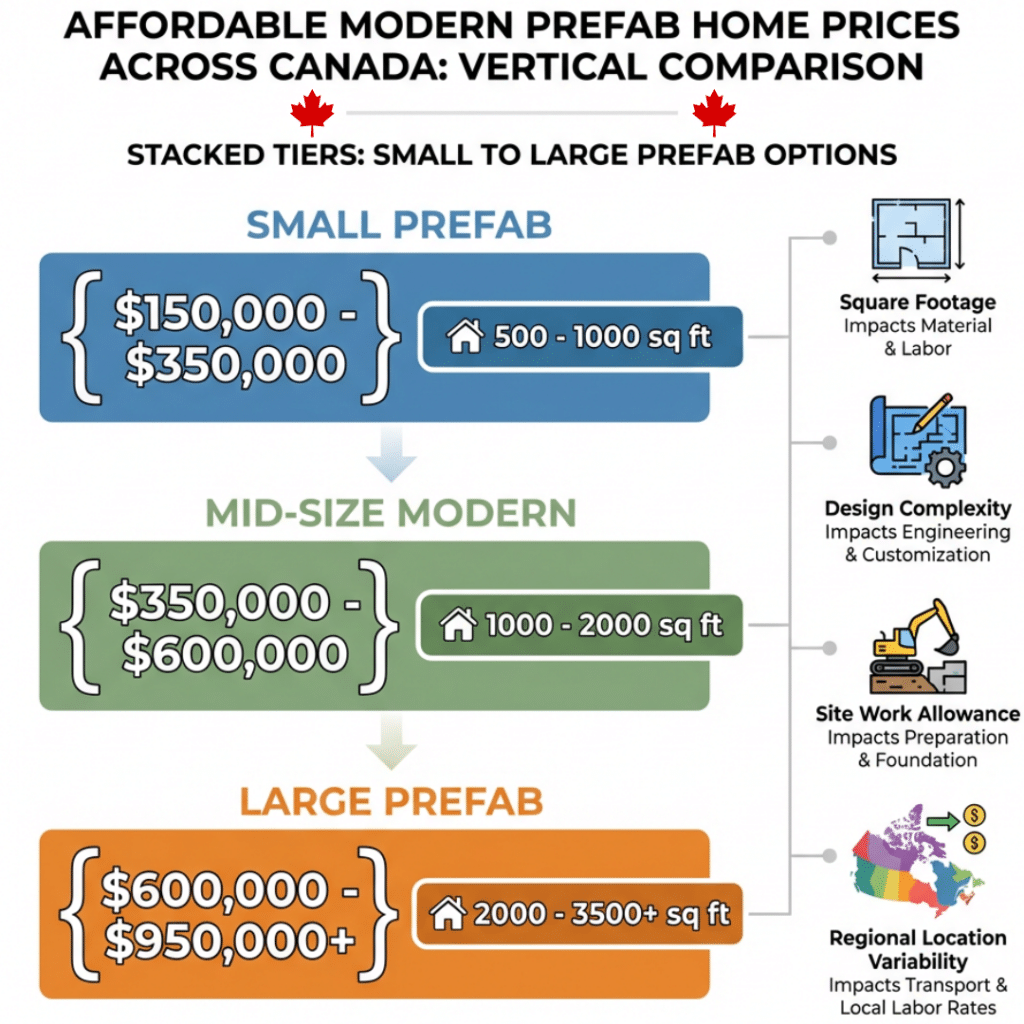
Above, we're comparing affordable modern prefab home prices in Canada by size, square footage, and key cost drivers to help homebuyers understand real pricing differences.
According to Canada Mortgage and Housing Corporation and Statistics Canada, prefabricated home construction reduces labor costs, material waste, and weather-related delays.
This is accomplished by shifting much of the building process into controlled environments.
A factory-based approach improves precision-built outcomes, supports energy-efficient building techniques, and delivers high-quality homes.
These prefab designs are purpose-built to meet Canadian building codes across British Columbia, Ontario, Alberta, Quebec, and Atlantic Canada.
For homebuyers comparing prefab, manufactured home, and traditional home options, understanding price differences by square foot, customization options, and site work requirements is essential to achieving modern living at an affordable price point.
What Is an Affordable Modern Prefab Home in Canada?
What qualifies as an affordable modern prefab home
Affordable modern prefab homes in Canada typically cost 15–30% less per square foot than traditional homes while delivering modern designs, efficient floorplans, and strong curb appeal.
These prefabricated homes are built in factory settings using repeatable building techniques, which improves quality control, reduces material waste, and lowers production costs.
Unlike mobile homes or older manufactured homes, modern prefab homes are permanent structures built to the National Building Code of Canada and recognized as real estate assets by lenders and insurers.
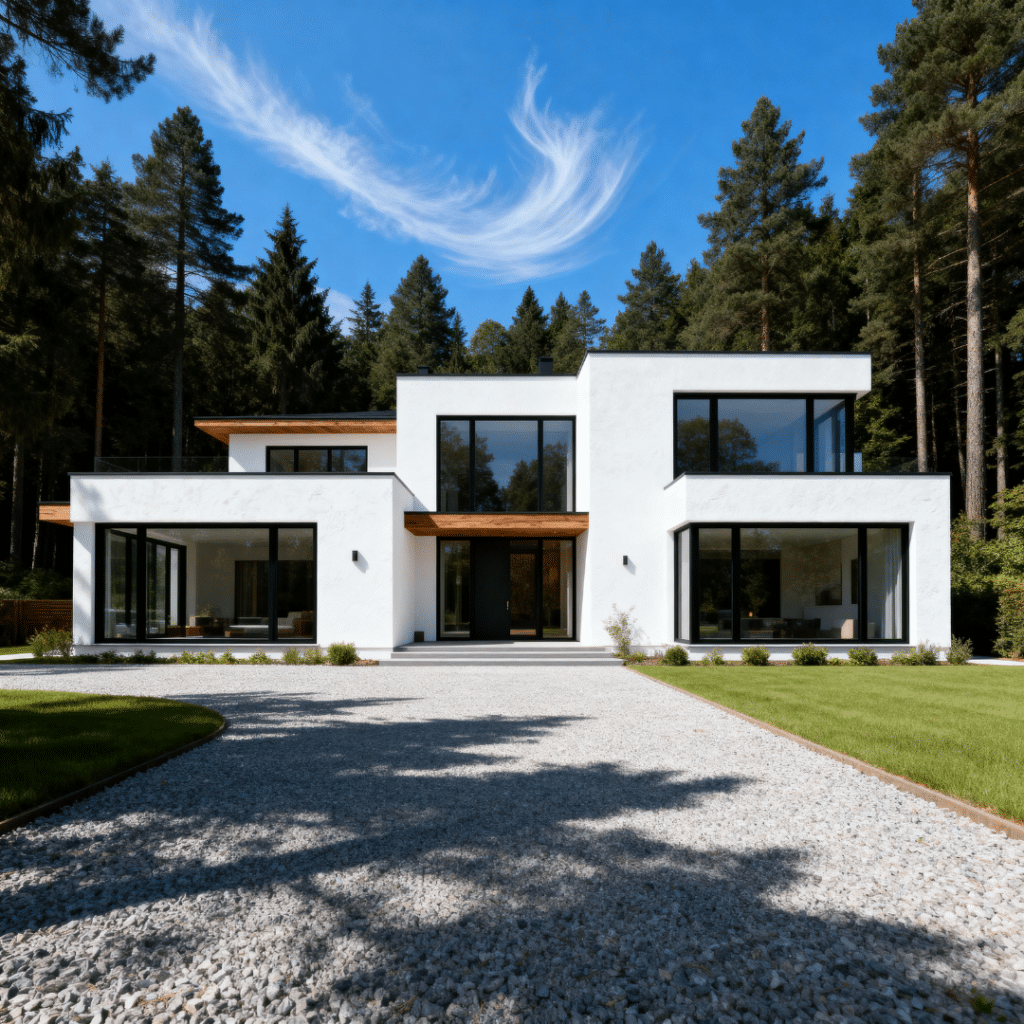
This exterior view illustrates what qualifies as an affordable modern prefab home in Canada, combining contemporary design, permanent construction, and strong curb appeal.
According to the Modular Building Institute, factory construction minimizes rework, shortens construction timelines, and delivers consistent interior finishing regardless of weather conditions.
Affordable prefab homes are commonly chosen by families seeking a quality home with predictable costs, fewer phone calls during the construction project, and a smoother building experience every step of the way.
Affordable prefab homes in Canada are permanent, code-compliant houses built in factories and assembled on site to deliver modern living at a lower overall price.
How modern prefab homes differ from mobile, manufactured, and traditional homes
Modern prefab homes differ from mobile homes and older manufactured homes in both regulation and long-term value.
Mobile homes are typically built to CSA standards and may face zoning or resale limitations, whereas prefab homes comply with provincial building codes and qualify for standard mortgages.
Traditional homes rely heavily on site construction, large construction crews, and extended exposure to weather conditions, which can increase labor costs and the final price.
Prefab homes shift much of the construction process into controlled environments, improving precision, reducing building material waste, and supporting customizable options.
These options include modern home layouts, farmhouse styles, minimalist living, and cutting-edge architectural designs.
Research from the National Research Council Canada shows that off-site construction improves structural consistency and reduces defects.
Naturally, this is making prefab homes a reliable alternative to traditional homes for long-term residential use.
Prefab homes are permanent houses built faster and with more consistent quality than most traditional site-built homes.
Why Price Comparison Matters for Prefab Homes in Canada
Why prefab home prices vary across Canada
Prefab home prices in Canada vary based on square footage, architectural designs, site work requirements, transportation distance, and provincial permitting rules.
While base price estimates often look similar nationwide, the final price can differ significantly once foundation work, utility connections, building permits, and local labor costs are included.
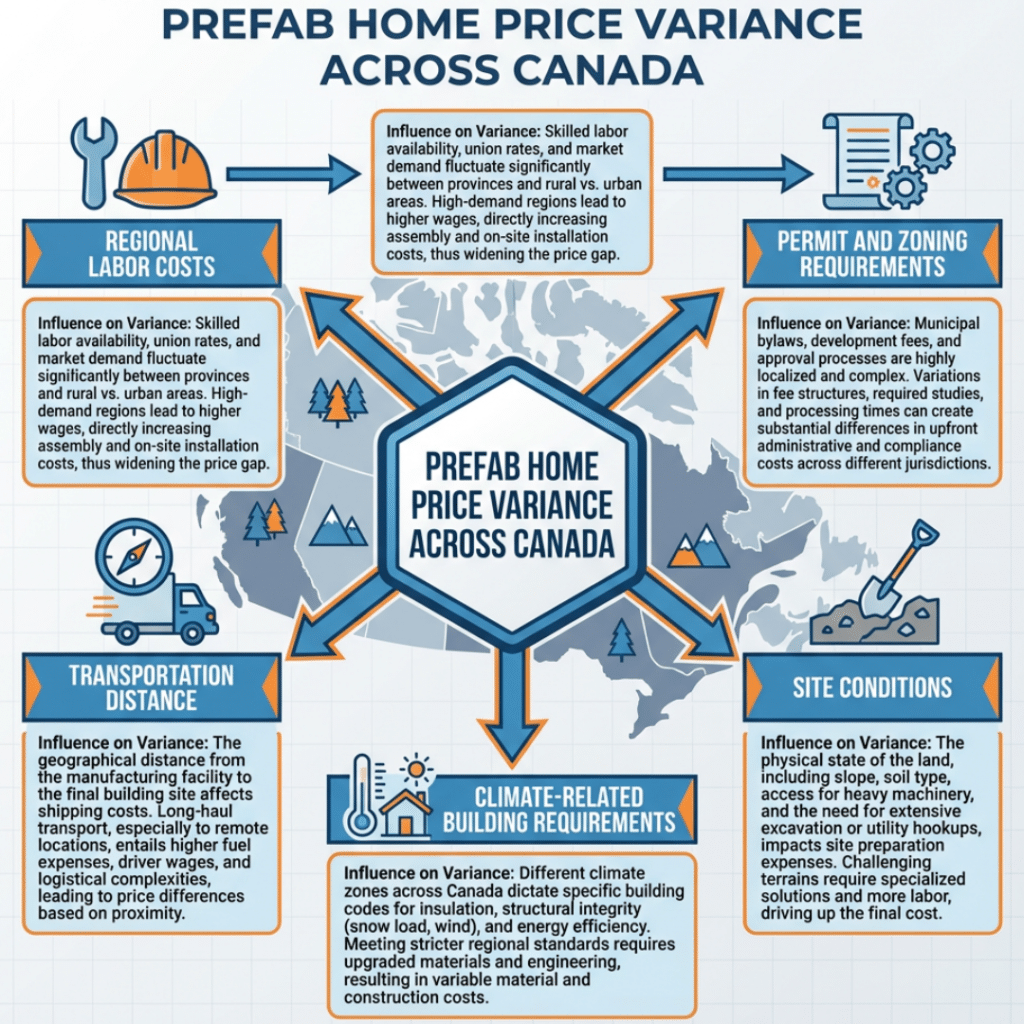
This infographic explains why affordable modern prefab home prices vary across Canada, highlighting regional labor costs, permits, transportation, site conditions, and climate factors.
For example, British Columbia and Ontario often experience higher site construction and permitting costs, while Prairie provinces may benefit from simpler land preparation and lower labor costs.
According to Statistics Canada’s Residential Construction Price Index, regional cost differences can materially affect the total investment required for a prefab home.
Prefab homes cost less overall, but location, site work, and permits still influence the final price in Canada.
How affordability goes beyond the base price
Affordability is not defined by the base price alone. True cost-effectiveness includes energy efficiency, construction speed, financing eligibility, and long-term operating costs.
Modern prefab homes are frequently designed with energy-efficient envelopes, high-performance insulation, and advanced HVAC systems supported by programs from Natural Resources Canada.
According to the Canada Green Building Council, energy-efficient prefab homes can reduce monthly utility expenses, lower maintenance requirements, and improve resale value.
Faster construction timelines also reduce interim financing costs and help buyers move into their family home sooner, which is critical in competitive housing markets.
A prefab home’s real affordability shows up over time through energy savings, faster builds, and fewer cost overruns.
Prefab vs Traditional Home Costs in Canada
How prefab homes compare to traditional homes on price
Prefab homes in Canada generally cost less per square foot than traditional homes because factory production reduces labor costs, shortens construction timelines, and limits material waste.
For most homebuyers, this translates into a more predictable final price and fewer cost overruns during the building process.
According to Canada Mortgage and Housing Corporation and Canadian Home Builders’ Association, traditional homes are more vulnerable to price escalation due to site construction delays, changing weather conditions, and labor availability.

This comparison shows how affordable modern prefab homes in Canada typically cost less than traditional homes due to lower labor needs, faster construction timelines, and factory quality control.
Prefab homes, by contrast, benefit from precision-built modules produced in controlled environments, which improves quality control and stabilizes production costs.
Importantly, prefab homes cost less primarily because much of the construction work is completed before the home reaches the site, reducing uncertainty and improving efficiency.
Discover how building methods stack up in our in-depth prefab homes cost comparison with traditional homes.
Cost breakdown differences between prefab and traditional homes
The cost structure of prefab homes differs meaningfully from traditional homes.
Traditional construction allocates a larger portion of the budget to on-site labor, construction crews, and extended project management.
Prefab homes shift a higher percentage of costs into manufacturing, design standardization, and logistics.
Research from the Modular Building Institute shows that prefab construction reduces rework and material waste, which are two of the most common contributors to budget overruns in conventional home building.
Additionally, fewer site visits and phone calls are required, improving the overall building experience for homeowners.
Prefab homes concentrate costs upfront in manufacturing, while traditional homes accumulate costs gradually through site construction and labor variability.
Prefab vs Traditional Home Cost Comparison (Canada)
| Home Type | Average Cost per Square Foot | Cost Predictability |
|---|---|---|
| Prefab Home | Lower | High |
| Traditional Home | Higher | Moderate to Low |
Small vs Modern vs Large Prefab Homes: Price and Square Footage
How size impacts prefab home pricing
Prefab home pricing in Canada scales primarily with square footage, but design complexity and customization options also influence the final price.
Smaller prefab homes benefit from simplified floorplans and reduced material use, making them an attractive entry point for first-time homebuyers or those pursuing minimalist living.
Modern mid-sized prefab homes balance affordability with enhanced interior design, larger living rooms, and flexible layouts.
Larger prefab homes, while still cost-effective compared to traditional homes, require more modules, additional site work, and higher transportation costs.
Prefab home size directly affects price, but design efficiency plays an equally important role in overall affordability.
Comparing small, modern, and large prefab homes
According to data aggregated by Prefab Canada and regional builder associations such as the Ontario Home Builders’ Association, prefab homes remain competitive across size categories.
This is primarily due to repeatable production methods and standardized building techniques.
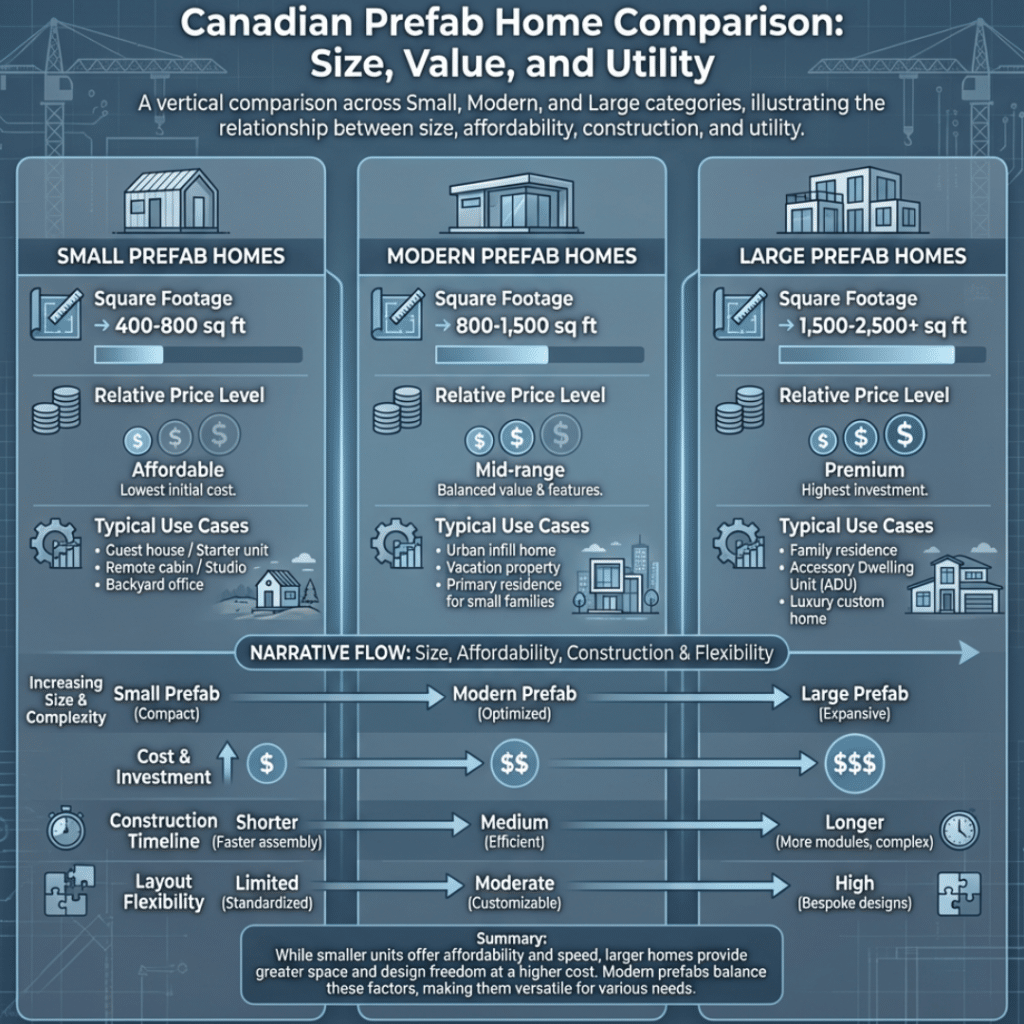
This comparison shows how small, modern, and large prefab homes in Canada differ by size, relative cost, and typical use cases, helping homebuyers choose the right option for their needs.
Smaller homes often appeal to buyers seeking a cost-effective custom home or cottage.
In contrast, larger prefab homes are increasingly chosen as family homes with multiple bedrooms, modern home layouts, and customizable interior finishing.
Prefab homes maintain affordability across sizes by controlling production costs and reducing site construction inefficiencies.
Small vs Modern vs Large Prefab Home Comparison
| Home Size | Typical Square Feet | Relative Price Level |
|---|---|---|
| Small Prefab Home | Lower sq ft | Most Affordable |
| Modern Mid-Size Prefab | Mid-range sq ft | Balanced |
| Large Prefab Home | Higher sq ft | Higher, but competitive |
Timeline impact by prefab home size
Construction timelines also vary by size.
Smaller prefab homes can be completed and installed quickly due to fewer modules and simpler foundations.
Larger homes require additional coordination, but still outperform traditional homes in speed and predictability.
According to the Build Canada, prefab construction timelines are consistently shorter across all size categories, which reduces interim financing costs and accelerates occupancy.
Larger prefab homes take longer than smaller models, but still finish faster than most traditional construction projects.
Modern Prefab Home Features That Influence Price
Which modern features raise or lower prefab home costs
Modern prefab home pricing in Canada is strongly influenced by feature selection rather than just square footage.
Design elements such as open-concept living rooms, large window systems, steel frames, premium insulation, and advanced interior finishing can increase the base price.
However, these features often reduce long-term operating costs and improve resale value.
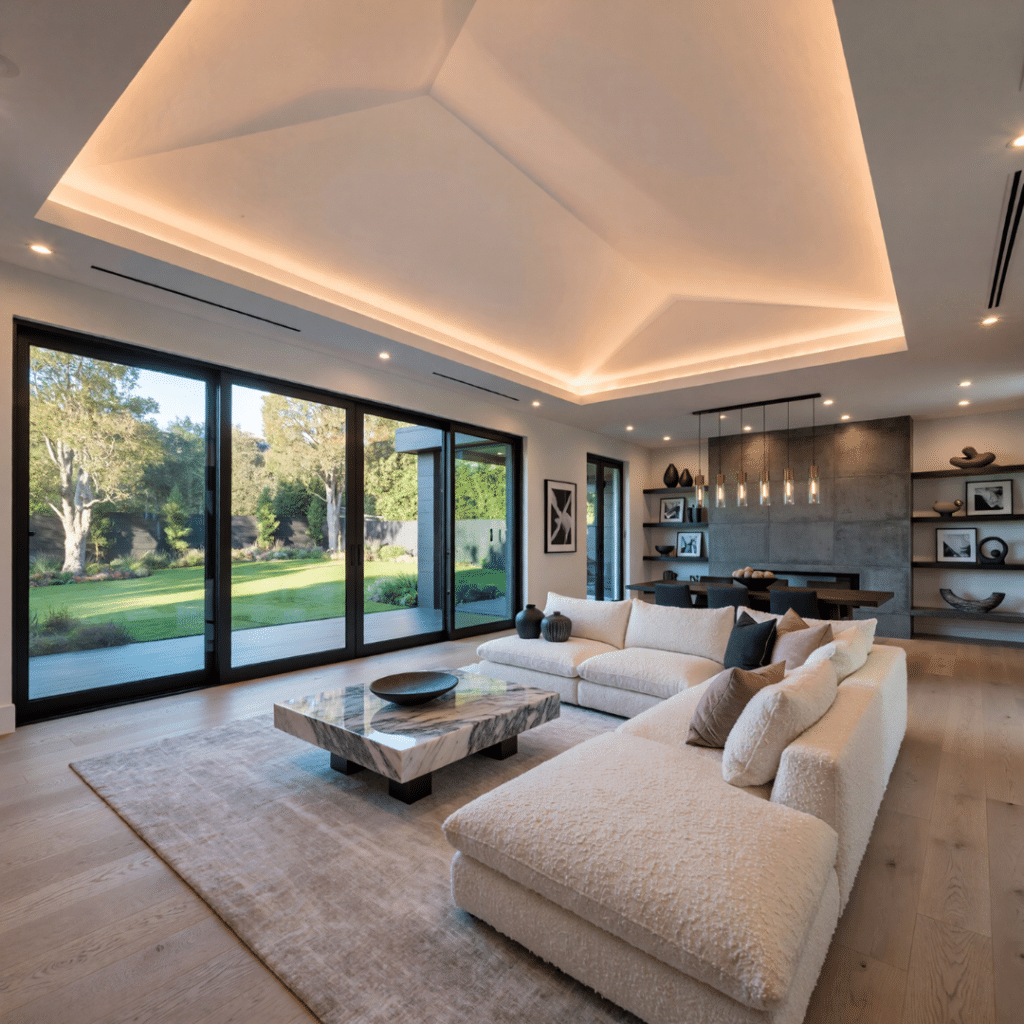
This modern prefab home interior shows how design features like open layouts, natural light, and restrained finishes can influence overall home costs without sacrificing quality.
According to Canada Green Building Council and Natural Resources Canada, energy-efficient features like high-performance envelopes, triple-pane windows, and airtight construction meaningfully improve cost-effectiveness over time.
These features are easier to implement in prefabricated homes because factory settings allow tighter tolerances and consistent quality control.
Modern features may increase upfront cost, but they often lower lifetime ownership costs and improve comfort.
Design efficiency versus luxury upgrades
Not all modern features impact affordability equally.
Design efficiency—such as compact floorplans, simplified rooflines, and repeatable architectural designs—helps keep prefab homes affordable.
Luxury upgrades, including custom cabinetry, premium home decor, and expansive glazing systems, can push a prefab home closer to traditional home price ranges.
Research from the University of British Columbia — School of Architecture and Landscape Architecture shows that design-to-cost strategies allow prefab builders to deliver modern home aesthetics while controlling production costs.
Buyers focused on affordability often prioritize efficient layouts over purely aesthetic upgrades.
Smart design choices matter more than luxury finishes when keeping a prefab home affordable.
Modern Prefab Feature Cost Impact Comparison
| Feature Type | Cost Impact | Long-Term Value |
|---|---|---|
| Energy-Efficient Envelope | Moderate | High |
| Open-Concept Floorplan | Low | High |
| Premium Interior Finishing | High | Moderate |
Construction Timelines and Their Cost Impact
Why prefab construction timelines reduce costs
Prefab construction timelines are shorter than traditional homes because much of the work happens simultaneously rather than sequentially.
While site work and foundations are prepared, the home modules are built in the factory, reducing idle time and exposure to weather conditions.
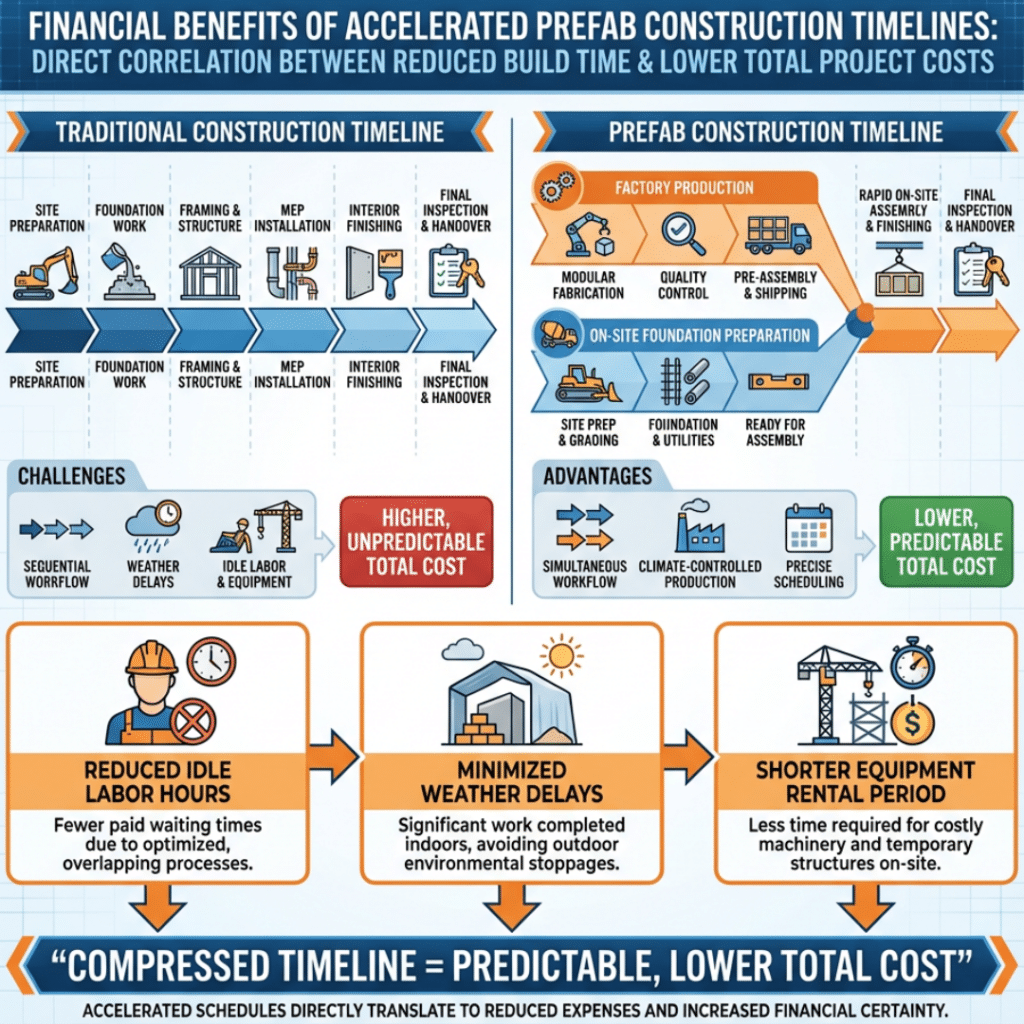
This infographic shows how shorter prefab construction timelines reduce costs by overlapping factory production with site preparation and minimizing delays.
According to Modular Building Institute, this parallel process reduces labor costs, limits scheduling delays, and improves overall construction efficiency.
Faster timelines also reduce interim financing costs, which directly affects the final price paid by homebuyers.
Shorter construction timelines lower total costs and reduce financial risk.
Timeline differences between prefab and site-built homes
Traditional homes often experience delays caused by weather, subcontractor availability, and material shortages.
Prefab homes, built in controlled environments, maintain consistent schedules and predictable delivery dates.
Data from Build Canada shows that prefab homes typically reach occupancy weeks or months sooner than comparable site-built homes.
This speed benefits families looking to move into a new home quickly and reduces the stress commonly associated with prolonged construction projects.
Prefab homes finish faster and with fewer delays than traditional homes.
Typical Prefab Home Timeline (Canada)
| Stage | Prefab Home | Traditional Home |
|---|---|---|
| Factory Construction | Shorter | Not applicable |
| Site Construction | Minimal | Extensive |
| Total Build Time | Faster | Slower |
Financing Options for Affordable Modern Prefab Homes in Canada
How prefab homes are financed in Canada
Affordable modern prefab homes in Canada can be financed through many of the same mortgage products used for traditional homes, provided the home meets provincial building codes and is permanently affixed to land.
Lenders typically view prefab homes as real estate assets rather than personal property, which supports competitive interest rates and standard amortization terms.
According to Canada Mortgage and Housing Corporation, construction-to-permanent mortgages are commonly used for prefab home projects.
Importantly, a construction loan allows homebuyers to finance both the building process and the completed home under a single loan.
This approach reduces complexity and helps stabilize the final price during the construction project.
Prefab homes qualify for conventional financing when they meet code and permanence requirements.
Key differences between prefab and traditional construction financing
Prefab home financing differs slightly from traditional home building because a portion of the cost is paid earlier in the process to cover factory production.
This staged payment structure reflects the manufacturing phase, where modules are built before site construction begins.
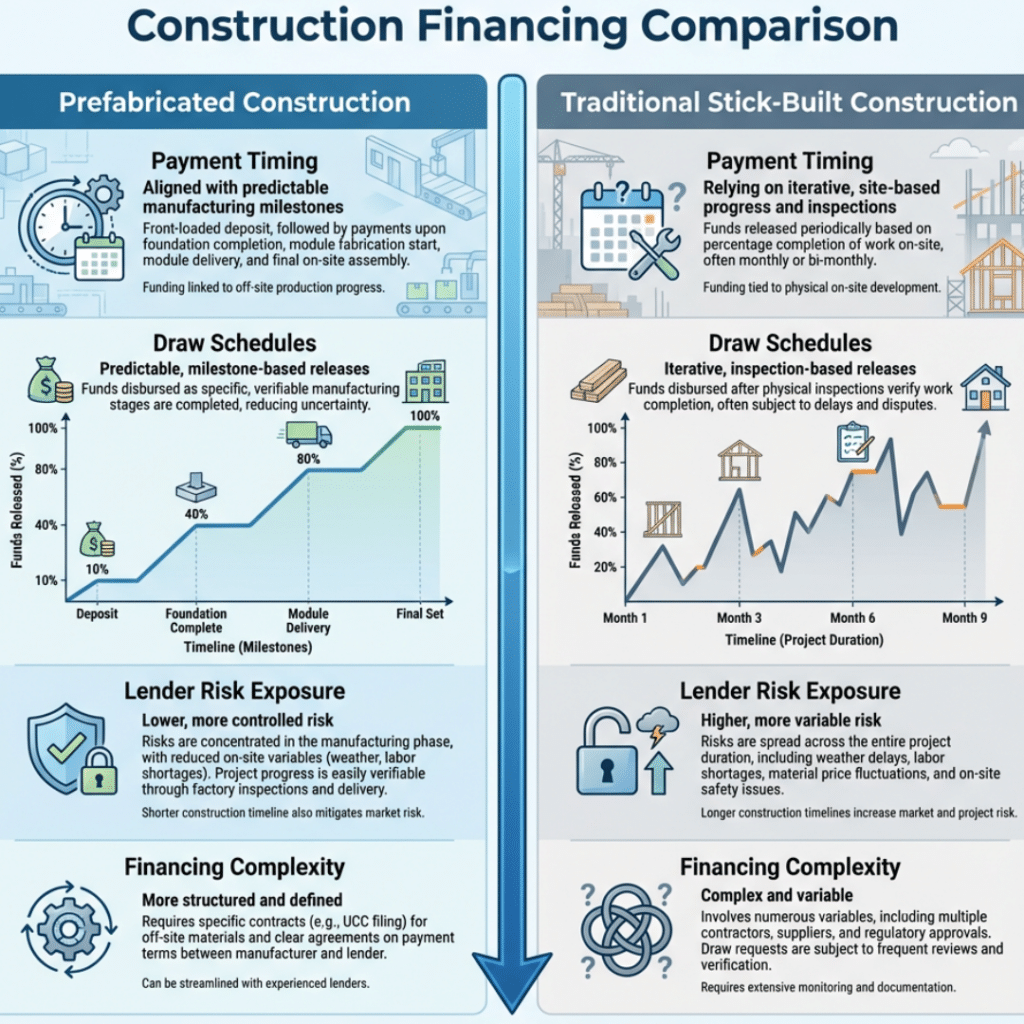
This infographic compares prefab and traditional construction financing in Canada, explaining differences in payment timing, draw schedules, and overall financing complexity.
Financial institutions aligned with guidance from the Canadian Home Builders’ Association recognize prefab homes as lower-risk builds due to predictable construction timelines and reduced exposure to weather conditions.
As a result, prefab buyers often experience fewer financing delays compared to traditional homebuyers managing extended site construction schedules.
Prefab financing is structured around predictable milestones rather than ongoing site-based expenses.
Prefab Home Financing Options Comparison
| Financing Type | Best For | Key Advantage |
|---|---|---|
| Construction-to-Permanent Mortgage | Primary residences | Single loan, simplified process |
| Conventional Mortgage | Completed prefab homes | Competitive rates |
| Credit Union Financing | Rural or custom homes | Flexible underwriting |
Permits, Zoning, and Regional Cost Factors
How permits and zoning affect prefab home prices
Building permits and zoning rules play a critical role in determining the final price of a prefab home in Canada.
While prefab homes are built in factories, they must still comply with local zoning bylaws, setback requirements, and utility regulations once installed on site.
Municipal guidance often aligns with national standards set by the National Building Code of Canada and enforced locally through provincial authorities.
According to the National Research Council Canada, prefab homes are subject to the same safety, structural, and energy requirements as traditional homes, which supports their long-term value and insurability.
Permits and zoning rules influence site costs, timelines, and total project budgets.
Provincial differences in permit complexity and cost
Permit complexity varies widely across provinces and municipalities.
British Columbia and Ontario often require additional environmental reviews, development charges, or inspections, which can increase site construction costs.
In contrast, Prairie provinces and some Atlantic regions may offer more streamlined approval processes.
Data referenced by Statistics Canada and regional housing authorities show that local regulatory requirements contribute to measurable differences in final price, even for identical prefab home models.
Understanding these regional factors is essential for accurate price comparison and planning.
Regional permit requirements can meaningfully affect prefab home affordability.
Permit and Regulatory Impact Comparison (Canada)
| Region | Permit Complexity | Cost Impact |
|---|---|---|
| British Columbia | Higher | Higher |
| Ontario | Moderate to High | Moderate |
| Prairie Provinces | Lower | Lower |
How to Compare Affordable Modern Prefab Homes with Confidence
How to evaluate prefab home price quotes accurately
Comparing affordable modern prefab homes in Canada requires looking beyond the advertised base price and evaluating the full cost breakdown.
Accurate comparisons account for square feet, design options, site work, interior finishing, transportation, and local permit requirements.
Homebuyers who compare only model home pricing often underestimate the final price once customization options and site construction costs are included.
According to Prefab Canada and insights from the Canadian Home Builders’ Association, standardized quotes that clearly separate factory production costs from on-site expenses offer the most reliable basis for comparison.
This approach allows buyers to evaluate value rather than just price point.
Accurate prefab price comparisons depend on transparent, itemized cost breakdowns.
Why builder experience and quality control matter
Builder experience plays a significant role in both pricing accuracy and final build quality.
Established prefab home builders benefit from repeatable building processes, stable supplier relationships, and refined quality control systems that reduce errors and delays.
Research conducted with support from the National Research Council Canada indicates that experienced off-site builders deliver more consistent structural performance and fewer post-completion issues.
For homebuyers, this translates into fewer surprises, smoother inspections, and a better overall building experience.
Experienced prefab builders deliver more predictable pricing and higher-quality results.
Why Affordable Modern Prefab Homes Appeal to Canadian Homebuyers
How prefab homes support modern living and long-term value
Modern prefab homes align with the needs of today’s Canadian families by combining efficient layouts, energy-efficient construction, and flexible design options.
These homes support a wide range of lifestyles, from minimalist living and farmhouse-inspired designs to contemporary family homes with open living rooms and customizable interior design.
According to Canada Green Building Council and Natural Resources Canada, prefab homes are well positioned to meet future energy standards and sustainability expectations.
This forward-looking design approach helps protect long-term real estate value and reduces operating costs over the life of the home.
Prefab homes offer modern design, energy efficiency, and durable value in one package.
Why prefab homes are becoming a mainstream housing solution
Once considered niche, prefab housing is now a mainstream housing solution across North America.
In Canada, rising labor costs, housing shortages, and demand for faster construction timelines have accelerated adoption among both first-time buyers and repeat homeowners.
Market data referenced by Statistics Canada and Canada Mortgage and Housing Corporation shows growing acceptance of prefab homes as permanent, high-quality residences.
This shift reflects broader changes in home buying behavior, where predictability, efficiency, and value matter more than traditional construction methods.
Prefab homes are increasingly seen as a practical response to Canada’s evolving housing market.
Choosing the Right Prefab Home for Your Next Build
How to decide if a modern prefab home is right for you
Choosing a modern prefab home starts with aligning your budget, lifestyle goals, and land conditions.
Buyers seeking cost-effective housing solutions with predictable construction timelines, strong quality control, and modern home design often find prefab homes to be a strong fit.
By comparing square footage, design efficiency, energy performance, and regional site costs, homebuyers can confidently determine whether a prefab home meets their expectations for affordability and comfort.
Understanding the full building process—from factory production to site installation—helps ensure a smoother journey every step of the way.
Canadian prefab homes offer a balanced path to owning a beautiful home without unnecessary complexity.
Next steps with My Own Cottage
For homebuyers exploring affordable modern prefab homes in Canada, working with an experienced builder simplifies decision-making and reduces risk.
My Own Cottage supports homeowners through the full process, from early design options and floorplans to final installation and interior finishing.
By combining transparent pricing, modern designs, and customer service focused on long-term satisfaction, My Own Cottage helps turn a dream house into a precision-built reality.
Our process is ideal whether you are building a family home, custom home, or future-ready housing solution.
Start your next home journey with clarity, confidence, and a smarter way to build.
🧑💼 Request a Free Consultation
📲 Call Us Directly: (705) 345-9337
🏘️ View Our Design Catalogue
✅ Ontario-Built | ⚡ Energy-Efficient | 🏡 Fully Customizable | 🚚 Fast Delivery
Alternatively, for your convenience, you can also simply fill out the contact form below and we’ll get back to you soon! 👇

Contact Us Today!
We usually respond within 24 hours!
- Comprehensive Warranty
- Best Price Guarantee
- Exceptional Service
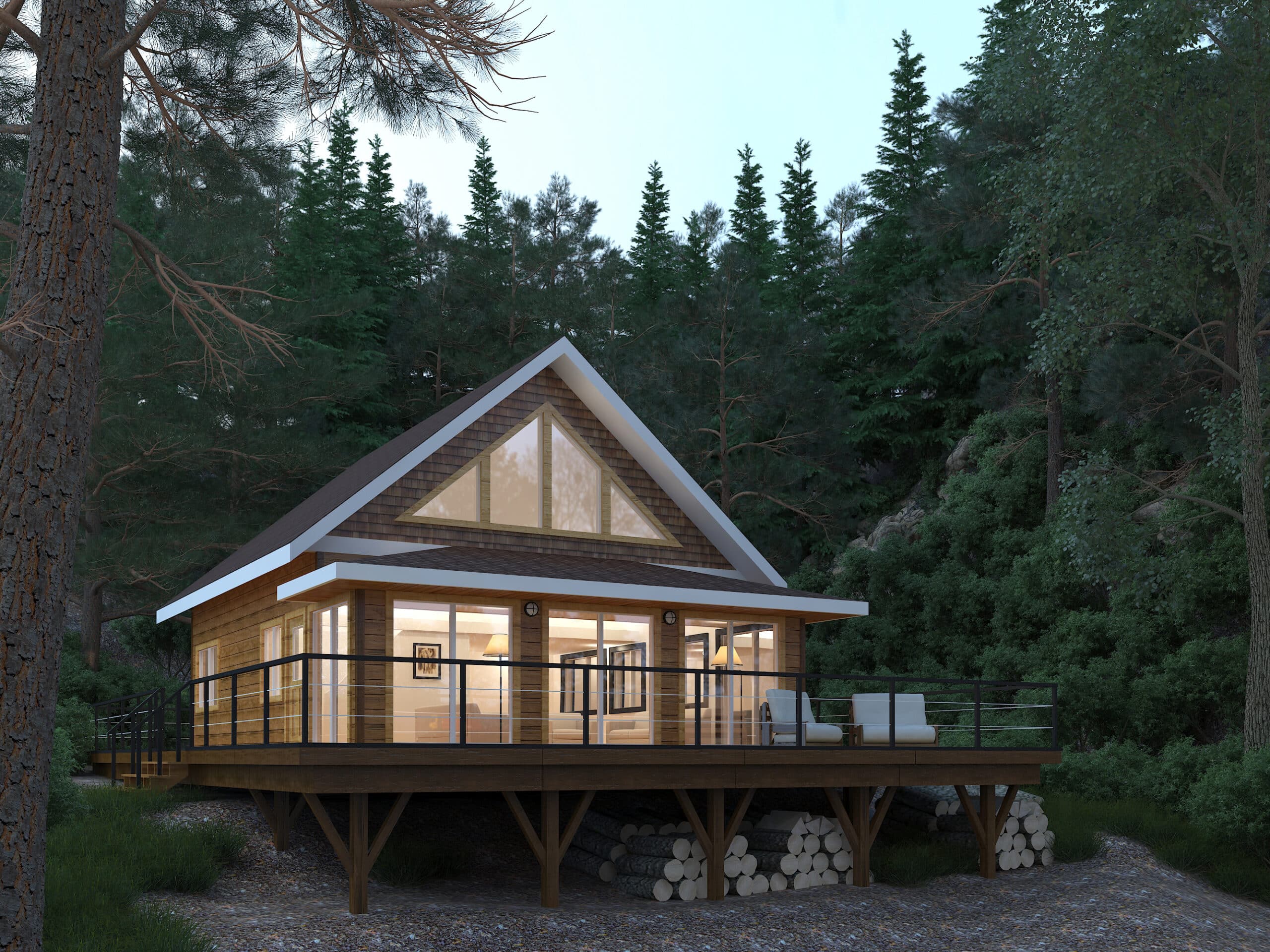
Prefab Cottages Ontario
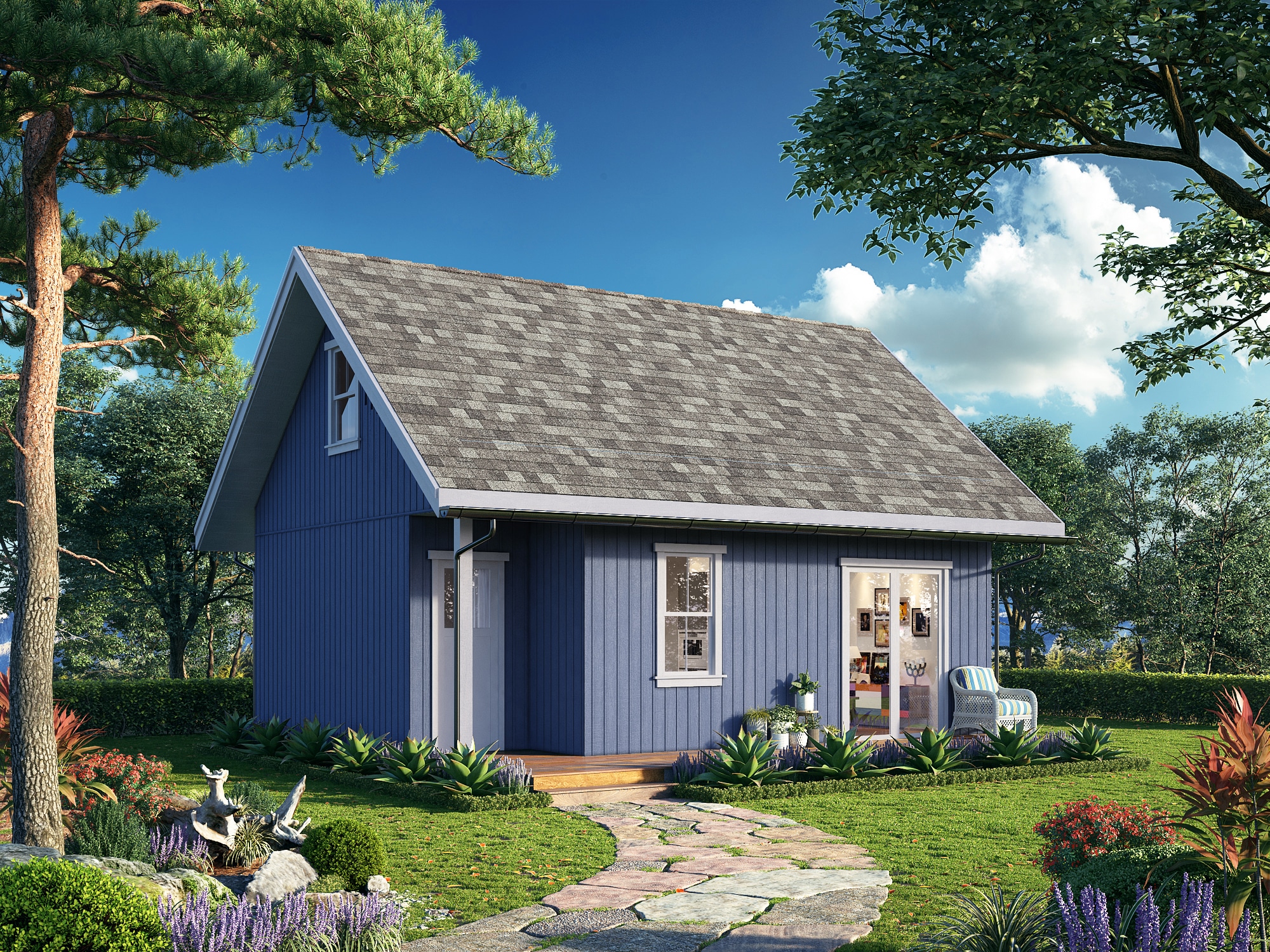
Prefab Cabins Ontario