Prefab Cottages in Belleville, Ontario: Costs, Lot Rules and Models
Last updated: August 8, 2026
Prefab cottages in Belleville start at $229,500 for the cottage, delivered and installed on a prepared site. What moves your total isn’t usually the cottage — it’s the lot.
Whether your property sits inside or outside Belleville’s urban boundary changes the municipal development charge by $9,939 on an otherwise identical build, and placing a compact cottage behind an existing home as an accessory dwelling unit can remove that charge entirely.
✓ HCRA Licensed | ✓ Tarion Enrolled | ✓ CSA A277 | ✓ Ontario-Built
This page covers what prefab cottages cost in Belleville, Ontario, the three lot situations buyers actually fall into, current City fees, the approvals that apply, and which of our 33 cottage models suit each path.
It sits within our wider guide to prefab cottages throughout Ontario, which covers Muskoka, the Kawarthas, Eastern Ontario and the Bay of Quinte.
Key takeaways
• Cottage models and floor plans, 505 to 3,373 sq ft, $229,500 to $949,500 — delivery and installation included
• 2026 development charges: $22,244 rural, $32,183 urban per single or semi-detached dwelling
• A qualifying accessory dwelling unit is exempt from municipal development charges, and Belleville currently offers a $5,000 rebate per new ADU
• Building permits: $12 per m² for a new dwelling, $7 per m² for an ADU, $100 minimum
• Residential building permits carry a 10-business-day review once the application is complete
Our Prefab Cottage Models and Floor Plans
We build 33 cottage models ranging from 505 to 3,373 sq ft, priced from $229,500 to $949,500. Every price shown is the preconfigured model delivered and installed on a prepared site. Custom cottages are also available where none of the standard floor plans suits the property. Foundation, site preparation, servicing, building permits and municipal charges are quoted separately against your lot.
Each model is a starting point rather than a fixed package. Layouts, bedroom and bathroom counts, finishes and exterior treatments are adjusted to your property and to how you intend to use the cottage — seasonal, four-season, or full-time.
Compact cottage models and small homes
These are the plans most relevant to a garden suite behind an existing house, a first build on a rural lot, or a seasonal cottage on a constrained property. Cabins and compact cottages in this range are also the most straightforward to deliver onto tight or wooded sites.
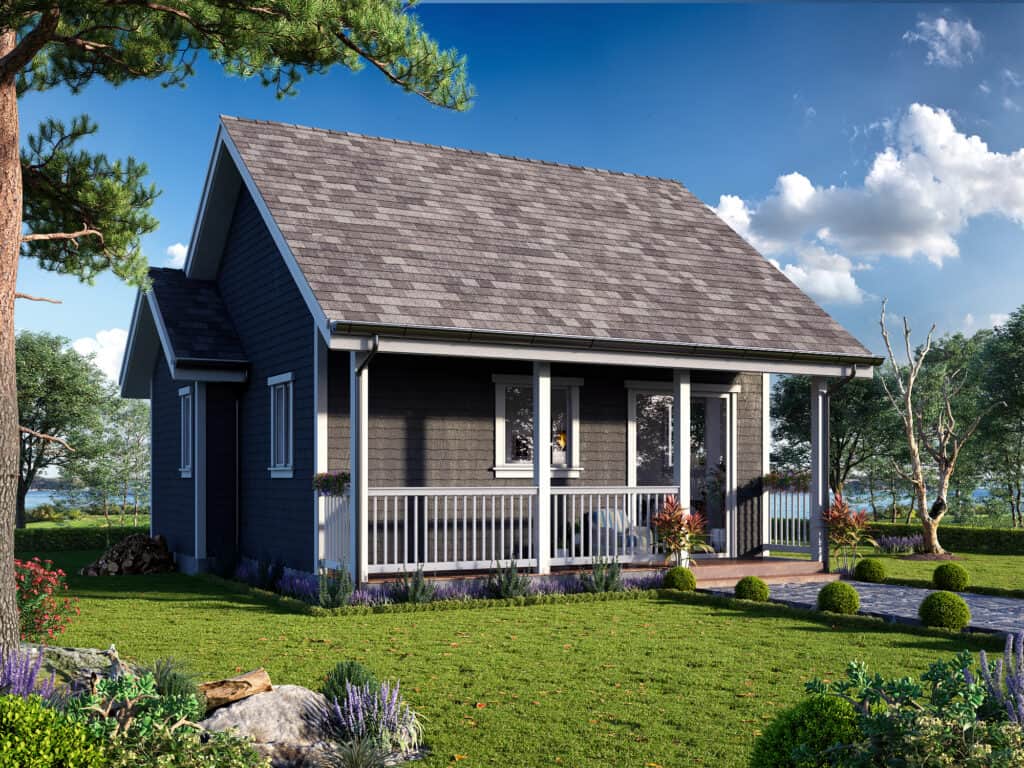
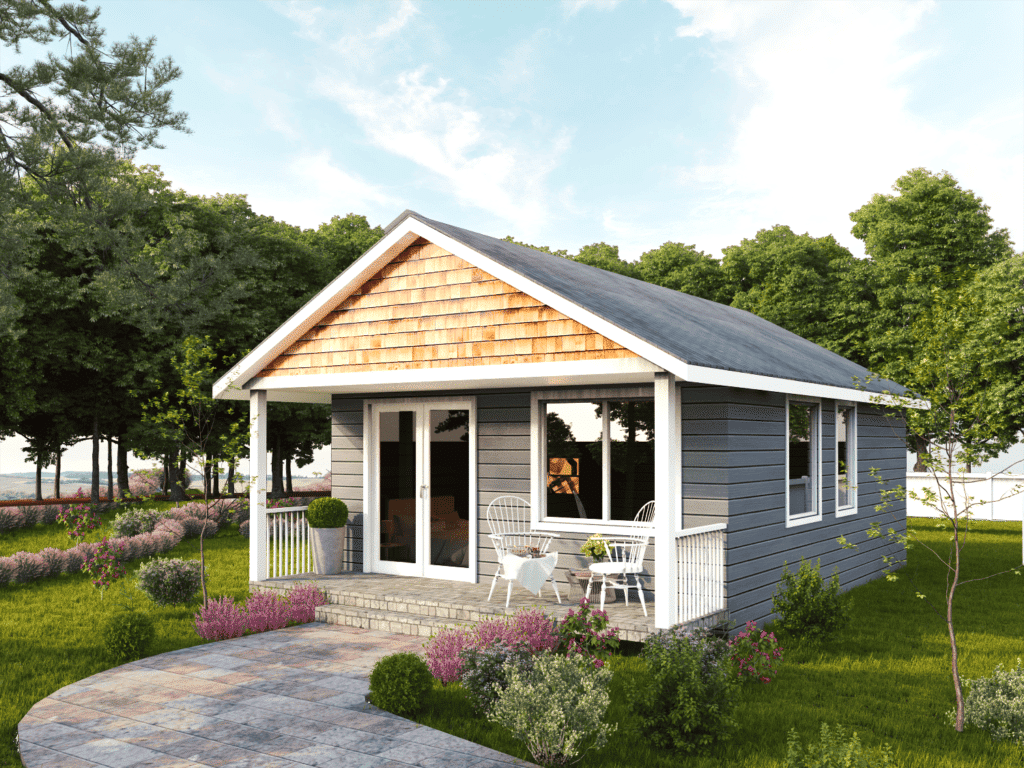
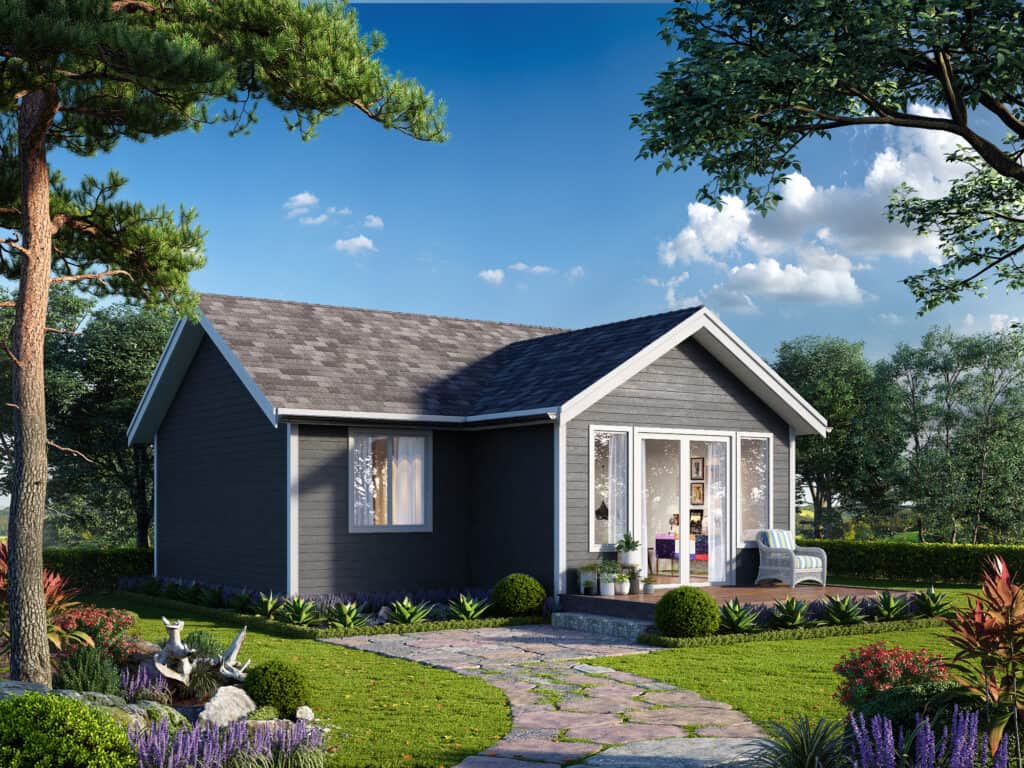
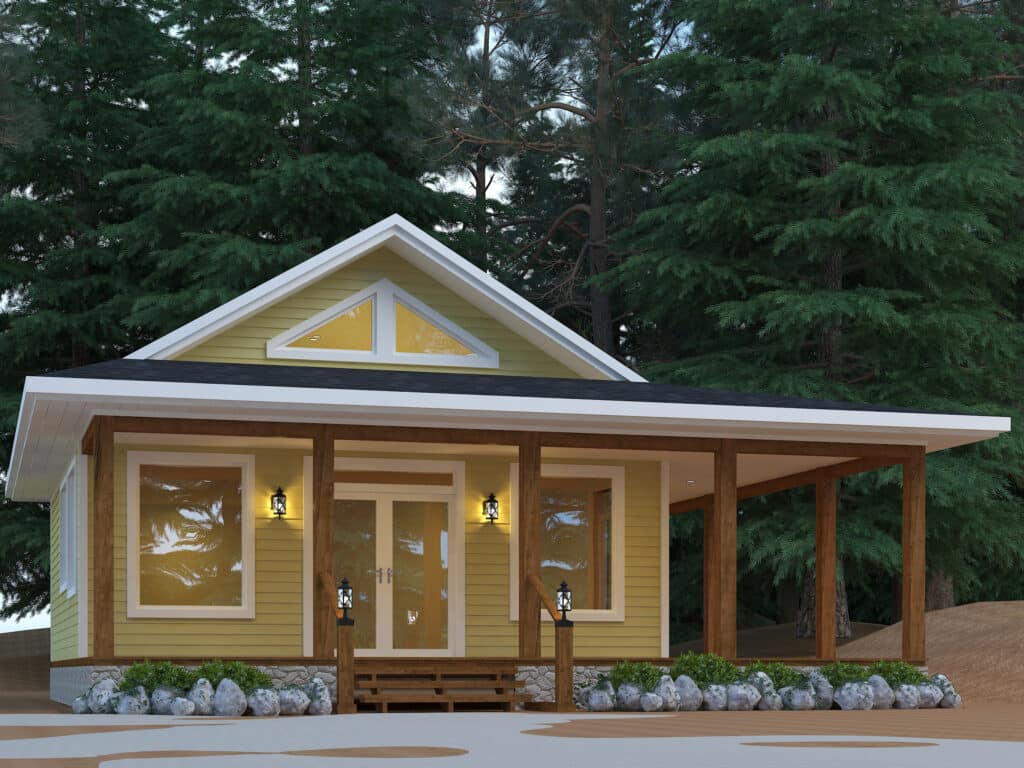

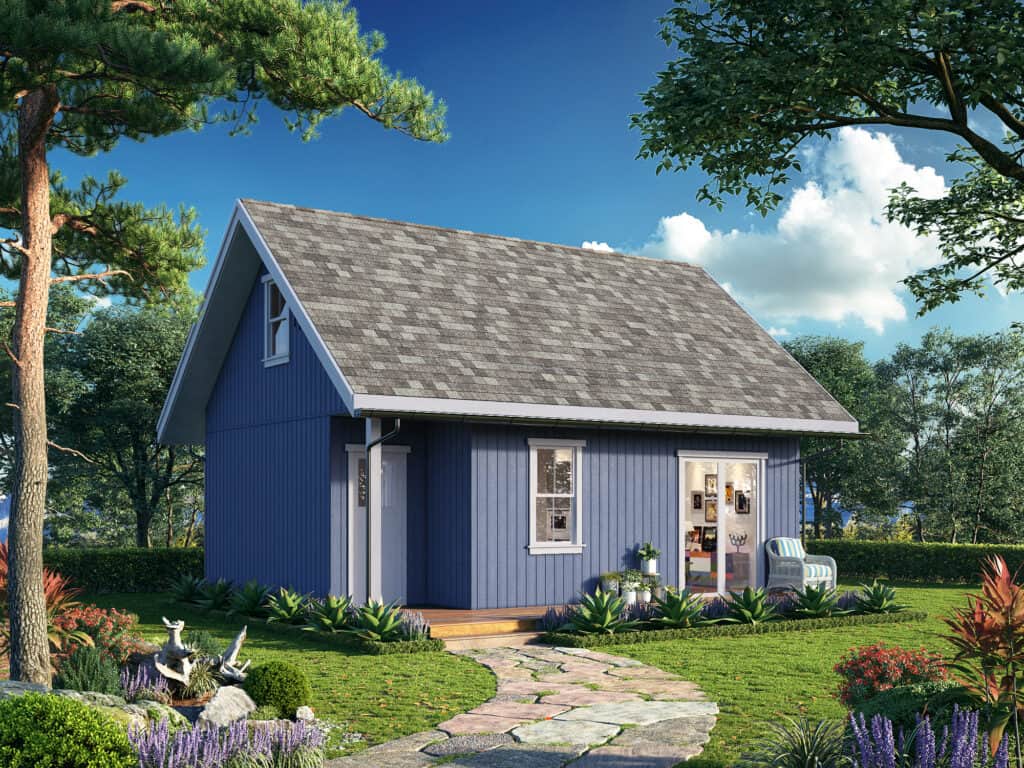
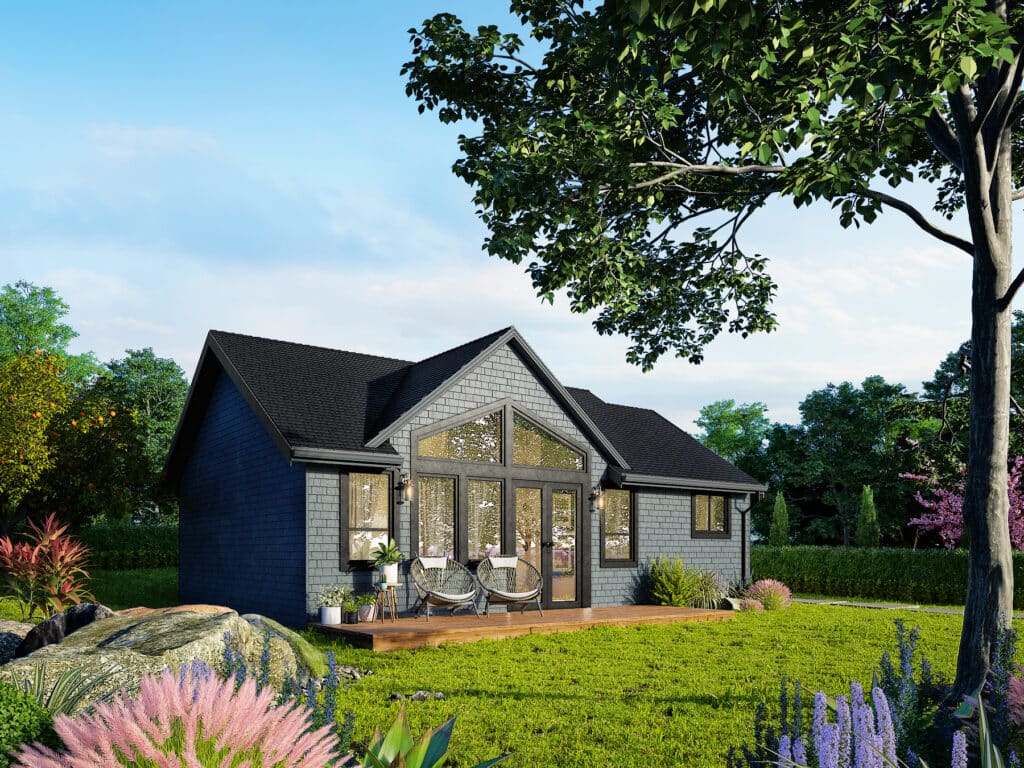
- 988 SQ. FT
- Bedrooms: 2
- Bathrooms: 1
Preconfigured model starting at: $324,500

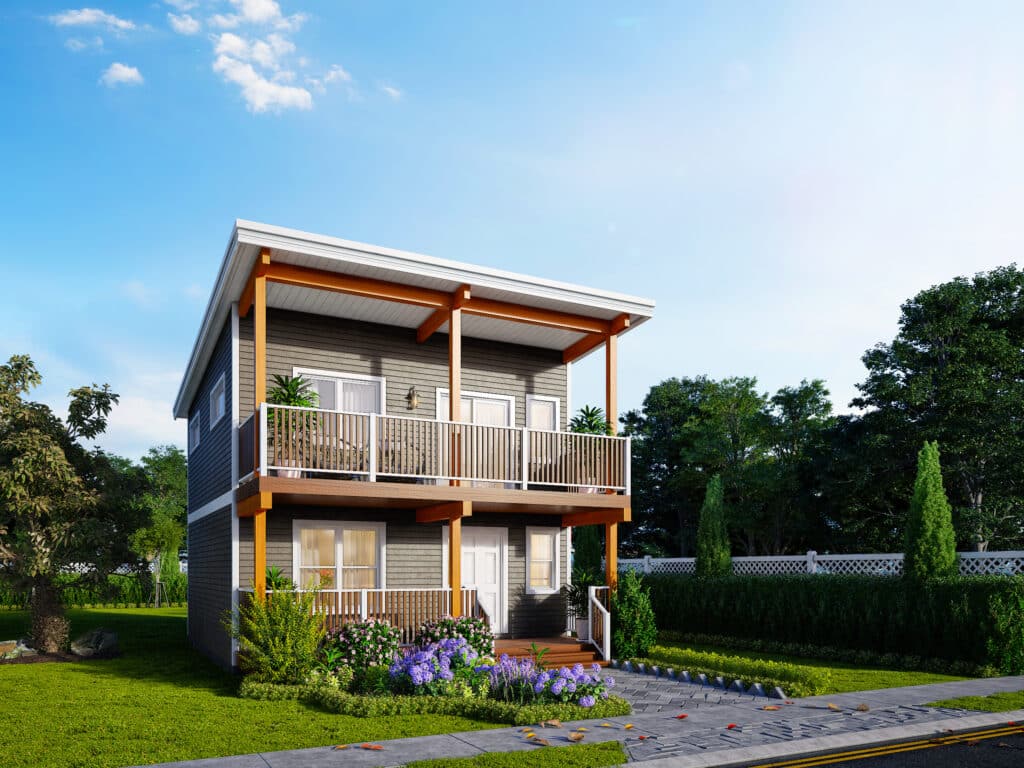
Full-size cottage models and prefab homes
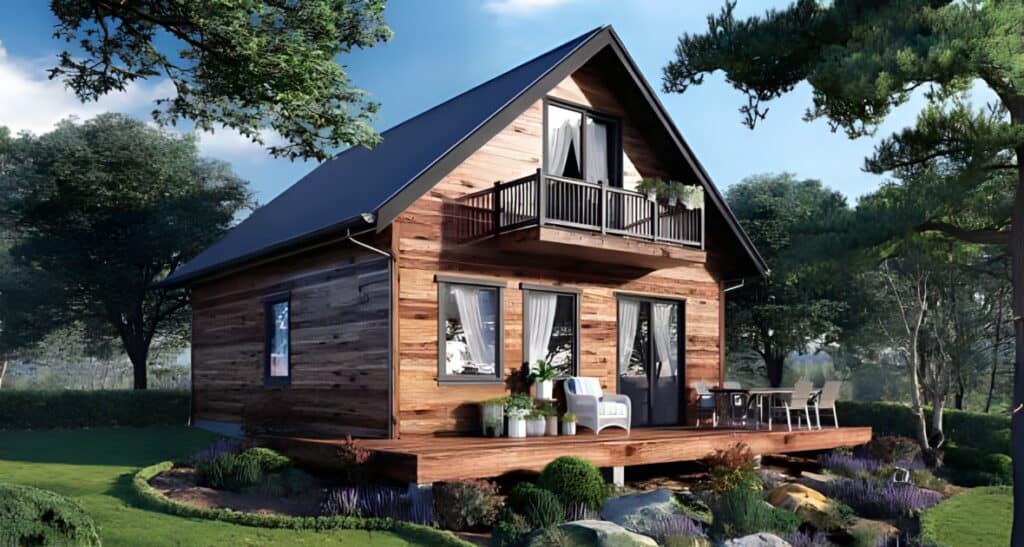
- 1170 SQ. FT
- Bedrooms: 3
- Bathrooms: 1
Preconfigured model starting at: $369,500
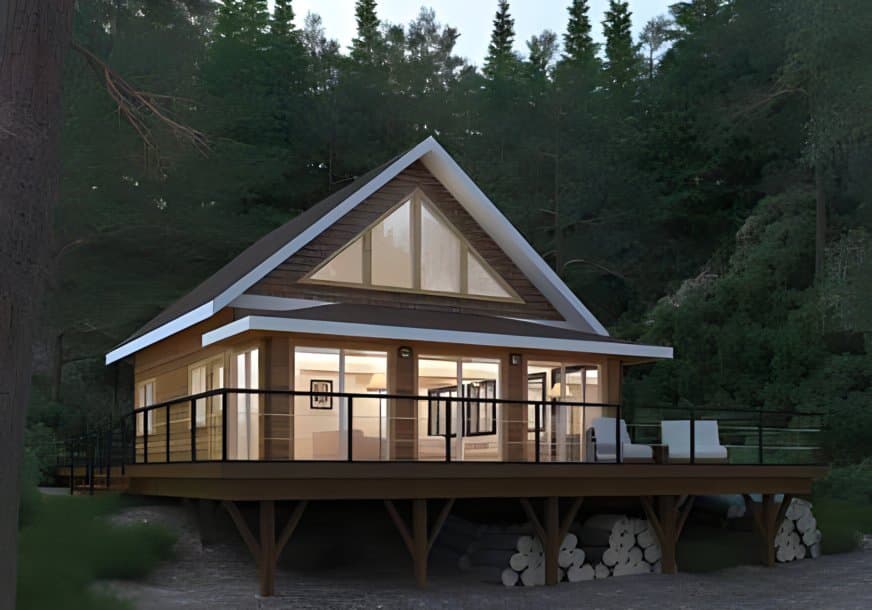
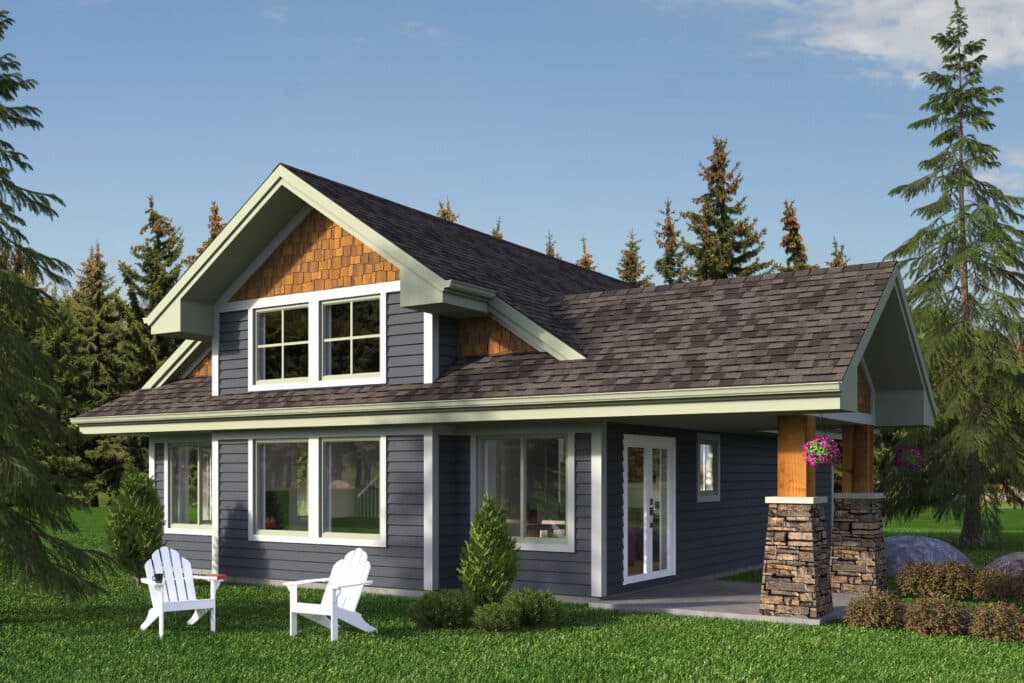

- 1381 SQ. FT
- Bedrooms: 2
- Bathrooms: 2
Preconfigured model starting at: $529,500
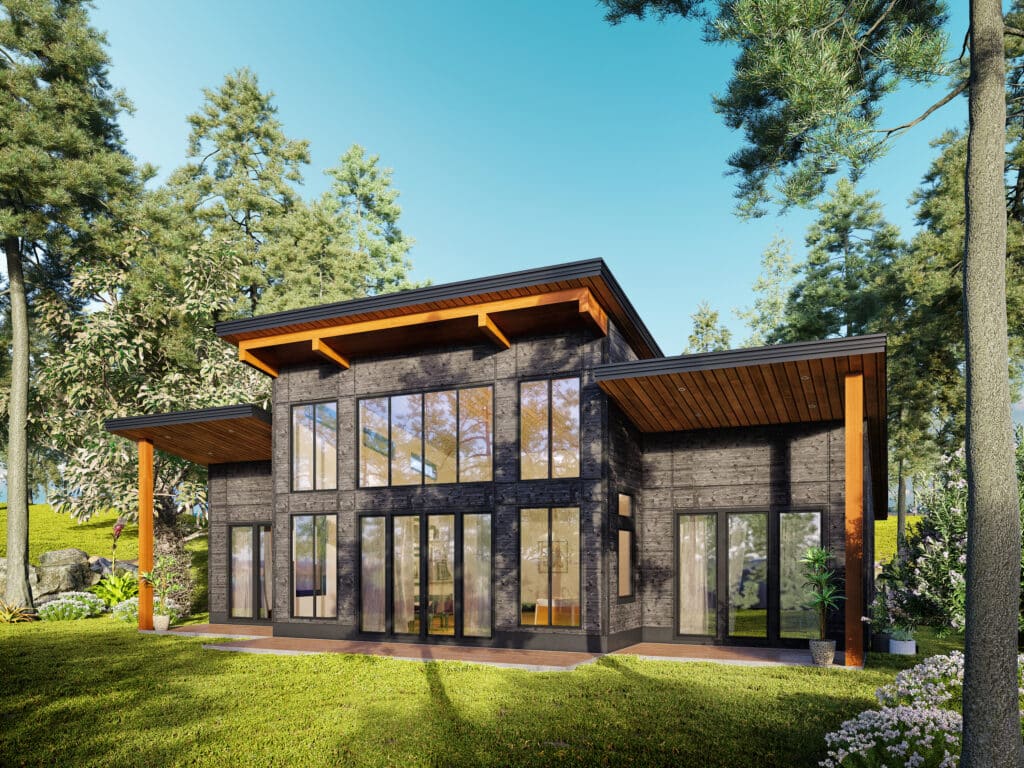
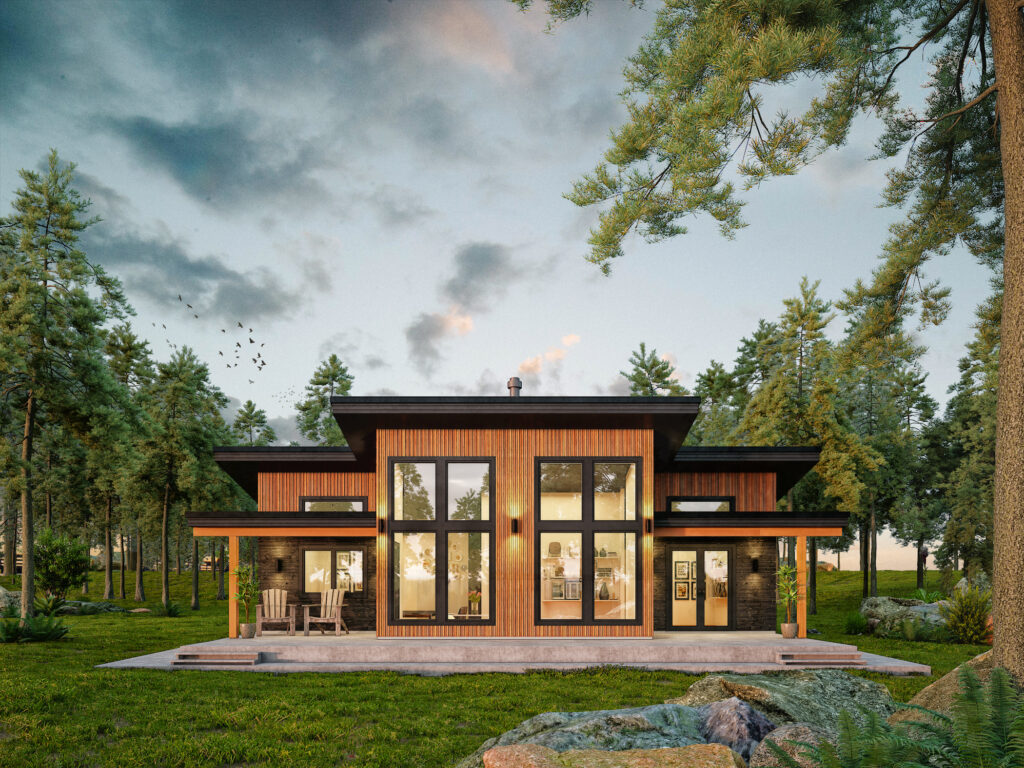
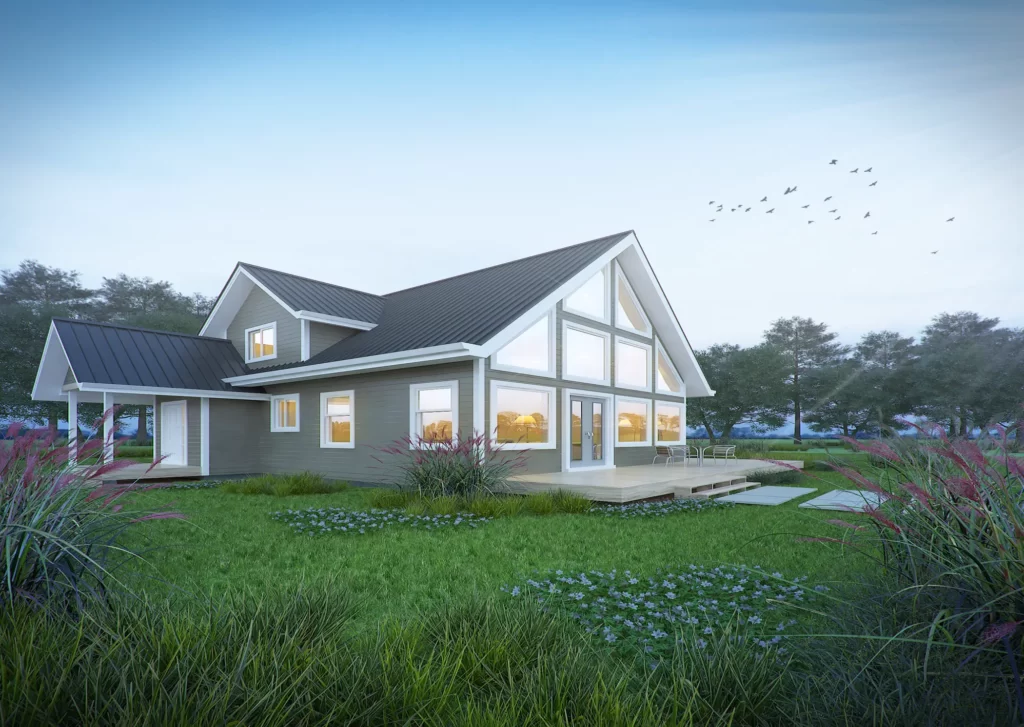
- 1752 SQ. FT
- Bedrooms: 3
- Bathrooms: 2
Preconfigured model starting at: $519,500
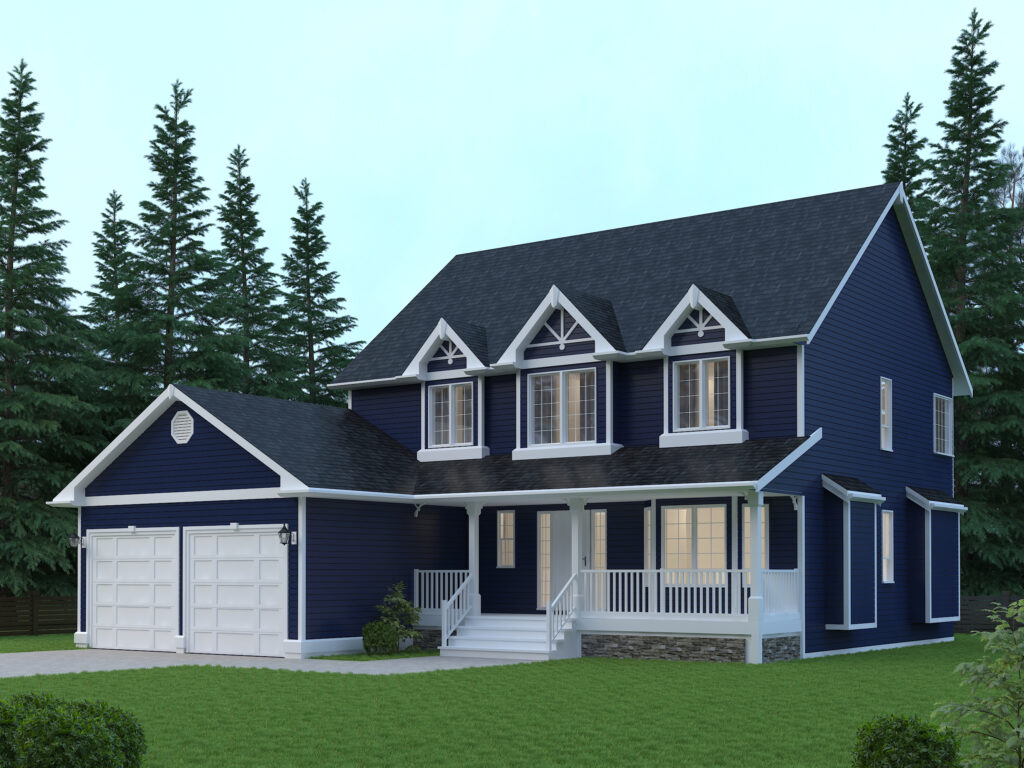
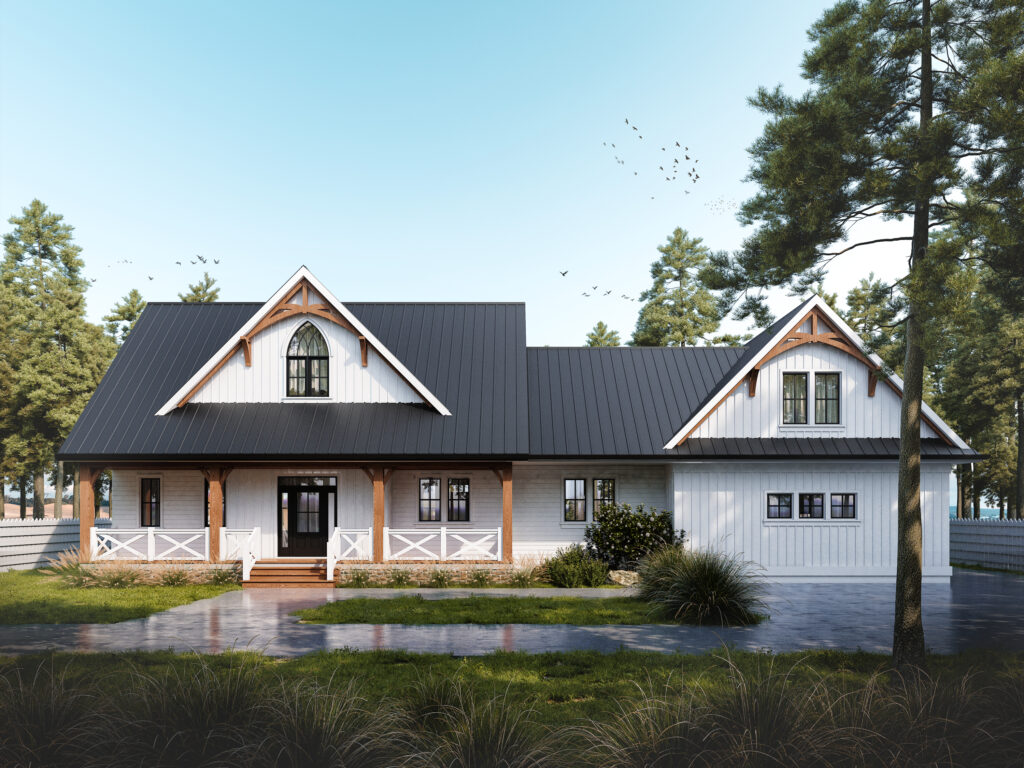

- 2307 SQ. FT
- Bedrooms: 3
- Bathrooms: 2
Preconfigured model starting at: $619,500
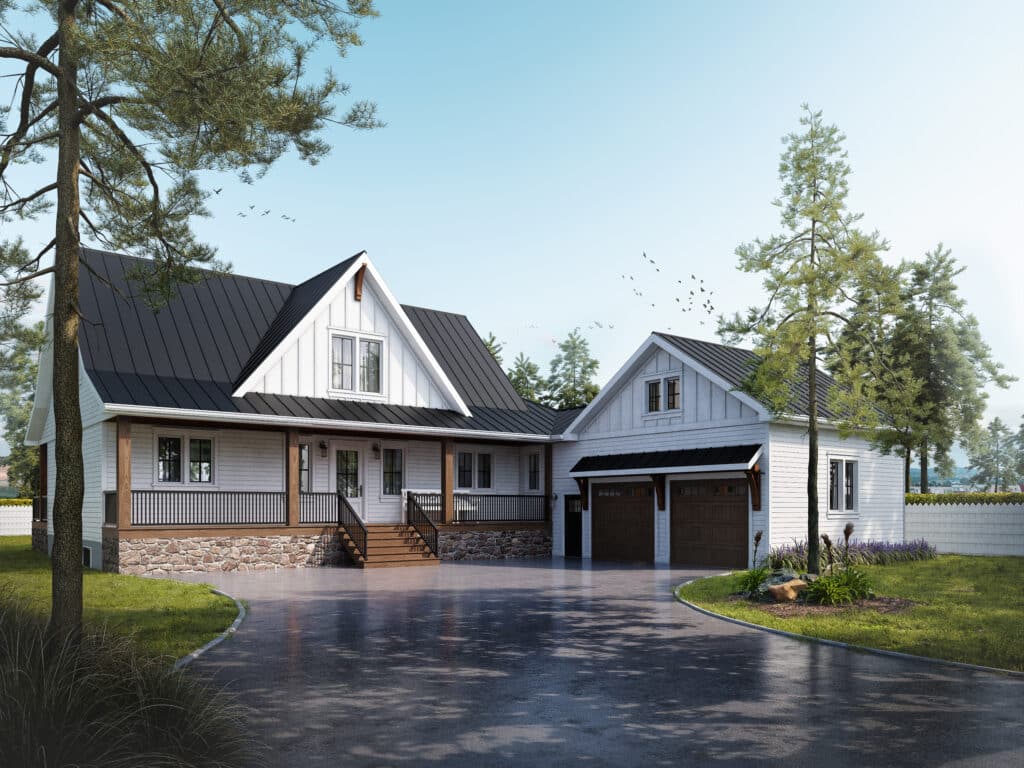
- 2513 SQ. FT
- Bedrooms: 3
- Bathrooms: 3
Preconfigured model starting at: $899,500
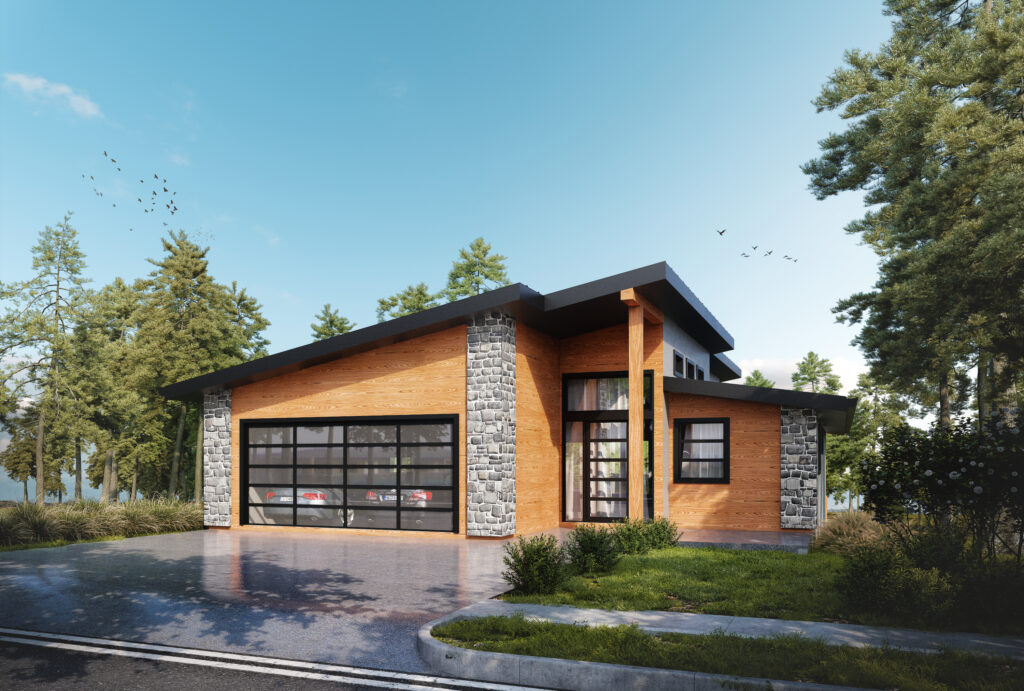
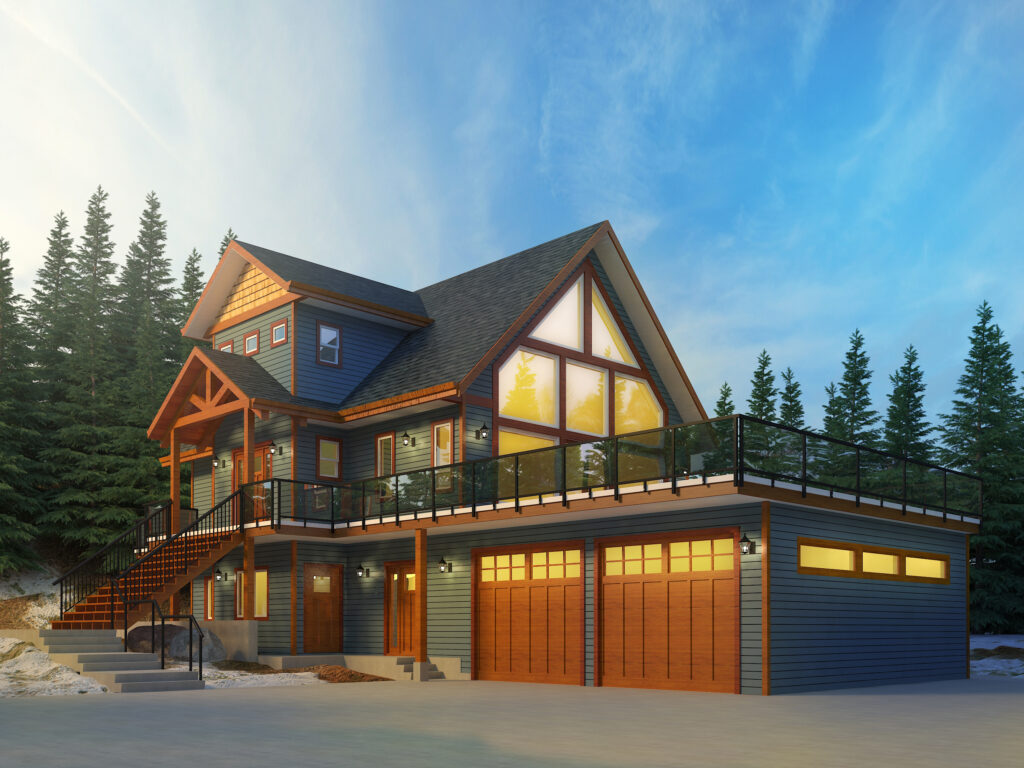
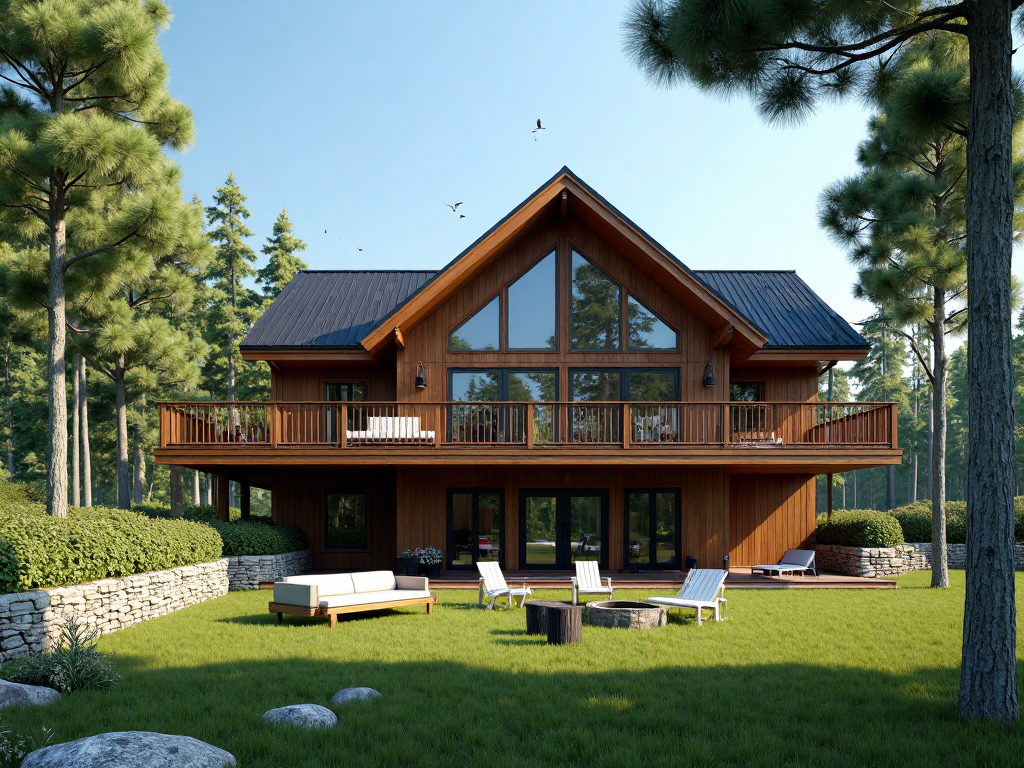
- 3008 SQ. FT
- Bedrooms: 3
- Bathrooms: 2
Preconfigured model starting at: $579,500
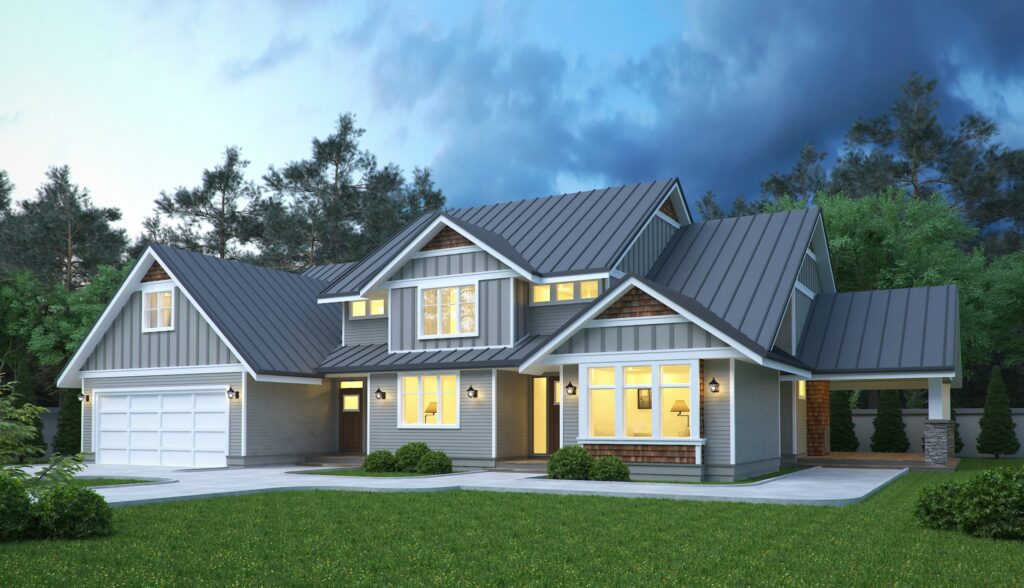
The full catalogue shows all 33 cottage designs with current pricing and floor plans, including the models not listed above.
Pricing tracks specification rather than floor area alone. A smaller plan with a more involved envelope, roofline or finish package can price above a larger one — which is why comparing prefab homes on cost per square foot tends to mislead.
How Much Do Prefab Cottages in Belleville Cost?
Prefab cottages in Belleville start at $229,500 for a compact model delivered and installed on a prepared site. Your total depends on three separate budgets: the cottage, your site costs, and municipal charges. In the urban area, development charges alone add $32,183 — roughly 14% of the entry-level cottage price — before any excavation begins.
Most published prefab pricing quietly leaves out the third budget. That is the one that surprises people.
The three budgets
| Budget | What it covers | How predictable |
|---|---|---|
| The cottage | Controlled factory construction, transport, delivery and installation on a prepared site | Quoted up front |
| Your site costs | Foundation, excavation and grading, driveway and access, water and sewer connection or well and septic, hydro | Varies widely by property |
| The municipality | Development charges, building permits, plumbing and occupancy permits, sewage system permit where applicable | Published, and calculable in advance |
The cottage price offers real cost predictability. Your site costs do not. That is why we quote them separately rather than folding everything into a single per-square-foot number — a figure that only becomes meaningful once someone has actually assessed your lot.
Transparent pricing on this page means showing you both halves, including the half that varies.
The same three-budget structure applies province-wide; how cottage budgets break down across Ontario sets out which parts change between municipalities and which don’t.
What the cottage price includes
• Controlled factory construction of the modules, with quality control applied under repeatable indoor conditions
• Transport to your property
• Delivery and installation onto a foundation you have prepared
• Licensed-trade installation and coordination for final connections
What it does not include
• Foundation design and construction
• Site preparation, excavation, grading and access
• Water and sewer connection, or well and septic
• Hydro servicing
• Building permits, development charges and other municipal fees
• Land
Every item on that list is quoted against your specific property. Send us the address and we will scope it.
Belleville Development Charges: The Number Nobody Publishes
Belleville’s 2026 city-wide development charge for a new single or semi-detached dwelling is $22,244 in the rural area and $32,183 in the urban area, set under By-law 2021-201 and effective January 1, 2026. An additional Stanley Park area charge of $4,340 per unit applies to specified lands. Development charges are payable at building permit issuance.
That $9,939 gap between rural and urban is decided by a boundary line, not by anything about your cottage.
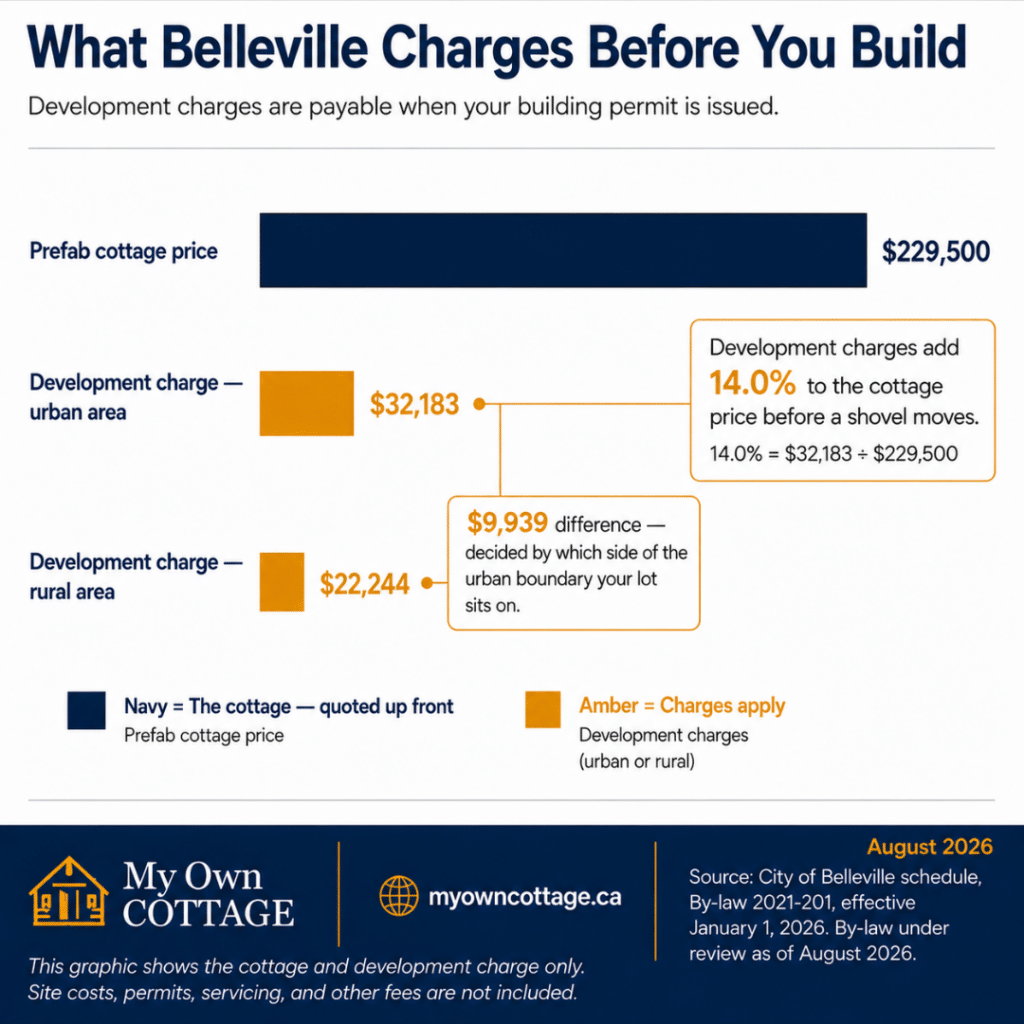
Prefab cottages Belleville development charge comparison showing how the City of Belleville's 2026 development charges relate to a prefab cottage starting at $229,500.
Why “budget 10–20% for site costs” doesn’t hold in Belleville
You will see that rule of thumb across prefab websites — that foundation, landscaping, permits and utilities add roughly 10 to 20 percent to the base price.
Run it against Belleville’s published figures. The urban development charge of $32,183 is 14.0% of a $229,500 cottage on its own — before a cubic metre of excavation, before a foundation, before a water connection, before a permit fee. Add real site preparation and the 10–20% guidance is not in the right range.
We would rather give you the actual numbers and let you plan against them.
Two timing details that change your budget
Development charges are calculated at the rate in effect on the date your building permit is issued, not the date you applied. If rates move between application and issuance, the newer rate applies.
Belleville is actively reviewing its development charge by-law. A consultant’s report presented to Council in late July 2026 recommended a lower residential rate, with a replacement by-law expected in the autumn. Confirm the current figure with Building Services before committing to a budget. The numbers above are accurate as of August 8, 2026 and are under review.
Belleville Building Permit Fees, Calculated by Cottage Model
Belleville charges building permits by floor area in square metres, not square feet. New residential construction of three units or fewer is $12 per m², minimum $100. An additional dwelling unit is charged at the lower rate of $7 per m². An occupancy permit is $20, and a new Class 2–5 sewage system permit is $640.
Here is what that produces across a range of our cottage models.
| Cottage model | m² | As a new dwelling ($12/m²) | As an ADU ($7/m²) |
|---|---|---|---|
| Fox Den (505 sq ft) | 46.9 | $563 | $328 |
| Willow (564 sq ft) | 52.4 | $629 | $367 |
| Kingswood (646 sq ft) | 60.0 | $720 | $420 |
| Hideaway (788 sq ft) | 73.2 | $879 | $513 |
| Water’s Edge (988 sq ft) | 91.8 | $1,102 | $643 |
| Lily of the Valley (1,752 sq ft) | 162.8 | $1,953 | — |
| Victoria (3,373 sq ft) | 313.4 | $3,760 | — |
These are our calculations from the City’s published rates and each model’s floor area. The Permit Clerk performs the official calculation at submission, and that calculation governs.
The takeaway: building permits are a rounding error beside development charges. On an urban lot, the permit for a Water’s Edge is about $1,100 against a $32,183 development charge. If you are worried about the wrong number, this is the one to stop worrying about.
Other published fees worth knowing: detached garages and accessory structures are $7.50 per m², a finished basement $5.50 per m², residential plumbing $15 per unit plus $7 per fixture, and a sewage system repair or alteration $150. Building without a permit adds a surcharge of 30% of the permit fee, minimum $150.
Prefab Cottages as Accessory Dwelling Units in Belleville
Belleville currently permits up to three accessory dwelling units on a property in the urban area, depending on servicing and zoning conditions, and one in the rural area. A qualifying additional residential unit is exempt from municipal development charges under the Development Charges Act, and the City currently offers a $5,000 rebate for each new ADU through its Community Improvement Plan.
This is the largest single cost lever available to a Belleville buyer, and almost nobody discusses it.
Two paths compared
Take a Fox Den at $229,500 on an urban Belleville property.
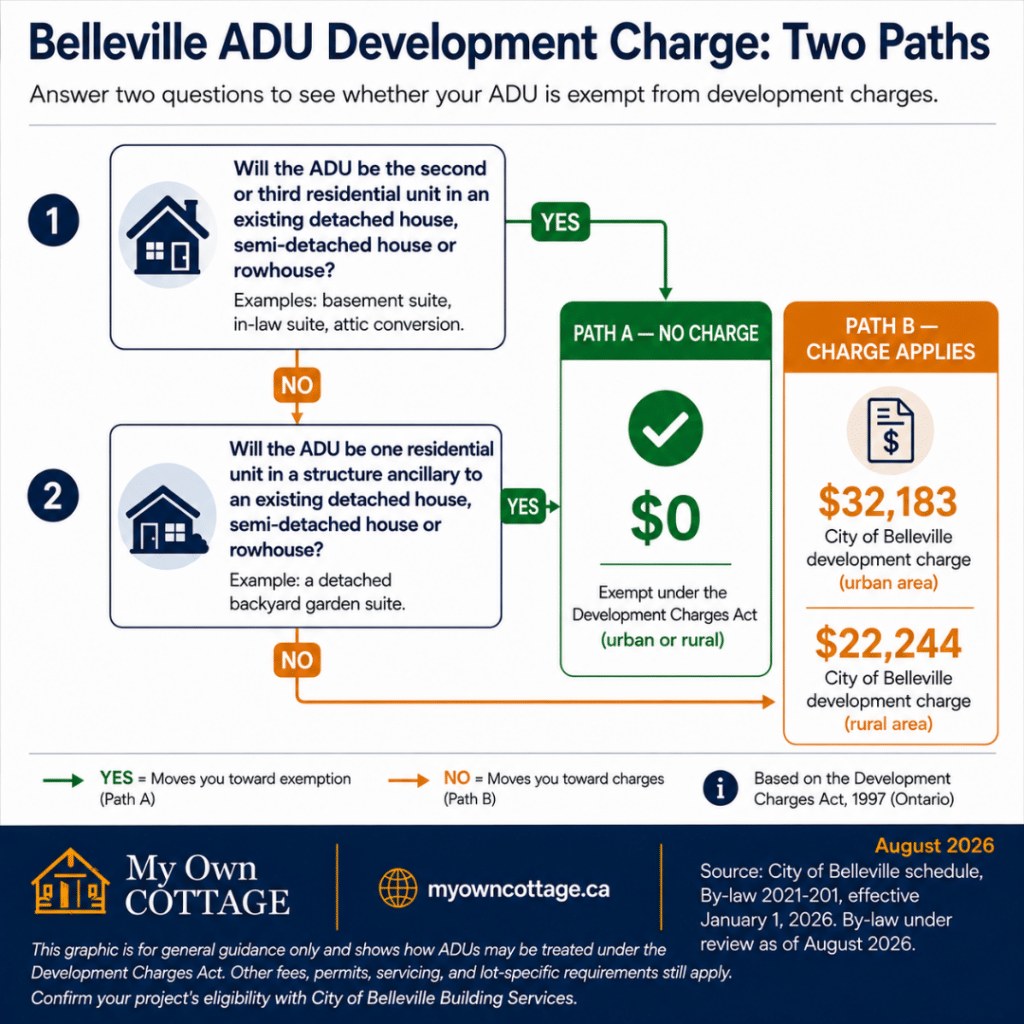
Two questions decide whether Belleville's development charge applies to your backyard cottage. If the unit qualifies, the charge is $0 — instead of $32,183 on an urban lot or $22,244 rural. Confirm your project's eligibility with City of Belleville Building Services.
| Municipal cost item | Path A — behind an existing home (ADU) | Path B — new dwelling on its own urban lot |
|---|---|---|
| Development charge | $0 (qualifying unit, exempt) | $32,183 |
| Building permit | $328 ($7/m²) | $563 ($12/m²) |
| Occupancy permit | $20 | $20 |
| City ADU rebate | −$5,000 | Not applicable |
| Net municipal position | About −$4,652 | About $32,766 |
Which path your project falls into depends on your lot and what already stands on it. We will walk through it with you before you spend anything.
The same cottage, from the same factory. A swing of roughly $37,000 in municipal cost, decided entirely by which legal category your project falls into.
Two honest qualifications. The exemption applies to qualifying units, and the conditions turn on how many residential units already exist on the parcel — confirm your specific project with Building Services rather than assuming it applies. And the CIP rebate is funded first-come, first-served with eligibility conditions attached, so confirm funding remains available before you count on it.
What makes an ADU legal in Belleville
The City is explicit that only registered units are legal. The sequence is:
1. A building permit is issued
2. All required inspections are completed successfully
3. A final inspection and occupancy permit are issued
4. The unit is listed in the City’s Accessory Dwelling Unit Registry, updated monthly
If you are buying a property that already advertises a second unit and it does not appear on that registry, resolve it before closing.
Worth knowing for owner-builders: the City exempts property owners from designer qualification requirements, provided the application is not creating a third dwelling unit in total within a single structure.
If your property is on well and septic
Your septic system may need evaluation to confirm it can carry the additional load. A hydrogeological study may also be required. The City’s stated trigger is land within an area of known groundwater constraint, or an area with five or more existing dwellings or lots occupying four hectares or less within 300 metres of the new lot boundary.
That is a specific test, and it is worth checking at the outset — it affects both your timeline and your utility planning budget.
Belleville’s Near Permit-Ready House Designs
The City of Belleville is assembling a free public library of near permit-ready house designs for detached ADUs of up to 100 m². Locally produced base designs will be $1,000 each; designs drawn from the CMHC Housing Design Catalogue are free.
Because City Building Officials review these plans in advance, building permit issuance is faster. A BCIN-qualified designer or architect is still required to adapt any design to a specific property.
Two catalogue designs are currently showcased: Ontario ADU 01 (one unit, one bedroom, 58.9 m²) and Ontario ADU 02 (one unit, three bedrooms, 95.2 m²). The City also lists a fourplex design at 362 m² and a stacked townhouse at 201 m².
What “near permit-ready” covers, and what it doesn’t
This is the part buyers most often misread. The City states plainly that a licensed professional must still finalise drawings for your property.
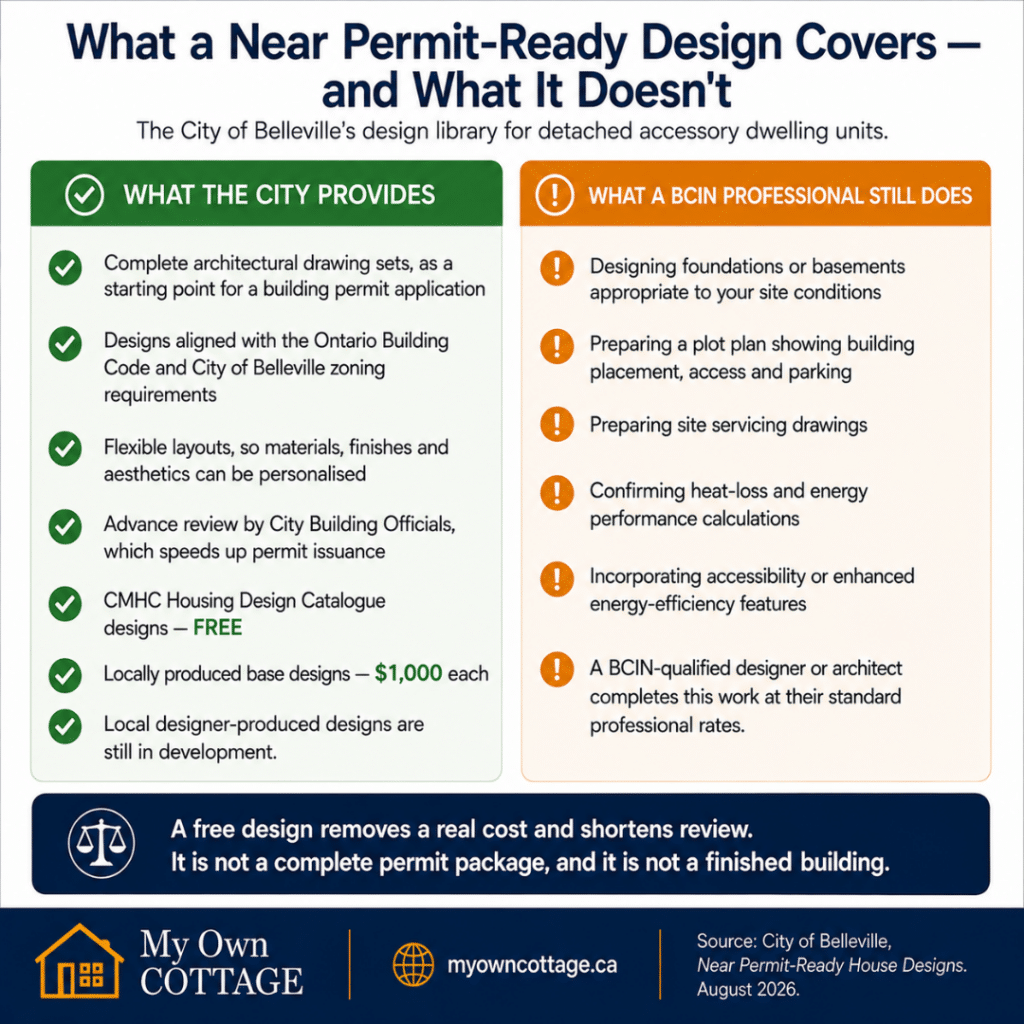
The City's design library gives you pre-reviewed drawings — free, or $1,000 locally produced. Adapting them to your lot is still a BCIN professional's job, at their usual rates.
That work typically includes:
• Designing foundations or basements appropriate to your site conditions
• Preparing a plot plan showing building placement, access and parking
• Preparing site servicing drawings
• Confirming heat-loss and energy performance calculations
• Incorporating accessibility or enhanced energy-efficiency features
A free design is genuinely valuable — it removes a real cost and shortens review — but it is not a complete permit package and it is not a finished building.
How our compact cottage models compare
Thirteen of our 33 cottage models fall within the same size range the City’s design library targets, from Fox Den at 46.9 m² up to Haven at 99.0 m². Those are listed in the compact table near the top of this page.
One point to confirm before you shortlist: the 100 m² figure is the design library’s size limit, not necessarily the zoning size limit for a detached ADU on your particular property. Zoning provisions for accessory dwelling units sit in Subsection 16.13 of Zoning By-law 2024-100, and the applicable limit — along with how it treats porches, decks and balconies — should be confirmed against your parcel before you choose a model.
Zoning, Permit Coordination and the Real Timeline
Belleville’s current zoning framework is Zoning By-law 2024-100, in effect since March 11, 2024 and consolidated to May 2026. A residential house permit carries a 10-business-day review period under the Ontario Building Code, and that clock starts the day after the City considers your application complete — not the day you submit it.
That distinction is where most “it took months” stories originate. The statutory review is fast. Reaching a complete application is the part that takes time, and it is where permit coordination and municipal coordination earn their keep.
The approval sequence
1. Confirm your zone. Use the City’s zoning and building compliance request rather than assuming. Zoning determines whether your intended use is permitted at all.
2. Check whether Quinte Conservation regulates your property. Where it does, this approval comes first.
3. Resolve servicing. Municipal water and sewer, or well and septic. A new Class 2–5 sewage system permit is $640.
4. Assemble the application. Plot plan, floor and framing plans, cross-section drawings, application form, fees. The document set is broadly consistent across Ontario — what a building permit application actually requires walks through each item and what it is for.
5. Submit and review. Ten business days for a residential house once complete; small buildings under 600 m² are 15 business days.
6. Build, inspect, occupy. Inspections at framing, plumbing and mechanical rough-in, then insulation and air and vapour barriers, fire separations, and prior to occupancy.
Controlled factory construction and site preparation can proceed in parallel where approvals and site conditions allow. That is the main reason off-site construction compresses a schedule and limits exposure to weather-related delays. It does not shorten the approval stage, and no builder can promise that it will.
Quinte Conservation
If your property sits near a wetland, watercourse, steep slope or lake shoreline, you may need a permit from Quinte Conservation before the City will issue a building permit. This is a separate authority with its own application, operating under the Conservation Authorities Act and O. Reg. 41/24, which replaced the previous regulation on April 1, 2024.
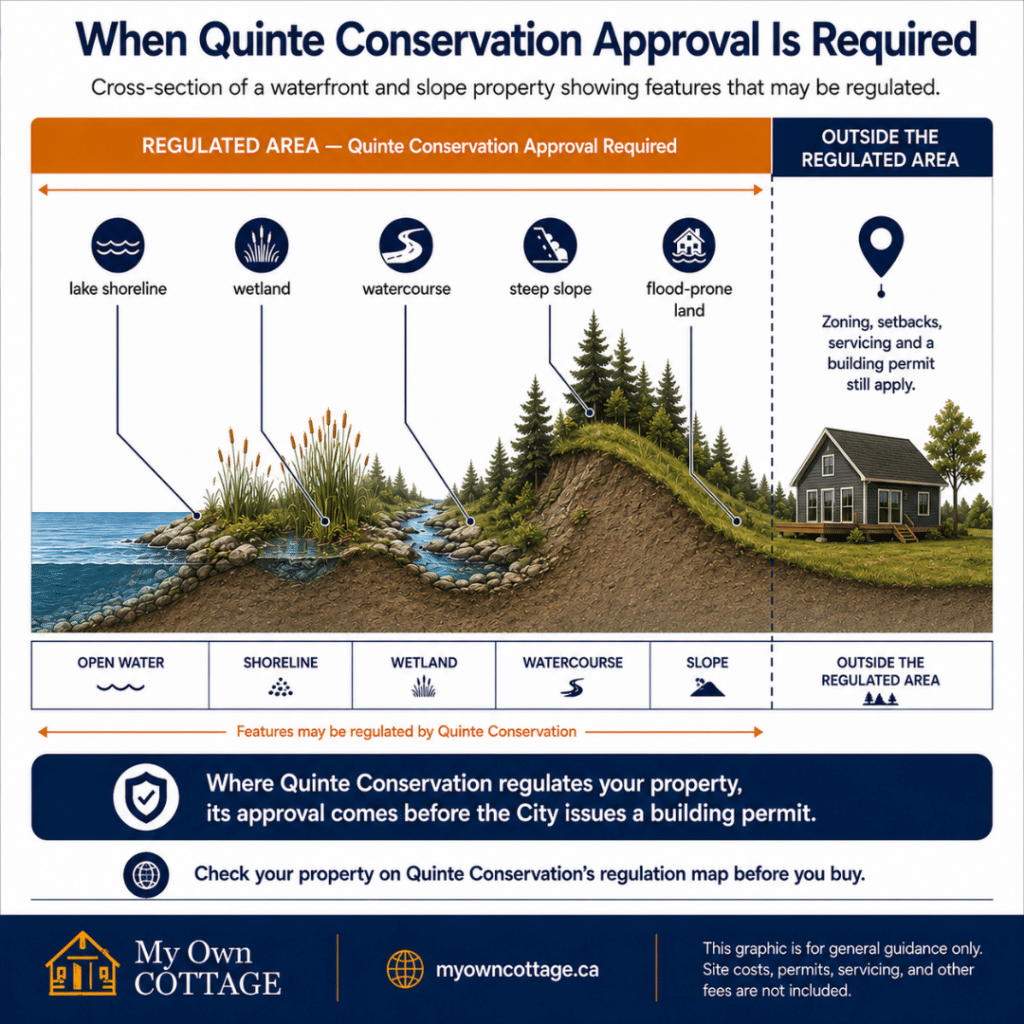
Quinte Conservation may regulate work near a shoreline, wetland, watercourse, steep slope or flood-prone land — and its approval comes before the City's building permit.
Two Belleville-area floodplain mapping studies are underway. Bell Creek mapping dates from 1984 and Potter Creek mapping from 1993; both are being updated with current land-use and climate data, the latter covering a 30 km² watershed and a 31 km watercourse.
Because development within a floodplain or its associated setbacks requires conservation approval before a building permit is granted, updated mapping can change what is buildable on a specific parcel.
If you are buying land near either creek, check the regulated-area mapping before you buy. Quinte Conservation publishes an online property regulation map for exactly this purpose, from its office at 2061 Old Highway 2 in Belleville.
One piece of stability on cost: a March 2026 provincial direction requires conservation authority planning, development-review and permitting fees to remain unchanged through February 28, 2027.
Where You Can Put a Prefab Cottage in Belleville
Three lot situations cover almost every prefab cottage project in Belleville, Ontario, and they carry materially different costs and approvals. A serviced urban lot has the highest development charges but the simplest servicing. A rural property saves $9,939 in charges but adds a well, septic and access. Waterfront adds a conservation approval ahead of the building permit.
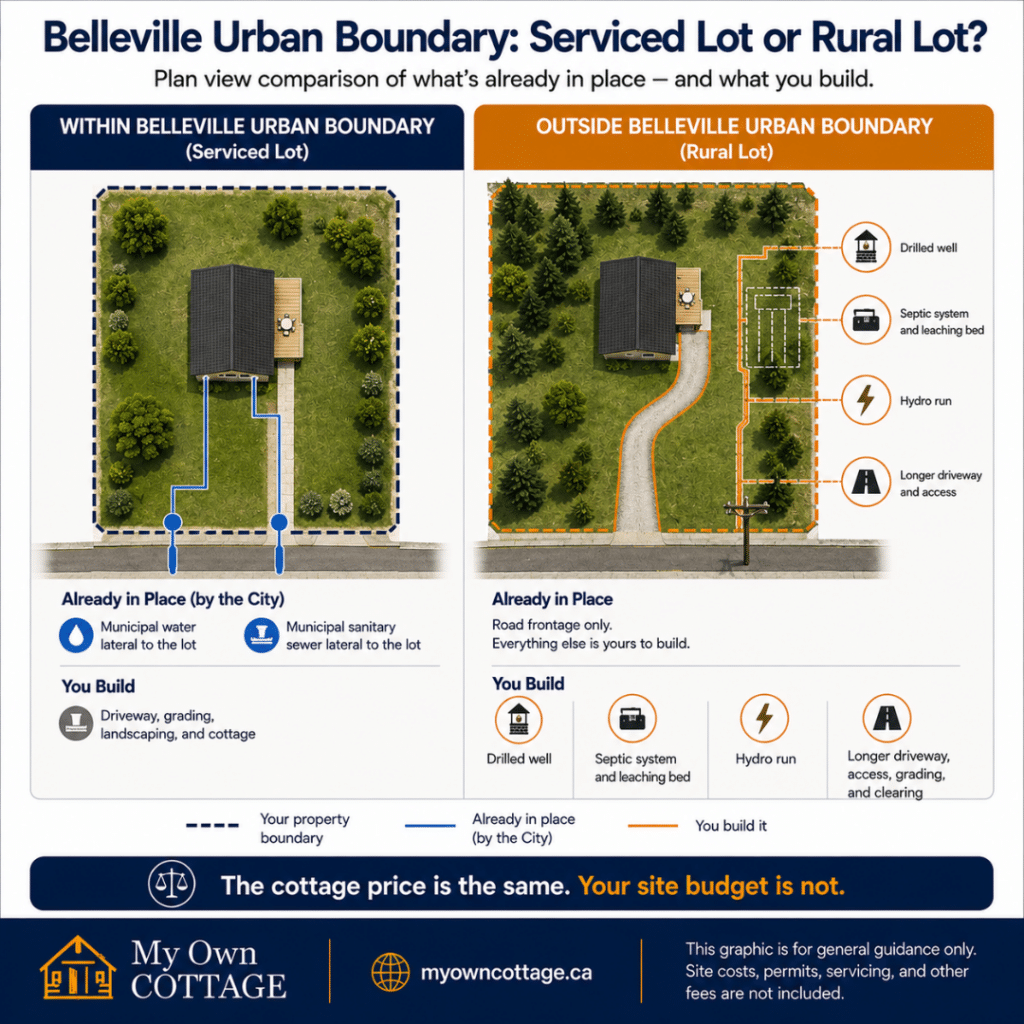
A serviced Belleville lot comes with water and sewer at the property line. A rural lot comes with road frontage — the well, septic, hydro and driveway are yours to build.
1. A serviced lot inside the urban boundary
Water and sewer are at the street. Development charges are at their highest — $32,183 — but utility planning is simpler and more predictable than drilling a well and installing a septic system. This is also where up to three accessory dwelling units may be permitted, subject to servicing and zoning.
Best suited to: a permanent residence, or a compact garden suite behind an existing house. If a full-time home is what you have in mind, our guide to permanent factory-built housing in the Quinte area covers the same lot, zoning and servicing questions from that angle.
2. A rural property on private services
Development charges drop to $22,244, but you take on a well, a septic system, a longer hydro run and a driveway. The $9,939 saved can be consumed several times over by servicing, so treat it as a shift in where the money goes rather than a saving. One ADU is permitted, subject to septic capacity.
Best suited to: acreage, four-season country cottages, and buyers who want land more than services. An hour east along the 401, the equivalent figures for Kingston show how differently two Eastern Ontario municipalities price the same build.
3. Waterfront on the Bay of Quinte or the Moira River
Add Quinte Conservation to your approvals and treat the regulated-area mapping as the first thing you check rather than the last. Setback, floodplain and shoreline provisions constrain where a building may sit — sometimes enough to determine which cottage models remain viable.
Best suited to: seasonal and four-season cottages, with a longer planning runway.
Serviced, rural or waterfront — the model that suits your lot depends on access, servicing and approvals as much as on floor area.
Prefab Homes, Modular Homes, Manufactured Homes and Kits
“Prefab” is an umbrella term rather than a product. Prefab homes, modular homes, manufactured homes, panel packages and house kits are genuinely different products delivered at different stages of completion — which is why advertised prices across the category are not comparable. Understanding which one you are buying matters more than the label on it.
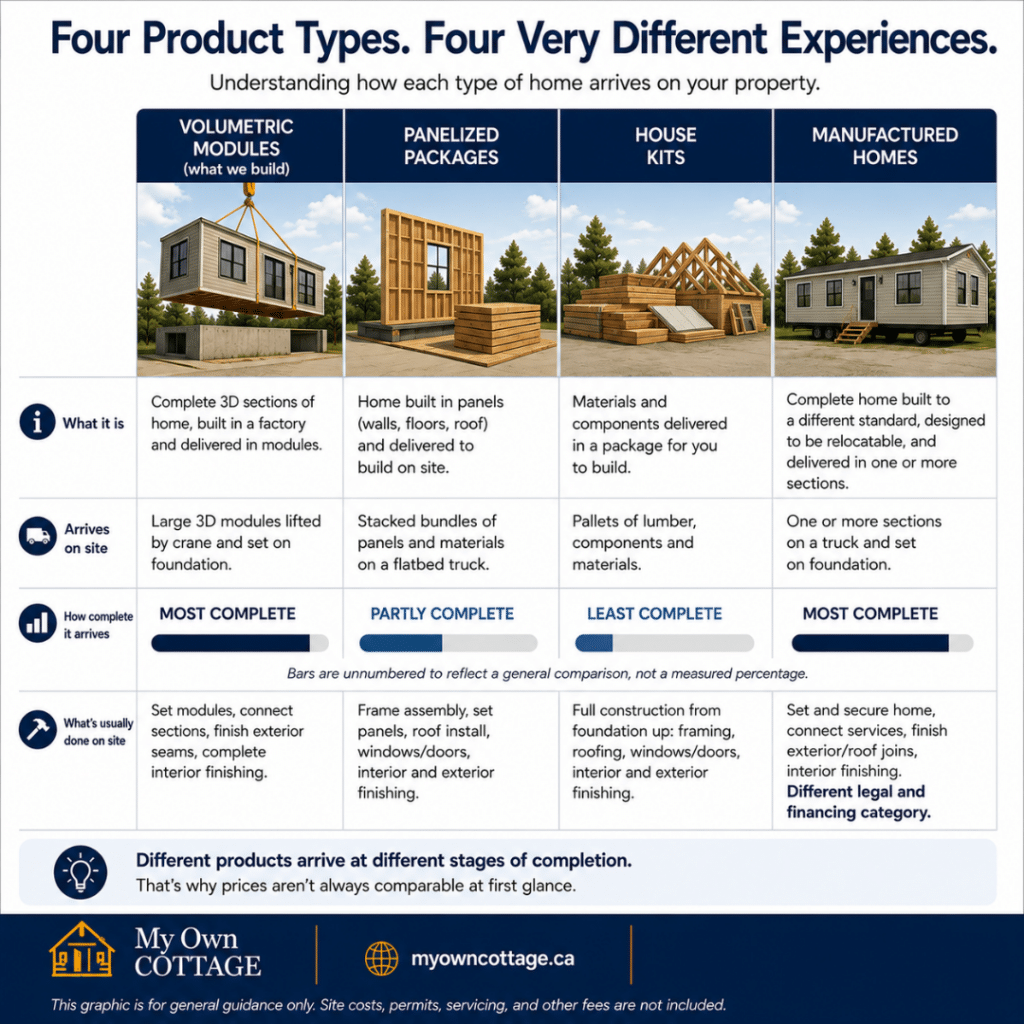
"Prefab" covers four different products that arrive at very different stages of completion — which is why their advertised prices aren't directly comparable.
| Product type | What arrives | What remains your responsibility |
|---|---|---|
| Volumetric modules (what we build) | Largely finished sections, craned onto your prepared foundation and joined | Foundation coordination, servicing, final connections, exterior finishing at the joins |
| Panelized package | Wall panels, trusses and components, erected on site | Foundation, all interior work, mechanicals, finishes |
| Material or house kit | Materials and drawings | Everything, including construction |
| Manufactured homes / mobile homes | A complete unit built to a different standard and designed to be relocatable | Siting and servicing — and note this is a different legal and financing category |
The kit option
We also offer a kit option, where the prefab ships for self-completion. It changes three things substantially:
• Financing – draw schedules and lender treatment differ from a completed build
• Permit responsibilities – more of the application and inspection sequence falls to you
• Timeline – governed by your own pace rather than a factory schedule
Worth discussing early, not treated as a late-stage cost decision.
A note on CSA A277, since you will see it referenced: It is a factory-certification procedure governing how a manufacturing plant’s quality control is audited. It covers the factory portion of the work — not transport, foundation or site erection, which remain subject to municipal inspection wherever a project is built.
It is not a substitute for a building permit.
What off-site construction does and doesn’t do
What it genuinely improves:
• Exposure to weather-related delays
• Quality control under repeatable conditions
• Energy efficiency through consistent envelope assembly
• The ability to run factory work in parallel with site preparation
What it does not change:
• The cost of land
• How fast approvals move
• How simple servicing is
Any builder claiming otherwise is selling you the easy half of the project.
Can You Rent a Prefab Cottage Short-Term in Belleville?
Belleville licenses short-term accommodations. The current rules:
• 100-metre separation – a property within 100 metres of another registered short-term accommodation is not eligible to apply, with an exception for the downtown area
• 4% municipal accommodation tax on short stays
• Annual licence, which must be renewed
If you are planning a garden suite as a rental
A rented accessory dwelling unit is not considered owner-occupied. The City states that where a separate or accessory dwelling unit is rented, it is not owner-occupied — and any non-owner-occupied short-term accommodation is classified as a whole-home STA for administrative purposes.
That is not what most people assume when they picture renting out a backyard cottage while living in the main house.
If short-term rental income is part of your plan, confirm the current by-law requirements and your property’s eligibility with the City before you design around it. Long-term tenancy is a separate question with a different answer.
Financing a Prefab Cottage in Belleville
Factory-built homes on permanent foundations are generally treated as real property and financed much like site-built houses, though funds are typically released in draws — against land and site preparation, the unit at delivery, and post-installation completion. Two tests decide which programs apply to you: whether the property supports year-round occupancy, and whether it will be your primary residence.
Federal programs aimed at prefab construction generally require a property suitable and available for full-time, year-round occupancy with year-round vehicular access. A permanent residence on a serviced Belleville lot meets those tests; a seasonal recreational cottage on a difficult access road may not. New-housing tax rebates are similarly structured around primary residences.
Complete your mortgage pre-qualification before you finalise a model. Knowing your financing structure early changes the sensible sequence, and lenders differ on how they treat factory-built construction — this is a conversation to have directly with your lender rather than to take from any builder’s website, including ours.
Working With My Own Cottage in Belleville and the Quinte Region
My Own Cottage Inc. is an HCRA-licensed, Tarion-enrolled prefab home builder based in Orillia, Ontario, delivering prefab cottages, cabins, small homes and garden suites across the province — including Belleville, Quinte West, Trenton, Foxboro, Cannifton, Thurlow, Prince Edward County and the surrounding areas of Hastings County.
Our process runs in four stages: design, controlled factory construction, delivery, and installation. Across all four we handle foundation coordination, delivery access planning, licensed-trade installation and permit coordination alongside your municipal approvals — while being clear that final approvals rest with the City of Belleville and, where applicable, Quinte Conservation.
You can verify our licensing, regulatory history and warranty coverage yourself through the Ontario Builder Directory at obd.hcraontario.ca. It is a single public lookup covering both HCRA licensing status and whether a home carries Tarion warranty coverage — and it is worth running on any builder you shortlist, not only on us.
Prefab Cottages Belleville FAQ: Costs, Permits & Building Requirements
Which companies build prefab cottages near Belleville?
Several manufacturers deliver prefab and modular cottages into the Belleville and Quinte area — some based locally, others shipping from elsewhere in Ontario. The most reliable way to compare reputable suppliers is the Ontario Builder Directory at obd.hcraontario.ca, which shows each builder’s licensing status, regulatory history and Tarion warranty coverage. My Own Cottage Inc. builds in Orillia and delivers across Ontario.
Can I get a prefab cottage delivered to Belleville, Ontario?
Yes. Our cottages are built at our Orillia facility and transported to your property, roughly two and a half hours west of Belleville. Delivery planning covers route clearances, seasonal road load restrictions, driveway turn-in, module staging and crane access. Remote or constrained sites aren’t ruled out, but access should be assessed early — it can determine which cottage models are viable.
How much do prefab cottages cost in Belleville?
Prefab cottages start at $229,500 delivered and installed on a prepared site, with 33 models running to $949,500. Your total also includes site costs and municipal charges — in Belleville’s urban area, development charges add $32,183, and in the rural area $22,244, as of August 2026. Land, foundation and servicing are quoted separately.
What does a two-bedroom prefab cottage cost in Belleville?
Two-bedroom cottage models start at $279,500 for Hideaway at 788 sq ft, with Orchard at 992 sq ft from $289,500 and Water’s Edge at 988 sq ft from $324,500. Those prices are delivered and installed on a prepared site. Foundation, site servicing, building permits and development charges are quoted separately against your lot.
Are prefab cottages cheaper than building conventionally?
Not automatically. Land, servicing and municipal charges are identical either way. What off-site construction genuinely improves is cost predictability and schedule control — the largest single line item is quoted before work begins, and factory construction isn’t exposed to weather. Treat “prefab is cheaper” claims without a defined comparison basis with caution.
What is the cheapest prefab cottage available near Belleville?
Our entry point is $229,500 for a 505 sq ft model, delivered and installed. Lower figures advertised elsewhere usually describe a different product — a shell, a materials kit, or a unit built to a different standard — and aren’t comparable on completion stage. Always ask what stage of completion a quoted price represents.
Can I put a prefab cottage in my backyard in Belleville?
Often yes. Belleville’s zoning treats these as accessory dwelling units, sometimes called secondary dwellings or garden suites. The City currently permits up to three in the urban area depending on servicing and zoning conditions, and one in the rural area. A qualifying unit is exempt from municipal development charges, and a $5,000 City rebate is currently available.
What permits do I need for a prefab cottage on rural land near Belleville?
A building permit is required, plus a sewage system permit for a new septic system — $640 for a Class 2 to 5 installation. Zoning compliance must be confirmed first, and if your property is near a wetland, watercourse, steep slope or shoreline, Quinte Conservation approval comes before the City’s building permit.
How long does a building permit take in Belleville?
A residential house permit carries a 10-business-day review period under the Ontario Building Code, starting the day after the City considers your application complete — not the day you submit it. Zoning confirmation, conservation approval and septic design all happen before that clock starts, which is where most timeline surprises originate.
What are Belleville’s near permit-ready house designs?
A free City library of pre-reviewed detached ADU designs up to 100 m². Designs from the CMHC Housing Design Catalogue are free; locally produced base designs are $1,000. Because City Building Officials review the plans in advance, permit issuance is faster. A BCIN-qualified designer or architect must still adapt any design to your specific property.
What kind of foundation does a prefab cottage need?
Prefab cottages sit on a permanent foundation prepared before delivery — commonly a slab, a frost-protected shallow foundation, engineered piles, a crawlspace or a full basement. Which suits your property depends on soil conditions, water table, frost depth, servicing and grade. Permanent foundations also matter for financing, since lenders generally treat a factory-built home as real property only once permanently affixed.
Can I customize a prefab cottage?
Yes. Each of the 33 cottage models is a starting point rather than a fixed package — layouts, bedroom and bathroom counts, exterior treatment and interior finishes are adjusted to your property and intended use. Custom cottage design is available where no standard floor plan fits the lot. Changes made before production cost considerably less than changes after.
How do I order and install a prefab cottage in Belleville?
Five stages. Confirm your zoning and whether Quinte Conservation regulates your property. Choose a cottage model or begin a custom design. Finalise floor plans, finishes and the site scope. Secure your building permit and complete site preparation and foundation work. Then take delivery and licensed-trade installation. Factory construction and site preparation usually run in parallel.
How do I check that a prefab cottage builder is licensed and reputable?
Use the Ontario Builder Directory at obd.hcraontario.ca — one public lookup covering HCRA licensing status, regulatory history and Tarion warranty coverage. Also ask how your deposit is protected and when your purchase agreement gets registered, because that timing now affects your coverage.
Since April 1, 2026, freehold buyers should register their purchase agreement with Tarion within 45 days of signing to qualify for the maximum available deposit coverage. Agreements registered late, or not at all, fall under a separate capped fund. Tarion has implemented a transition period deferring the deposit-coverage consequences until January 1, 2027 — so the registration requirement applies now, but the reduced coverage does not take effect until then. Ask any builder you shortlist when registration happens and how deposits are held in the meantime.
My Own Cottage Inc. is HCRA-licensed and Tarion-enrolled.
What to Do Next
If you are at the start of this, the sequence that saves the most money is: confirm your zone and whether Quinte Conservation regulates your property, confirm whether your project qualifies as an accessory dwelling unit, then choose from the cottage models. Doing it in reverse is how people end up paying for drawings they cannot use.
Belleville is a market where the municipal numbers are published, checkable, and large enough to change your decision. They are on this page so you can plan against them rather than discover them.
Tell us where you are planning to build and whether you own the land, and we will scope a quote for your property.
• Request a Free Consultation
• Call Us Directly: (705) 345-9337
• View Our Design Catalogue
Alternatively, for your convenience, you can also simply fill out the contact form below and we’ll get back to you soon!
Contact Us
We usually respond within 24 hours!
- Comprehensive Warranty
- Best Price Guarantee
- Exceptional Service
How We Verified This Page
| Fact | Source |
|---|---|
| 2026 development charges, By-law 2021-201, Stanley Park charge | City of Belleville — Development Charges |
| Building, plumbing, occupancy and sewage system permit fees | City of Belleville — Check Applicable Fees |
| 10-business-day review period and its start trigger | City of Belleville — Check Review Periods |
| ADU counts, registry, $5,000 CIP rebate, hydrogeological trigger, designer exemption | City of Belleville — Accessory Dwelling Units |
| Near permit-ready house designs, pricing, CMHC Housing Design Catalogue | City of Belleville — Near Permit-Ready House Designs |
| Zoning By-law 2024-100 | City of Belleville — Official Plan and Zoning |
| Regulated areas, O. Reg. 41/24, Bell Creek and Potter Creek mapping, fee freeze | Quinte Conservation |
| Short-term accommodation licensing and municipal accommodation tax | City of Belleville — Short-Term Accommodations |
| Builder licensing and warranty status | Ontario Builder Directory, obd.hcraontario.ca |
Verified August 8, 2026.
Municipal fees and charges change. Belleville’s development charge by-law is under active review as of August 2026 — confirm current figures with Building Services at 613-967-3200 ext. 3230, or Planning at ext. 3288, before finalising a budget.
About the Author

Sean Stevenson is Chief Marketing Officer and Buyer Experience Lead at My Own Cottage Inc., an HCRA-licensed, Tarion-enrolled prefab home builder based in Orillia, Ontario.
Sean has spent five years guiding Ontario buyers through the full prefab cottage process alongside the company’s build team — lot assessment, all-in budgeting, zoning, building permits, development charges and final occupancy. He focuses on the part most buyers underestimate: what a factory-built cottage actually costs once the foundation, servicing and approvals are accounted for.